St. Johns Rotary honors First Responders
by Maralyn Fink
I attended The St. Johns Rotary Club’s meeting on Tuesday for the Luncheon Meeting for First Responders/Patriots at Clinton Commons.
Clinton County Sheriff Larry Jerue was the guest speaker for the meeting and also hosted a tour of Sheriff’s Department and Jail.
The following First Responder groups accepted the club’s invitation:
– St. Johns Police Department David Kirk
– SSt. Johns Department of Public Works Jeremy Ritter
– SSt. Johns Public Services Department Steven Martin
– SSt. Johns Water Department Justin Smith
– SSt. Johns Wastewater Treatment Plant Jordan Whitford
– SClinton Area Ambulance Service Authority Lynn Weber
– SClinton County 911 Em. Operations Center Christine Collum
– SClinton County Sheriff’s Department Larry Jerue
– SSparrow Clinton Hospital Emergency Room Diane Simon
City of St. Johns Newsletter
Recreational Marihuana – With the passage of the new Recreational Marihuana Law making it legal for Michigan residents twenty-one years of age and older to buy, sell and use marihuana, all Michigan cities need to decide whether or not they will allow marihuana businesses within their corporate boundaries. There are several types of marihuana businesses permitted under Michigan law, ranging from grow operations and retails sales to warehousing, testing and transportation. The State of Michigan has not finalized the rules and regulations pertaining to marihuana businesses, mak-ing it difficult to predict whether or not any type of recreational marihuana business would be beneficial to the City. Therefore, the City Commission has voted to prohibit all marihuana businesses. If in the future the rules and regulations allow for marihuana businesses that would be of benefit to the St. Johns community, an ordinance could be developed to allow one or more marijuana businesses in the City.
Trash and Recycling Services – Recently the City modified how it provides trash and recycling services. The long-established Green Bag system had become problematic with residents reporting issues disposing of bulky items and frequent incidents of animals tearing the bags open. Therefore, the green bags have been replaced with curb carts similar to the carts used for recycling. Recycling service is being changed to every other week (beginning in December) to be in line with what other communities are doing. If you find that your recycle bin is over flowing, please use the St. Johns Lions Club Recycling Center located at 605 N. Swegles St., corner of Steel St. and Swegles St., just off of North Business 27. Also to save room in your recycle bin, crush or break boxes down and make sure all other items are recyclable.
2019 Road Restoration Program – The 2019 road restoration program is now over for the season with final paving on Cass Street being completed the week of September 3rd. City staff members are already planning for the 2020 construction season. Look for updates on the City’s Web Site and Facebook page.
2019 Fall Leaf Collection Program – The City of St. Johns Leaf Collection Program will be returning this Fall with some positive changes as to how and when leaves will be collected. Watch the City’s Web-Site and Face-book pages for upcoming announcements.
Dairy Processing Plants – The Glanbia and Proliant dairy processing plants continue to grow and are right on schedule for a Fall of 2020 grand opening. Walls and interior spaces have been established as has piping and electrical conduits. Also showing progress are offices, laboratory and general work spaces. Parking areas, driveways, milk delivery areas and exterior lighting are also being completed. Walker Road improvements relating to this project are progressing nicely and the road surface should be completed by mid-November, well in advance of winter weather.
Unsung Heroes
from City Manager Jon E. Stoppels
 On September 11, 2001, tragic events changed the way we as Americans view our country, the world, and the turmoil of international politics. Pride in our country and those who serve and protect us has soared from that sad time in history. Since then, we have pledged our admiration and pride to the hundreds of firefighters and police officers (many who gave their lives) and medical professionals that worked tirelessly to save lives and minimize damage. Personally, I will always admire all Police, Fire and medical personnel for not only what they did during that tragic time, but for their sacrifices and dedication both before and after that day.
There is however, a significant group of public servants who also gave their all on those tragic days during and after the attacks. Those people are Public Works and Public Utility workers who worked side by side with the first responders on that fateful day. These public servants are all too often forgotten when the other heroes of the day are duly recognized and honored. They too worked tirelessly and around the clock with great personal sacrifice, having been exposed to the same harsh environment, but without the protective equipment that is typically provided to police and fire personnel. Today, these other public servants are also suffering the long-term effects of such exposure and are possibly experiencing high rates of cancer and respiratory problems, not to mention the emotional toll that such an occurrence would cause.
It stands to reason that when a first responder shows up to an emergency, several Public Works and Public Utility workers have already been there. Imagine firefighters responding to a house fire and there is no water at the hydrant or the natural gas has not been shutoff. Also, imagine police and fire personnel attempting to respond to an emergency and the road hasn’t been plowed, a fallen tree or rubbish has blocked their path, or there are no street lights.
Public Works and Public Utility personnel work around the clock to provide services and are often called in to work overtime on holidays or the middle of the night to plow snow, respond to flooding, repair a water, sewer, gas, or electrical line, or to assist Fire and Police personnel with an emergency. Imagine for a moment how difficult emergency response communications would be if there were no two-way radios, phone service or electricity. None of these things would exist without the efforts of so many unsung heroes.
Unfortunately many people don’t realize that while they may directly need Police or Fire personnel only a few times in their lifetime, they have to rely on the responsiveness, dedication and hard work of Public Works and Public Utility employees for their life needs on a daily basis. Just imagine a life without running water, flush toilets, paved roads, trash pickup, telecommunications, heat or electricity. When such amenities and public infrastructure were not available, that period of time in history was referred to as The Dark Ages, which is appropriate in more ways than one.
So the next time you see a Public Works or Public Utility worker, give them a wave or a thumbs up and let them know you appreciate their efforts. After all, they are the reason in so many ways that you and your family could get up and live your life today.
Voice for Clinton County’s Children now in two locations
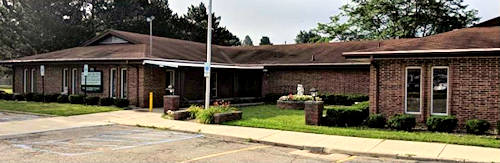
The heart work done by The Voice for Clinton County’s Children and our partners has grown significantly since planning began six years ago. To meet the needs of the clients we are entrusted to serve and with a generous grant opportunity, we are now serving Clinton County from two locations in St. Johns.
The Court Appointed Special Advocates (CASA) Program will be serving from 306 E. Elm Street in St. Johns. Building neighbors include Dr. Rajesh and Sparrow Medical Supply. CASA will host an Open House later this year when we are all moved and settled in to our space.

The Child Advocate Center (CAC) remains in the building filled with beautiful murals. You are invited to the CAC Fall Open House on Friday, September 13 from 4:00 p.m. until 7:00 p.m. The CAC is located at 1207 N. US 27 in St. Johns, just to the west of Sundance and next to Redwing Lanes Bowling Alley.
Chalk it Up Friday, September 13
Be sure to stroll downtown St. John this Friday, September 13 from 5:00-8:00pm.
Art Walk is a free, self-guided, art-filled Friday evening that allows everyone to explore historical downtown St. Johns’ businesses and see the work of various artists. It’s an opportunity to really get to know your town and its people.
Make your first stop the Art Gallery to pick up your event program which includes a map of participating businesses and a Chalk It Up! voting ballot. Enjoy meeting and admiring works from Photography artists, Sun and Moon Studio, and pet and wildlife artist Chad Burnham.
The sidewalks will transform into a vibrant palette for numerous artists to showcase their talent, skill and creativity in the sidewalk chalk competition.
Businesses in the downtown district will host various artists and sidewalk chalk contestants. Food vendors Fire & Rice and Wilson’s Meat Wagon will all be on site to satisfy your taste buds.
Each vendor is graciously donating a small portion of their proceeds to support the events, programming and mural projects of the Clinton County Arts Council.
Museum Accessories on display through September 25
Visit the Museum through Wednesday, September 25 to view the Accessories display. The hat, necklace and parasol umbrella completes the outfit.
Many more accessories are on display in several rooms of the house.
The 2019 Police and Firemen Exhibit will be available in the Paine-Gillam-Scott House and Carriage House through mid-December.
Open Wednesdays, 2-6 p.m. and Sundays, 1-4 p.m. Closed on holiday weekends.
Located at 106 Maple St., St. Johns, Michigan west of the courthouse. Group tours and individual tours are welcome. For more information contact us at 989-224-2894, email PGSmuseum@gmail.com. Visit the website, PGSmuseum.com. Facebook Paine-Gillam-Scott Museum.
Hearing and Vison team gearing up for another successful year
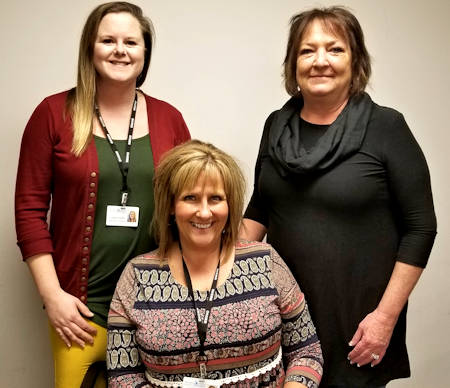
Jeannette Sternhagen, Mary Wallen and Stacey Peterman (seated)
Children are usually pretty good at expressing their wants and needs. If they are hungry, they tell their parents so. If a scraped knee is causing them pain, they cry and point to their wound. If they want to cuddle, they climb up on a loved one’s lap. If they are overly tired, their whiny, grumpy disposition is a dead giveaway.
But when a child can’t see or hear as well as they should, they are not always able to express it because they are unaware themselves that there is a problem.
Many children start school with these undiagnosed issues, which greatly affects their ability to read, pay attention, follow directions, and learn. But school achievement isn’t the only thing that suffers in this type of situation. Hearing and vision difficulties often lead to behavioral problems as well, which creates a host of additional problems at school, at home and in the community.
Diagnosing these problems at an early age is so important. That’s why the Mid-Michigan District Health Department (MMDHD), in conjunction with the Michigan Department of Health and Human Services (MDHHS), has been conducting free hearing and vision screenings for preschool and school-age children for over 60 years. Making sure that children in are seeing and hearing properly is a job MMDHD takes very seriously.
“Our three trained Hearing and Vision Technicians are committed to providing all children in our district with the highest quality hearing and vision screens to ensure they have the skills to succeed in school and in life,” said MMDHDs Andrea Tabor, Community Health and Education Division Director.
The Health Department’s Hearing and Vision trio has over 38 years of combined experience and screens almost 22,000 students a year. They each have their own unique passion for kids and work hard to ensure they provide the best service possible.
For Hearing and Vision Technician Mary Wallen, who screens children in Clinton County, identifying a hearing or vision loss is very rewarding and why she loves her job so much. According to Wallen, children are very good at accommodating for hearing and vision losses and it’s often difficult for a parent to know if their child has a problem until they are screened. “We find hearing and vision deficiencies on a daily basis,” she said, “And I cannot wait to screen that child again later in the year, because when I do, there is a good chance the problem will have been corrected, or that there is a medical professional working towards the best possible outcome. It’s such a great feeling to know I made a difference in a child’s life!”
Jeannette Sternhagen is the Hearing and Vision Technician serving Gratiot County. For her, helping kids in the community see and hear better is what makes her job so worthwhile. “I have had kids come up to me all the time in the store to show off their new glasses, some even point out how much better they can see, said Sternhagen. “One child told me they never knew there were lines on leaves before! He didn’t even realize he had poor vision, but now he’s seeing things in a whole new light.”
Stacey Peterman, Hearing and Vision Technician in Montcalm County, is thrilled each time she gets positive feedback from principals, teachers and parents. But what really gets her excited is when she hears specific success stories, one of which has made a lasting impression. Several years ago, she received a heartfelt thank you letter from a parent who had struggled with her son’s behavior in school. They had him tested for Attention Deficit Hyperactivity Disorder, and Attention Deficit Disorder, trying to get to the root of the problem. It was frustrating for this mom to try to figure out how to correct the problem.
That’s when Peterman discovered a problem with the child’s vision during a routine screening. After months and months of psychological testing, this mom finally had the answer she was searching for— her son didn’t have a disorder; he just needed glasses! He had not been able to follow along in class because he couldn’t see the board. His frustration led to him to act out, which is common in this type of situation. The parent was relieved and extremely thankful that Peterman was able to provide the service and was happy to report that the child is now on track with his grades and his behavior.
Michigan law requires the Hearing Screening Program to test children at least once between the ages of three and five years and every other year between the ages of five and ten. Goals of the program include identifying hearing loss as early as possible, reducing preventable hearing loss and ear disease, identifying hearing impaired children so their educational, medical and social needs can be met, and helping parents and school personnel understand the child’s hearing loss needs. Early identification of hearing problems is critical as it can alleviate speech/language, social/emotional, academic and psychological delays.
Michigan law also requires vision screening of pre-school children at least once between the ages of three and five years, and school-age children in grades one, three, five, seven and nine, or in conjunction with driver training classes. Early identification of vision problems is equally important, as it can lead to the discovery and treatment of conditions like amblyopia, or lazy eye. The vision screening tests for clearness of vision, eye muscle balance, nearsightedness, farsightedness, and symptoms of other eyesight problems.
For more information on the Health Department’s Hearing and Vision program visit www.mmdhd.org.