Now and Then – Purely Michigan in Auburn Hills
by Jean Martin
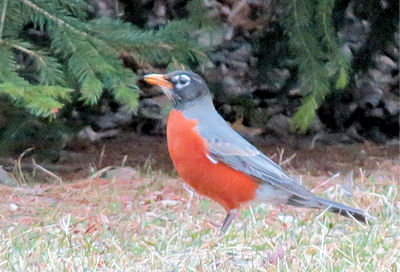
Barry saw his first robin this week.
In completely unrelated news . . .
It seemed like it was finally safe to take a short road trip to Great Lakes Crossing and the Sea Life Aquarium in Auburn Hills.
It might take 3 or 4 days to do a really thorough job of a visit like this; but by following a 3-year-old around we were able to accomplish the whole thing in about 4 or 5 hours.
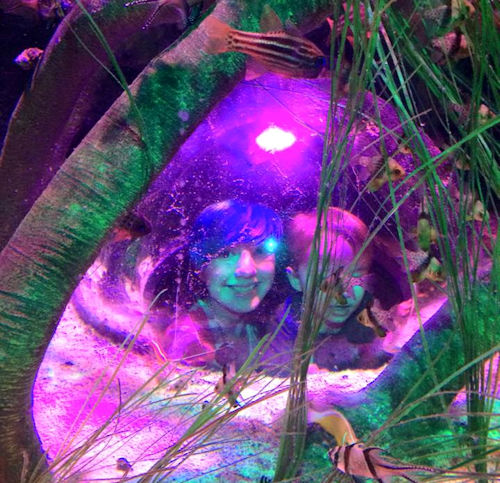
See the whole album https://picasaweb.google.com/110845930262453987007/160308?authuser=0&feat=directlink
This week’s Mystery Photo
Where is this?

Can you tell us where this is located? Drop us a line at mail@sjindy.com.
909 N. Oakland St.
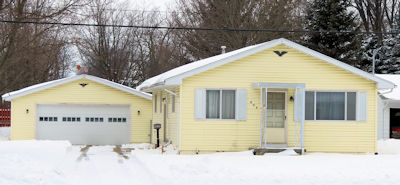
the current owner is Tammy Thelen. Previous owners include David Sillman, Louis Knight, and Bernard and Beulah Neller.
A Look Back – John Rehmann
by Barry Bauer
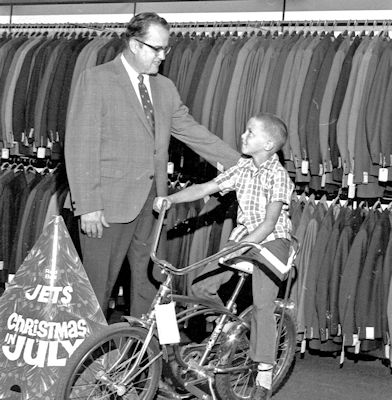
This photo of John Rehmann, then manager of Rehmann’s Men & Boys Wear store, was taken in 1968, and I believe this is the location next to Clinton National Bank at 206 N. Clinton Ave. That building is now occupied by Clinton Electronics/Radio Shack.
The young unidentified boy apparently won a bicycle in Rehmann’s “Christmas in July” store promotion.
Benny and Jessie’s Pet Info – Heart Failure in Dogs
Heart failure (or “congestive heart failure”) is a term used in veterinary medicine to describe the heart’s inability to pump enough blood throughout the body to keep the circulatory system from “backing up.” Not only does this lead to a condition whereby fluid accumulates upstream of the failing chambers of the (right sided heart failure affects the animal differently than left sided heart failure), it means less blood––and therefore less oxygen––is getting to the tissues of the body. For this reason, heart failure is an unsustainable condition that must be quickly reversed if the animal is to survive.
What to Watch For
The symptoms of heart failure will differ depending on which side of the heart is affected, right or left.
– Right-sided heart failure (backward failure):
abdominal distention (ascites)
exercise intolerance
lethargy/weakness
– Left-sided heart failure (forward failure):
coughing
breathing difficulty
lethargy/weakness
bluish skin/gums
Primary Cause
In pets heart failure is most commonly the result of chronic valve disease (in which the valves of the heart degenerate and prove incompetent), abnormal heart rhythms (arrhythmias) and nutritional or hereditary conditions affecting the heart muscle or the major vessels leading to and from the heart. It should go without saying that the treatment of heart failure should address both symptoms and root cause(s).
Immediate Care
In cases of heart failure, the timing of treatment is critical.
– Check for a pulse or heartbeat.
– Squeeze the dog’s gums and see if blood runs back into them when you remove your fingers.
– If the gums refill with blood, the heart is still active. You may need to give artificial respiration.
– If the gums do not refill with blood, the heart has stopped. You will need to give CPR and artificial respiration.
Seek immediate veterinary care in all cases.
Because oxygen therapy and drug therapy is considered essential, hospitalization will be required.
Treatment
Long-term treatment is required in almost all heart failure cases in which the crisis has been overcome. Drug therapy, dietary changes and/or surgery (as in the case of some congenital heart defects), can be extremely effective in preventing future episodes, mitigating the overall severity of the underlying disease and increasing the quality of life.
Maralyn’s Pet Corner – Dehydration in Horses
Dehydration occurs when there is excessive loss of water in the horse’s body. Generally due to strenuous exercise or long bouts of diarrhea, this loss of water and electrolytes — minerals like sodium, chloride, and potassium — is a serious emergency that can lead to kidney failure if the horse is not quickly rehydrated.
Symptoms and Types
A horse’s skin loses its elasticity when its body fluid or electrolyte levels are depleted. An easy way to identify this is to pinch up a skin fold along the horse’s back. A dehydrated horse’s skin will stay up in a ridge, while healthy skin should spring smoothly back into place. Other signs of dehydration include:
– Lethargy
– Depression
– Dullness in the eyes
– Dry skin and mouth
– Thick and sticky saliva
– High level of protein in the blood
Causes
Excessive fluid and electrolyte loss due to diarrhea or strenuous exercise can cause dehydration, as does an abnormally high body temperature (hyperthermia) or fever. Some other causes of dehydration include:
– Long distance riding/racing
– Athletic events
– Trail riding
– Severe burns
– Endotoxemia (disease which causes renal failure)
– Colitis-X (disease which causes watery diarrhea and hypovolemic shock)
– Anaphylactic shock (shock triggered by an allergic reaction)
Diagnosis
Your veterinarian will run various blood tests to determine if the horse is dehydrated. Such tests will identify a reduction in the water content of the horse’s tissue cells by examining the amount of protein in the blood and the blood volume itself. Examining the animal’s urine will also help in the diagnosis and may reveal secondary problems which have occurred in the kidneys.
Treatment
Administering fluids and electrolyte solutions is vital in treating and stabilizing horses suffering from dehydration. However, seek the advice of your veterinarian, as these dosages require medical expertise — excess administration of fluids can lead to a condition called water intoxication.
Generally a veterinarian will administer electrolyte solution by mouth and in severe cases, fluids injected intravenously into the horse may be necessary. The method that is chosen depends on the attitude, temperament, and health of the dehydrated animal. After the electrolyte balance is brought back into the “safe zone,” any other issues that may have caused the dehydration can be treated.
Prevention
Water is the life force of all living things and if horses are pushed to the point of exhaustion without an opportunity to rehydrate, it could be detrimental to the horse’s health, even causing death. Therefore, following simple management practices like always providing adequate fresh, clean water to your horses could prevent dehydration.