A true story about Depression
by Maralyn Fink
A short time ago I wrote an article on depression.
This is a true story about a student that I attended high school with and is written by his daughter Amy. Her father’s name was Doug McDowell who was very friendly and was very witty.
He graduated from Rodney B. Wilson with the class of 1960.
******
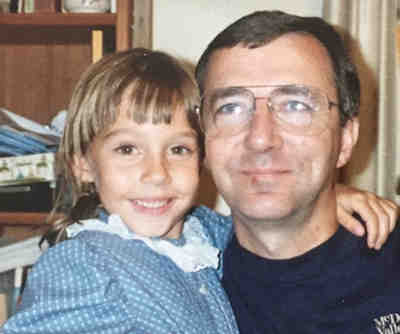
 “I was 13 years old and still a little girl. My dad was my hero – a Vietnam vet, a Michigan grad, a Springsteen fan. He was a brilliant labor lawyer who filed hundreds of briefs for the Supreme Court. I remember being a kid, flying down the road in his Oldsmobile with the windows rolled down and the music cranked up. I looked over and he smiled, his blue eyes sparkling and his black hair blowing in the wind. He played the trumpet and I played the sax, and we would sit, side by side, blaring out duets that sounded amazing to us and probably awful to anyone else.”
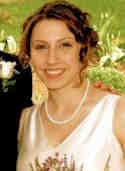 This comes from Doug’s daughter, Amy Morrow, as she looks back at the traumatic event that shaped her young life and still haunts it. She explored the story of her father’s hidden depression in an article published in the Washington Post last February.
“I was 13 years old and I didn’t know about depression, didn’t know that my dad had struggled silently with his mental health for years. I didn’t know the name for what started to change him. Why he became so tired, so withdrawn. Why he seemed weighed down with a heavy sadness. I didn’t know why the light went out of his eyes. The music had stopped and in its place I heard a deafening silence.
“Wrung with a fear that I couldn’t name I finally asked him, ‘Dad – what’s wrong?’ His blue eyes clouded over as he said, softly, ‘I . . . don’t feel good.’ Needing to know more, I asked, ‘When are you going to feel better?’ He said nothing as his eyes filled with tears. I had never seen him cry before and it scared me. I raced out of the room and slammed the door like the teenage girl that I was. I expected him to follow, to explain.
“He never did.
“Three days later, he was gone. My childhood ended . . . .”
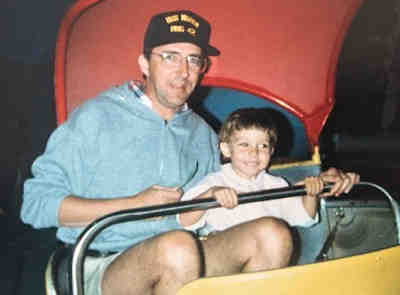
In loving memory of Douglas Sidney McDowell. August 31, 1942 – May 1, 1996.
To read the whole article go to the Washington Post story.
This week’s Mystery Photo
Where is this?

Can you tell us where this is located? Drop us a line at mail@sjindy.com.
704 S. Baker St.

The current owners are Robert and Marie Shrum. The previous owners were Keith and Nancy Barrett.
A Look Back Update – Winner of New Bike in 1968
Barry Clark Bauer
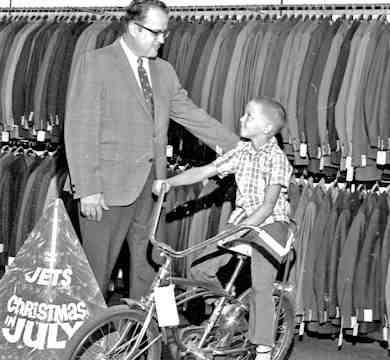
Eddie VanElls, 9, of West Walker Road, St. Johns, was the winner of a new bicycle given away by Rehmann’s in St. Johns Monday at the conclusion of a contest by Red Bali casual shoes.
John Rehmann queries Eddie about his plans for his new bike. The boy is the son of Mr. and Mrs. Richard VanEIIs of R-2.
Benny and Jessie’s Pet Info – Why You Should Adopt a Pet
The next time you’re in the market for a new pet and wondering where to buy a cat, dog, or other animal, try setting your sights on your local animal shelter. Despite any negative stereotypes animal shelters may have, they actually provide a ton of healthy, happy pet options for your family to take home and love.
Here are 5 things you may have heard in the past about shelter pets, and what the actual truth is.
Myth #1: Shelter pets aren’t healthy.
Truth: In fact, shelter pets can be quite healthy. Dr. Jules Benson is the VP of Veterinary Services at Petplan Pet Insurance. When he recently analyzed Petplan’s claims data he found something interesting: Contrary to popular opinion, the claims data revealed that pets adopted from shelters or rescue organizations are actually 5% less likely to suffer an unexpected trip to the veterinarian compared to pets purchased through pet stores. In addition, many shelter pets are spayed and neutered, and some even come with location microchips.
Martha Smith-Blackmore, DVM — immediate past president of the Association of Shelter Veterinarians and interim president and director of Veterinary Medical Services for the Animal Rescue League of Boston — also stipulates that although there is much variety in animal shelters throughout the country, most good shelters almost always provide excellent vet care for their animals. “In well-run shelters,” Dr. Smith-Blackmore says, “animals receive vaccinations upon in-take, and are fed a high quality diet from a single manufacture so they don’t undergo dietary stress caused from a constantly changing variety of donated food on a daily basis.”
Myth #2: I won’t be able to find a pure breed at a shelter.
Truth: According to Dr. Benson, 25% of all dogs in shelters are purebreds.
Myth #3: Shelter pets are unruly.
Truth: Many shelter pets receive training and socialization before adoption to help make the transition to their new family easier, says Dr. Benson.
Myth #4: I won’t be able to properly get to know my pet from the shelter before I take her home.
Truth: Many shelters offer online pet profiles so that you can get to know the animals that are available before you even step foot in the shelter. “In addition, ” says Dr. Smith-Blackmore, “it’s always a good idea to schedule a ‘get-acquainted’ session with your prospective shelter pet and, if at all possible, have a list of questions you can ask the available shelter staff and the staff veterinarian.”
Myth #5: All the pets in a shelter will be older.
Truth: Shelters and rescues have pets of all ages, promises Dr. Benson, including puppies and older pets, which are usually trained and less initial work for the new pet owner and make excellent companions.
Something else to consider: The cute and appealing puppy in the window of that pet store came from somewhere, says Dr. Smith-Blackmore. “Unfortunately, more than likely, its birth mother spent the majority of her life in a very small cage having litter after litter. Adopting from a shelter or a well-known breeder can help to eliminate commercial puppy enterprises.”
At the end of the day, deciding where to get your brand new family member from is a big decision, but with the right information, it can be made a bit easier.
When you adopt a pet from the shelter, it is important to immediately establish a relationship with a veterinarian to care for that new addition to your family. In fact, your pet needs to be examined at least yearly by a vet even if it appears healthy as many diseases are hidden and not apparent. Remember, it is much cheaper to prevent disease than it is to treat it.
Letters – CASA says thanks
CASA-The Voice for Clinton County’s Children is very appreciative of all who attended and supported our Voices of Hope for Children Luncheon on October 5th.
Special thank you to The Emerald Golf Course for underwriting the event and being wonderful hosts. Thank you to Andy T’s and Simpson Brother’s Greenhouse for the beautiful fall decorations and to Meijer of DeWitt for event supplies.
We thank our guests who heard from Melissa Gibson Board President, Kelly Schafer CASA Executive Director, Judge Lisa Sullivan, CASA Advocate John Lambright, and Katie Eccleton who hosted the lunch. With the generous support from our community, we will provide a Court Appointed Special Advocate for every child removed from their parents’ care due to abuse or neglect.
Kelly L. Schafer, M.S., Executive Director
******
Clinton County Senior Center invites young and old
If you are just reaching senior age, are new in town, or need something to fill up the hours each day, then come and check out the Clinton County Senior Center. The Senior Center, located at 201 E Walker Street in St. Johns is a registered non-profit with 501(c)(3) status that has been in the community since 1979. The center is governed and run daily by a volunteer Board of Directors.
You don’t have to be an “old” senior to attend. Anyone age 55 or older is invited. There are cards, bingo and other games, exercise, library, nutritional meals and meals made onsite, socialization programs, educational/informative program speakers, day trips and more. And the center is always open to new ideas.
The Senior Center is open Monday, Tuesday, Wednesday and Friday of each week between 9:00 am and 3:00 pm and meals are available each of those days.
If you feel you are still “too young” for the center but want to help in some way, consider becoming a volunteer to help at the center or with fundraisers, or consider joining their Board of Directors. For more information about their needs contact their Board Treasurer Brenda Terpening at 989-224-7248 during the daytime hours.
Brenda Terpening
Board Treasurer
Maralyn’s Pet Corner – Natural Ways to Manage Diabetes in Cats
If your cat has been diagnosed with diabetes, there are several treatment options available to help your feline live a long, healthy life. But is there a way for cat parents to avoid regular insulin shots and rely on natural remedies alone?
Not exactly, says Dr. Tara Koble, DVM of The Cat Doctor Veterinary Hospital, in Boise, Ida.
“Some diabetic cats can be managed on a low-carb food alone, without insulin,” says Koble. ”This is the only ‘natural’ treatment that sometimes works by itself. Many cats need a combination of a low-carb food and insulin.”
Most veterinarians agree that natural supplements that tout diabetes remedies don’t work as effective treatment options. Insulin shots may be a necessary means to managing a diabetic cat’s health.
“There is no ‘natural’ replacement for insulin. However, insulin itself is a naturally occurring hormone, and in cats who need it, we are just technically replacing what is lacking,” says Koble. “Other natural supplements that are marketed for diabetes just help support the overall health of the cat but they don’t treat the disease directly.”
On the other hand, there is a natural approach to preventing diabetes in cats that is highly effective. Koble recommends pet parents pay close attention to diet and exercise. “The two best things any cat parent can help do to protect from diabetes would be to feed the highest quality canned, low-carb or raw diet that is possible,” she says. “The second critical thing to help prevent diabetes is to get your cat moving. Exercise is protective against diabetes, and indoor only cats are usually lacking severely in activity.”
What Causes Diabetes In Cats?
Not dissimilar to type 2 diabetes in people, most cases of diabetes in cats occur when a cat’s blood sugar rises because its body is no longer responding to insulin in a normal manner. The pancreas can initially respond by producing more insulin, but the cells that make insulin eventually “wear out.”
While diabetes is more likely to happen in obese, middle-aged, indoor cats, it can affect any feline at any age and weight.
If your cat has been diagnosed with diabetes, there are several factors that could have led to the development of the disease. Koble explains that some of the causes include, “genetic predisposition, a sedentary lifestyle, obesity, diet (high-carbohydrate, dry kibble), and the deposition of amyloid in the islets of the pancreas.”
Koble notes that diabetes in cats is not just caused by one of these issues—it is usually a combination of multiple problems.
How To Tell If Your Cat Has Diabetes
While there are a few things to look out for, Dr. Erika Raines, DVM, CVA, CVSMT, of the Holistic Pet Vet Clinic in Tigard, Ore., says more frequent drinking and urination is the biggest sign of diabetes in cats. She notes that cats may also develop diabetic neuropathy, “where they start to lose nerve function in their back legs and have weak hind legs as a result.” Raines says that the most common sign of neuropathy is a cat who walks flat on his back legs with his hocks on the ground.
A change in eating and drinking routines may also signal the onset of diabetes in cats. “Without insulin, [a cat’s] body can’t use glucose. So in the beginning you notice your cat is really hungry and is still losing weight,” says Koble. “The body also tries to dilute the high sugar by increasing the thirst, so cats that are diabetic will drink and urinate much more than a healthy cat.”
If you notice any of these signs, take your cat to the veterinarian immediately. If untreated, diabetes in cats can lead to severe issues, including weakness in the legs (diabetic neuropathy), diabetic ketoacidosis, infections, cataracts, nausea, kidney failure, severe dehydration, seizures, coma, and even death, explains Koble.
Insulin Treatments: A Common Option
While lifestyle and dietary changes may assist a cat in managing diabetes, Koble notes that many cats will need to receive insulin shots “before going into remission.”
Insulin, as Koble explains, is a hormone that is made in the pancreas that regulates blood sugar (glucose) levels. The more insulin secreted, the lower the blood sugar will drop. The less insulin that is secreted, the higher the blood sugar will remain. When there is not enough insulin, blood sugar remains high, resulting in diabetes.
For cats that do require insulin, most cats need a dose every 12 hours. Koble adds, “All insulin is safe when used properly.”
Any cat with diabetes will have to maintain visits with their vets based on their diagnosis. “Some [vets] require frequent office visits for blood sugar measurements and some prefer to empower clients to do monitoring at home,” Koble explains. “If a cat is well regulated and doing well, there may be up to six months on average between recommended visits.”
Natural Options to Help Manage Diabetes in Cats
While insulin may be necessary to ensure effectiveness in managing diabetes in cats, pet parents can also take a natural approach to diet and lifestyle changes following a diabetes diagnosis.
Raines recommends a low-carb diet without the addition of grains, sweet potatoes, potatoes, and green peas. “If you are feeding raw or home cooking your cat’s diet, definitely make sure that it is balanced appropriately,” she says, “This can be done by purchasing a supplement designed to balance a home prepared diet, or by purchasing commercially prepared complete raw diets.”
In addition to natural dietary changes, Raines says diabetic cats may also benefit from a cranberry-based urinary supplement since “diabetic cats can be at a higher risk for bladder infections.”
When searching for a natural urinary supplement, look for companies that perform independent testing and for products that have the GMP (Good Manufacturing Practices) label. It’s best to work directly with your veterinarian to ensure safe and proper supplementation for your diabetic cat.
Most importantly, never change your cat’s insulin dose or diet without first talking to your veterinarian. Oftentimes, a cat’s insulin needs will change when they start eating a different food. A mismatch between diet and insulin can result in serious and even fatal complications.
Now and Then – Remembering Doug McDowell
by Jean Martin
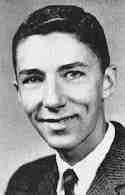 To say simply that Doug McDowell was a graduate of Rodney B. Wilson High School is not saying enough. Doug was a sprite, a force of nature.
St. Johns was still a small town in the late 1950s. We all knew one another. Doug was a year ahead of me in school, but we all knew one another; we knew everyone’s families.
Kids in the band were almost like brothers and sisters. And Doug was the pesky little brother who was really good at what he did, but he was always skating on the edge of minor infractions. He was always blurting out wise cracks, always in danger of being sent to the office — if only so that class could continue uninterrupted.
And one fine Friday night Doug’s story became a cautionary tale.
It was Band and Orchestra Festival season; and after every Friday home game, whether it be football or basketball, there would be a dance in the gymnasium. One year the band had an unusually early call to get on the buses the next morning and head to Festival.
And so the decree went out from the band director, Frank Jilka, that no band member was to attend the dance after the game. He would come up to the school, he promised, sweep the room, take any band member home and personally put him or her to bed.
Little groups of band members discussed this pronouncement among themselves and weighed the chances of getting caught. Most of us decided that it wasn’t worth the risk. We might not be in bed early, but we weren’t going to be caught in the school gym that night.
The word spread quickly through the buses the next morning that one of us had defied the ban. Of course it had been Doug who had been flushed out of the dance. Urban legend soon had it that Frank had actually escorted him from the dance and personally put him in his jammies and chucked him in bed. We knew that the McDowells were friendly with the Jilkas, and so the story had enough of the ring of truth to it that we were inclined to believe it.
We became believers, and the incident seemed not to make even a blip on Doug’s radar. He knew he was going places, and he did.
 Thomas L. Wilson, 85, passed away Monday, October 10, 2016 as the result of complications from Multiple Sclerosis. Tom was a graduate of Ohio Wesleyan University, and then went on to serve as a Lieutenant in the United States Air Force. After his military service Tom was a successful Insurance Salesman, before going on to open two retail stores including Quality Discount House in St. Johns and Hastings, Michigan, which he operated until the onset of his MS.
 Joyce Ann Dyer, age 81, of St. Johns, Michigan passed away Sunday, October 9, 2016, at Sparrow Clinton Hospital, St. Johns, Michigan.
 Kathleen A. Simmon, 94, of St. Johns, MI, passed away Sunday, October 9, 2016, at Hospice of Mid Michigan, Lansing, Michigan.
  Karl Louis Blemaster died Friday, October 7, 2016 at the age of 65. He was born December 23, 1950 in Carson City, MI the son of Gale and Helen (Poteric) Blemaster. Karl was a graduate of Fulton High School, Class of 1969. He is an Army veteran of the Vietnam War and an avid University of Michigan and Detroit Lions football fan. Early in his work career he worked for Lansing Drop Forge and most recently was a self employed contractor. On March 30, 1991 he married Honey Jerenstadt and she survives him.
  Richard J. Halfmann died Friday, October 7, 2016 at the age of 88. He was born February 7, 1928 in Fowler, MI the son of Raymond J. and Bernita (Geller) Halfmann. He attended St. Joseph Catholic Church in St. Johns and was an Army veteran of the Korean War. Richard was a member of the American Legion, enjoyed Detroit Tiger baseball and loved spending time with his grandchildren. He retired from a career in sales after 39 years of service.
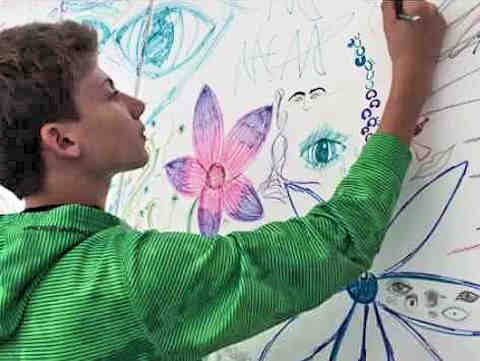
 Teacher wins 30 ukuleles
 Senior Center To Hold Annual Rock-a-Thon
 A true story about Depression
 According to Chief Kyle Knight, during the investigation of Plowman, it was determined that images taken with his phone that contained Child Sexually Abusive Material were transferred to the phones of Carol Boak, a 50 year old St. Johns resident, and Kenneth Lee Thelen, a 43 year old Fowler resident.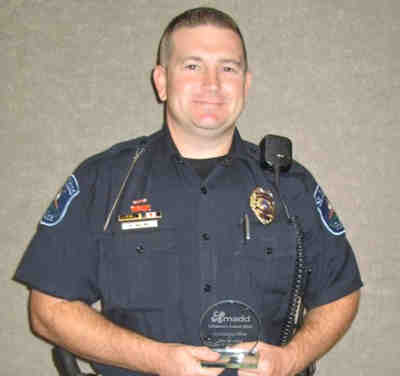

 Alexa Ruestman, a 2013 graduate of St. Johns High School has been named to the 2016-2017 Court.
 Joseph A. Schafer, 84, of St. Johns, MI died at Ashley Care Center on Saturday, October 1, 2016. Joe was born on March 26, 1932 in Fowler, MI the son of Joseph M. and Dora (Schueller) Schafer. On December 19, 1969 he married Waneta Wilson in Eagle, MI. Joe worked at General Motors in the maintence dept. He was a veteran of the US Army and was a member of the Portland V.F.W.

 Jean Ruestman announces candidacy for City Commission
 Fire Hydrant Flushing Program – Fall 2016
 Class of ’56 – 60th Reunion
 “I am excited to announce my candidacy for City Commissioner for the City of St. Johns. Through my involvement with the Mint Festival for over 10 years, the Briggs Library board for two years and local church and school committees most of my adult life, I have been committed to positive change in St. Johns. I feel that the best way for me to continue having a positive impact on our community is by seeking elected office,” said Jean Ruestman. “Commission members are the leaders elected to represent the community and to concentrate on policy issues that are responsive to citizens’ needs and wishes.”