This week’s Mystery Photo
Where is this?

Can you tell us where this is located? Drop us a line at mail@sjindy.com.
505 S. Oakland St.

Neighbor Don Zimmerman writes Don and Julie Vecasey at 505 S. Oakland St.
The previous owner was Jessie Bartholomew.
A Look Back – City Commission Meeting
by Barry Bauer

Gerald “Jerry” Irrer, on the left, was a well known, well liked, local barber. He was also an antique dealer/collector. The story I remember most about him was the time a car was driven into his shop from the street and resulted in a remodeling job.
On the right is Rex Sirrine, local banker and father of the late Bob Sirrine who owned the Osgood Funeral Home.
One thing they had in common was they were both City Commissioners at the time of this 1968 photo.
Maralyn’s Did You Know? – Purina Voluntarily Recalls Wet Dog Food
Nestlé Purina has issued a voluntary recall of select wet dog food sold in 10-oz. plastic tubs due to possible issues with the level of vitamins and minerals in the food.
This Purina dog food recall only involves the following brands with both a “Best Before” date range of June 2017 to August 2017 and production code range starting with the first four digits of 5363 to 6054.
– Beneful Prepared Meals Wet Dog Food in 10-oz. Tubs
– Beneful Chopped Blends Wet Dog Food in 10-oz. Tubs
– Pro Plan Savory Meals Wet Dog Food in 10-oz. Tubs (limited to five varieties)
According to Purina’s website the recall occurred because the company discovered through their own internal quality tests that some 10-oz. wet dog food tubs may not contain the recommended level of added vitamins and minerals.
Pet parents with product questions are urged to discontinue feeding the food to their dog and discard it. For more information on the dog recall and to receive a refund for affected products contact Purina at 1-800-877-7919.
Letters – CASA says thanks
CASA-The Voice for Clinton County’s Children appreciates all who joined us for the kick off of our 2016 Superhero Season on March 9th.
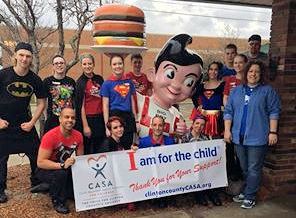
Super thank you to the St. Johns Big Boy and their staff for being wonderful hosts for a fun evening of a spaghetti buffet served by terrific Superheroes. We had a wonderful evening visiting with Big Boy patrons about CASA and appreciate all who came out for the evening.
To learn how you can be a Superhero for Children, please visit our website ClintonCountyCASA.org or contact our office at 517-599-7145.
Sincerely,
Kelly Schafer, CASA Executive Director
Maralyn’s Pet Corner – Vitamin C Deficiency in Guinea Pigs
Scurvy in Guinea Pigs
Like people, guinea pigs lack the physical ability to manufacture their own vitamin C, and require an outside source of vitamin C in the form of vegetables and fruits. If a guinea pig does not get enough of this vitamin in its diet, its body’s supply of vitamin C will disappear quickly, leaving it vulnerable to a condition called scurvy. This condition can interfere with the body’s ability to manufacture collagen — an important component of bone and tissue formation — can cause blood clotting problems, and can lead to problems of the skin and joints. Vitamin C deficiency is common in guinea pigs.
Some guinea pigs may develop a vitamin C deficiency even when they are getting enough vitamin C in their diets. This can happen if there are other illnesses or physical problems that are preventing the guinea pig from eating enough, or are interfering with the body’s ability to absorb the vitamin C properly. Vitamin C deficiency due to dietary causes can be prevented (or treated) by feeding a specially formulated guinea pig diet or by regular supplementation with vitamin C tablets.
Symptoms and Types
– Weak and lacking in energy
– Difficulty in walking due to swollen joints
– Spots or subcutaneous bleeding may be noticed just under the surface of the skin
– Small wounds may bleed excessively or not heal as rapidly as normal
– Internal bleeding may also be present, including in the muscles, the membranes around the skull, the brain, and in the intestines
– Rough hair coat
– Loss of appetite with concurrent weight loss
– Diarrhea
– Sudden death, if left untreated
Causes
Guinea pigs are prone to vitamin C deficiency as they lack the body mechanism needed for synthesis of vitamin C. This is sometimes exacerbated by a lack of vitamin C-rich food in the diet. Vitamin C deficiency can also occur due to other illnesses or physical problems that are preventing the guinea pig from eating or absorbing enough vitamin C-rich foods.
Diagnosis
You will need to provide a thorough history of your guinea pig’s health and diet leading up to the onset of symptoms. Your veterinarian can make an initial diagnosis of vitamin C deficiency by going over your guinea pig’s diet and by performing a thorough examination, looking especially for bleeding or joint problems. A blood analysis will also be conducted to determine the level of vitamin C in the blood.
Treatment
Treatment includes giving your pet guinea pig daily vitamin C supplements for 1-2 weeks, either by mouth as directed by your veterinarian or by injection at your veterinarian’s office. Administration of multivitamin tablets is not recommended as many guinea pigs develop allergic reactions to some of the other minerals that are present in the tablets.
Living and Management
Your pet guinea pig will need to be monitored carefully while it is recovering from vitamin C deficiency. Consult your veterinarian about the specialized diet you will need to prepare for your guinea pig, both to treat the condition as it is occurring and to prevent further episodes from occurring.
Some of the foods that are rich in vitamin C, and that guinea pigs tend to enjoy, are kale, tomatoes, bell peppers, spinach, broccoli, dandelion greens, cabbage, and oranges, among other foods.
Prevention
Because this is a relatively common ailment in guinea pigs, you should consider taking steps to prevent vitamin C deficiency from occurring in the first place, before it becomes an issue. Ensure that the feed you are providing to your guinea pig contains an allowance of at least ten milligrams of vitamin C per day, and if you are preparing a diet for a pregnant guinea pig, make sure to increase the allowance to about 30 milligrams of vitamin C per day.
It is important to take note that too much vitamin C in the diet can bring about its own set of problems, so care needs to be taken to rotate the types of vegetables and feed you are offering to your guinea pigs, as well as the amount of these foods your are offering.