Tom and Beth Webb kicked off the showcase of home-grown talent in the first half. This clip is from Beauty & the Beast title song.
Fiddler on the roof was the source for the skit and the featured song, “Match Maker” with Maria and Anna Biewer, and Eliana and Elyse Nurenberg; Jeff Richards accompanying.
Later Anna did the title song from The Sound of Music. Her sister Maria did “That’ll Be the Day” with John Kelly on guitar.
St. Johns this Week – an album
by Maralyn Fink
This week’s Mystery Photo
Where is this?
Can you tell us where this is located? Drop us a line at mail@sjindy.com.
505 S. Clinton Ave. – St. Johns, Michigan
The current owner is Sarah Welton Trust. Previous owners include Cora Price, David Curtis, Secretary of Veterans Affairs, and Gregory Hunt.
A Look Back – Fire Fighting Demonstration
Barry Clark Bauer
Fire fighting procedures were demonstrated in 1968 at the Sealed Power Corp. (now Mahle) plant located on W. State St. Sealed Power Corp. employees at St. Johns got an opportunity Friday afternoon to receive a little training in fire fighting with different types of extinguishers.
Phil Albers, chief fire inspector for the City of Lansing (pointing in foreground), directs one worker to the best spot in a pile of blazing scrap lumber.
Benny and Jessie’s Pet Info – Is Your Perfect Lawn Killing Your Pet?
Pesticides accounted for more than 32 percent of lawn and garden supply sales in 2014. As Americans strive for the perfect green lawn, they are using a wide array of chemicals to achieve their goals. Unfortunately, this has a detrimental effect on the environment and the animals who live in it.
But “animals” are not limited to wildlife. In fact, many pets are susceptible to falling ill as a result of exposure to lawn chemicals. Pet owners also happen to carry many pesticide chemicals with them, on clothes and shoes, as a result of regular exposure. Research has revealed that after pesticides are applied outdoors on lawns, they often make their way indoors and onto surfaces.
How much exposure do cats and dogs experience when they are close to the ground on a regular basis?
A study published in July 2013 looked at urine samples of dogs from 25 households to determine whether chemicals entered their systems after they were applied to lawns. Chemicals were detected in the urine of dogs from 19 of the 25 households examined following pesticide application. However, it’s worth noting that pets from 14 of the 25 households had chemicals in their urine prior to application.
“Lawn chemicals can vary widely in their safe use around pets,” said Dr. Tina Wismer, medical director of the ASPCA’s Animal Poison Control Center. “Some items, such as fertilizers, may only cause mild stomach upset, while others, such as insecticides, can be deadly.”
Wismer goes on to state that insecticides and snail bait tend to be the most poisonous to pets. Luckily, safer alternatives, such as pyrethrins, have been developed as of late.
“There has been a greater awareness [from insecticide developers] that people have pets, and the labeling reflects that,” Wismer continued. “The products used today are much safer around pets than the ones we used 20 years ago.”
Some experts believe that it isn’t just insecticides that pose the biggest threat—herbicides and fertilizers can be just as dangerous. Disolfuton, for example, is a pesticide commonly used to protect roses. It’s extremely toxic to animals, causing everything from diarrhea to seizures.
“With more pressure from pet owners, the large lawn care companies may be looking for ways to accommodate safety concerns,” said Dr. Avi Adulami of the Smiling Pets Veterinary Clinic in Florida.
However, the key to improving safety may not just lie in the hands of fertilizer and pesticide manufacturers. There is plenty that pet owners can do to maintain their lush, green lawns while keeping their furry friends safe.
“Most lawns need very few supplemental chemicals beyond nutrients applied in fertilizer products,” said Dr. Frank Rossi of Cornell University’s School of Integrative Plant Science.
“When fertilizing your lawn, be sure to water the product off the leaves after application. Then, it is safe for pets to enter.”
The dryness of pesticides on plants after application may also play a role in how they impact animals that come into contact with them.
“Pesticide use is different if it’s allowed to stay on foliage,” Rossi continued. “This is only an issue with some weed control products that have to dry on the leaves. Most other lawn pesticides are watered in like fertilizer and once watered in will not pose a risk to pets. If a product must dry on the leaf, avoid the area with pets until it has dried.”
Rossi goes on to state that as pesticide and insecticide manufacturers move to make these chemicals safer for humans, they are inevitably becoming safer for animals, too.
Of course, it helps for pet owners to be savvy about what they buy for their lawns. Warning labels on lawn care items may list specific hazards to animals, as well as precautionary statements. All of these warnings should be taken into consideration before using a product throughout a yard.
Maralyn’s Did You Know? – Radagast recalls four lots of Frozen Rad Cat Raw Diet
Radagast Pet Food, Inc., based in Portland, Oregon, is voluntarily recalling four lots of frozen Rad Cat Raw Diet products, sold in 8oz., 16oz., and 24oz. tubs, and free 1oz sample cups, due to the potential to be contaminated with Salmonella and/or Listeria monocytogenes.
According to a company release, the recall was initiated after an FDA third party contracted lab found two lots of Grass-Fed Beef tested positive for Listeria monocytogenes, one lot of Free-range Chicken tested positive for Listeria monocytogenes, and one lot of Free-range Turkey tested positive for Salmonella and Listeria monocytogenes.
As a precautionary measure, the company is voluntarily recalling three products produced in these four lots.
All affected lot codes 62384, 62361, 62416, and 62372 and Best By dates are located on the lid of all products packaged in tubs, and on the bottom of the sample cups.
The following recalled products were distributed in western Canada and all U.S. States except in Hawaii and Mississippi.
Please do not return any of these recalled products to the retailer and dispose in a secure garbage receptacle.
For refund claims, fill out all sections of the consumer claims form provided by the manufacturer, found on www.RadFood.com and return this form only to the retailer where you purchased the product for a refund. Consumers may call Radagast Pet Food, Inc. at 503-736-4649 for assistance.
Letters – Beware of Fireworks
Dear Animal Friends:
As we approach the big 4th of July weekend, please keep your pets in mind. A lot of celebrations are going on, so please take your pet into consideration that party foods, etc are not good for their tummies.
But the big thing is the fireworks alone. Please leave your pets at home inside for the fireworks as this can cause severe damage to their hearing and is very frightening to the animal.
Your pets cannot speak for themselves to tell you that they would rather not be there and would prefer to be in a quiet setting so that you and your family can enjoy the fireworks.
Your furry friends and I thank you for considering this.
Can you tell us where this is located? Drop us a line at mail@sjindy.com.
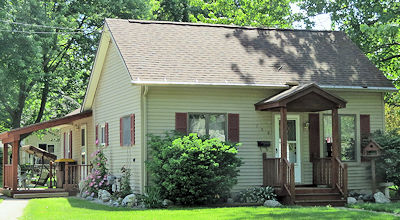
404 E. State St. – St. Johns, Michigan
Pat Snyder writes that this is 404 E. State St., St. Johns.
The current owners are Richard and Jennifer Gonzales. Previous owners include Diane White, Terry andNancy Sangl, James andLynn Porter, and Timothy Smith.
A Look Back – Calling All Blood Donors
Barry Clark Bauer
That’s exactly what these volunteer workers did Tuesday night in an effort to bring a good turnout for Wednesday afternoon’s semi-annual visit of the Red Cross Bloodmobile to St. Johns. Mrs. John “Corky” Paradise (left) was in charge of the telethon back in 1968 from the General Telephone Co. offices and was assisted by Mrs. Jerry Stone, Mrs. Dick Devereaux and Mrs. Gerald Henning.
The bloodmobile was to be set up from noon to 6 p.m. Wednesday at the St. Johns Municipal Building located on E. Walker St.
Benny and Jessie’s Pet Info – Is Bread Helpful for a Dog’s Digestion?
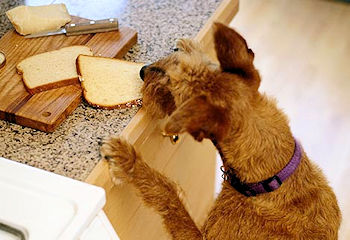
Have you heard the “old wives tale” that feeding dogs bread can make their upset stomachs better? Well, this is one instance when the “old wives” know what they’re talking about… at least under certain circumstances.
Here are three situations when feeding bread to dogs can be helpful.
1. Your Dog Has Eaten Something with Sharp Points or Edges
Dogs like to chew on bones, but sometimes they go overboard and end up swallowing sharp shards. Dogs have also been known to eat needles, nails, skewers—you name it and a dog has probably tried to eat it. Sharp points and edges can do a lot of damage as they travel through the gastrointestinal (GI) tract. In the most severe cases, they can perforate the esophagus, stomach, or intestines, allowing the contents of the GI tract to spill into the surrounding body part. If the abdominal cavity becomes contaminated in this way, a potentially fatal condition called peritonitis will develop.
When dogs eat a large meal of bread after ingesting something sharp, the bread can encase the foreign material, allowing it to pass more safely through the GI tract. Bread can also help protect the esophagus from sharp bits if a dog eventually vomits or is given medicine to make him do so. Some people recommend white bread, others whole grain. I don’t think it matters. Whatever you have on hand will do.
2. Your Dog Has Eaten a Long Piece of String, Yarn, Thread, or Something Similar
Long pieces of string, yarn, thread, etc., go by the name “linear foreign bodies” in vet-speak. Often, one end of a linear foreign body will becoming anchored somewhere along the intestinal tract. When this happens, the peristaltic action of the intestines cause them to move their way up the string. The intestines become pleated like an accordion, which prevents them from working normally. Left untreated, linear foreign bodies can also cut through the intestinal wall, resulting in peritonitis.
A meal of bread after ingesting a linear foreign body can help the material wad up into a clump and pass through the GI tract.
3. Your Dog Has a Mild, Upset Tummy
I know I’ve experienced this. Sometimes I skip a meal, or maybe I eat something that doesn’t agree with me, but whatever the cause, my stomach reacts poorly and feels “acidy.” Eating a piece of bread can help. What’s going on? I suspect the bread acts like a sponge and traps whatever is irritating my stomach, allowing it to move further down the GI tract without causing more trouble. The same scenario appears to occur with dogs. If you think your dog’s stomach is just a bit off, feeding some bread may help.
Of course, bread is not a cure-all. If your dog vomits more than a couple of times, has profuse diarrhea, is in pain, or is very lethargic, skip the bread and head straight to the veterinary clinic.
Maralyn’s Pet Corner – Common Emergencies for Senior Cats
It can be quite frightening to see your cat suffering, especially if you are unsure whether the situation should be considered an emergency. When in doubt, always contact your veterinarian or the nearest animal hospital. But to hopefully better prepare you, here are some of the most common cat emergencies found in emergency veterinary hospitals around the country.
Choking, Coughing, And/Or Difficulty Breathing
Choking can be a serious problem, even if the symptoms resolve within seconds. Lack of proper oxygenation or the build-up of fluid within the lungs can be a dangerous consequence of choking.
Any difficulty breathing should also be considered a serious problem, requiring immediate evaluation by a veterinarian. Often radiographs are necessary to evaluate the lungs and airways.
Coughing is a vague symptom of several possibilities, including viruses, bacteria, fungal pneumonia, allergic bronchitis, or even congenital heart disease. Any compromise in your pet’s respiratory ability should be evaluated by a veterinarian as soon as possible.
Vomiting and Diarrhea
Vomiting and/or diarrhea can be caused by many different things, including a sudden change in diet parasites, dietary indiscretion, infectious diseases, toxins, metabolic diseases, cancer, and more. Some cases of vomiting or diarrhea may be mild and self-limiting. However, persistent or severe vomiting and diarrhea can be problematic. Your cat can rapidly become dehydrated with these symptoms. Depending on the underlying cause, symptoms can drastically worsen in a matter of hours.
Trauma
Trauma may the result of a being hit by a car, being attacked by another animal, falling from an elevated height, or any other type of accident. Trauma may result in blood loss, shock, broken bones, lacerations and other external wounds, internal bleeding, internal injuries, and pain. It may become life-threatening for your cat. If your cat experiences any type of trauma, he should be examined by your veterinarian, even if he seems unharmed initially. Complications from trauma are not uncommon and early intervention will give your cat the best chance of a successful recovery.
Toxin Ingestion
There are many substances that can be toxic to cats. Among the most dangerous are the plants known as true lilies. Antifreeze is another potential toxin that can be deadly. Cleaning chemicals, medications (both prescription and over-the-counter), garden products (fertilizers, plants, bulbs), chocolate, rodenticides, and insecticides are other potential toxins. If in doubt about whether a substance is toxic, contact your veterinarian for advice.
Foreign Body Ingestion
Cats are curious by nature, and even seniors can be playful. Any foreign body that is ingested can become problematic, either causing gastrointestinal problems such as intestinal obstructions or perforations, or getting stuck in the throat or trachea, causing choking and possibly suffocation. Linear foreign bodies are a particularly common problem in cats. These may include string, rope, ribbon, fishing wire, and other similar items.
Allergic Reactions
Cats can develop allergic reactions. Causes of these reactions range from vaccine sensitivity to insect bites. An anaphylactic reaction is the most serious form of allergic reaction. Symptoms of anaphylaxis include vomiting, diarrhea, lethargy, difficulty breathing, and collapse. Cats may also suffer allergic reactions that include facial swelling, hives and itchiness. Care is necessary if you suspect an allergic reaction in your pet.
Pain
Pain can occur in pets for several reasons and can be displayed in a variety of ways. Pacing, agitation, restlessness, panting, rapid heart rate, or even aggression, are all symptoms of possible pain. Arthritis, dental disease, and trauma are some of the most common causes of pain. If you believe your cat is in pain, seek veterinary help.
Seizures
Seizures are episodes of abnormal electrical activity within the brain. They can be triggered by intra-cranial problems (such as epilepsy, brain tumors, or brain swelling) or extra-cranial problems (such as low blood sugar, electrolyte disturbances, etc). Any seizure can be life threatening. Seizures can occur singly or in clusters, and can occur at any time and in any frequency. If your pet has a seizure, seek veterinary care as soon as possible.
Difficulty Urinating
Straining to urinate is a symptom of more than just a urinary tract infection. Many pets will strain to urinate if they have crystals or stones in their bladder. Inflammation, blood clots, cancer, or even stress alone can all cause difficulty urinating. If your cat is straining and is unable to pass any urine, it is a life threatening emergency that needs to be addressed by a veterinarian immediately.
by Kelly L. Schafer, M.S., Executive Director of CASA
Recently when talking with a community member about the work of CASA-The Voice for Clinton County’s Children encouragement was given to share more about the hard stuff and difficult situations Clinton County children we serve have experienced.
I share some of our CASA (Court Appointed Special Advocates) kiddos’ experiences with caution only because we don’t want to think it, we don’t want to go there.
We don’t want to think about a toddler being the caregiver for a younger sibling; a pre-teen being a caregiver for a parent; little ones who disclose sexual abuse and maybe are not believed; little ones in a home with no available food; kiddos who struggle with big emotions; and little ones who have been home during a drug raid.
Right now it is easier to think about kiddos getting ready for summer vacations, going to the beach, having sleep overs, camping–anything but the unsafe and scary situations described.
Wrapping our brains around situations no child should experience can be difficult–the situations described are a very brief snapshot of what has happened to Clinton County children.
There are bright spots in these difficult situations–9 Clinton County CASA Advocates who support and advocate for children who are in foster care. Their work includes play dough, board games, coloring, helping with homework, playing outside, and navigating life skills. Through the interactions with the children, CASA Advocates present information to the court to ensure children’s voices are heard throughout their experience in the foster care system.
Consider how you can be a bright spot and provide a voice to Clinton County children.
– Become a CASA Advocate (kids are waiting!)
– Participate in our events
– Make a financial gift to our program
– Educate yourself and others
– Stay informed through our Facebook page
– Help to spread the word
– EveryONE can do something
If you would like more information about CASA Advocacy in Clinton County, we would be happy to speak with you. Our work is not easy–but it is always worth it.
Can you tell us where this is located? Drop us a line at mail@sjindy.com.
306 N. Swegles St.
The current owner is Benjamin Bradley. Previous owners include Neal McDiarmid, David Seibert, Gregory Poxson, Roger Howes, Lisa Baxter, Valdemar and Karla Garcia, and Kurt and Wendy Schneider. In 1950 Leonard W Gordon lived here.
A Look Back – New VFW Commander
Barry Clark Bauer
Norman Ketchum has been elected commander of the St. Johns Veterans of Foreign Wars Post 4113 and will take over the duties July 1, 1968. He succeeds Don Devereaux as commander.
Other new officers include Lawrence Peterson as senior vice commander, Ed Schmitt as junior vice commander, John Flak as quartermaster, and Tony Rositas as chaplain.
Benny and Jessie’s Pet Info – Trendy Dog Breeds Suffer for Popularity
A recently published study points to a disturbing trend in dog ownership.
Researchers analyzed Australian National Kennel Council (ANKC) registration statistics from 1986 to 2013 for 181 breeds. They found that people are becoming increasingly likely to purchase smaller, brachycephalic dogs. In other words, breeds like Pugs and Bulldogs that have a short muzzle, wide head, and prominent eyes.
Why is this a concern? Brachycephalic dogs have more than their fair share of health problems, chief among them brachycephalic airway syndrome. By selecting for this unnatural head shape, we’ve created some potentially serious anatomic abnormalities, including:
– narrowed nasal openings
– a thin trachea (windpipe)
– long soft palate
– outpouchings of tissue into the larynx (voice box)
These characteristics can combine to make breathing very difficult for these poor dogs. Typical symptoms include noisy breathing, working harder than normal to breathe, an inability to exercise normally, a tendency to overheat, and gagging. In severe cases, dogs may collapse due to low blood oxygen levels. Also, small brachycephalic dogs often cannot give birth naturally. Their pups have to be delivered by C-section, the timing of which may not ideal for the pups’ welfare.
Other brachycephalic-predisposed conditions include mast cell tumours, chemoreceptor system neoplasms, hydrocephalus and multiple digestive, ocular and dermatological disorders,” according to the Australian researchers. Most disturbingly, the authors report that “life expectancy is estimated 4 years lower in highly brachycephalic breeds than those not (8.6 years vs 12.7 years).
And this trend toward smaller brachycephalic breeds is not limited to Australia. As the paper states:
The brachycephaly boom seems to be worldwide. In agreement with our results, brachycephalic breeds such as English Bulldogs, French Bulldogs, Boxers, and Pugs have been becoming increasingly popular in the United Kingdom (UK) over recent years, and the numbers of Bulldogs and French bulldogs registered with the American Kennel Club have increased by 69% and 476%, respectively, in the past decade.
Why are we seeing a “brachycephaly boom”? The authors theorize that it has to do with a combination of three factors:
– The increasing popularity of smaller homes, which could limit the appeal of large dogs.
– The round head, prominent eyes, and small nose of brachycephalic dogs are infant-like and stimulate caregiving tendencies in adults, even across species.
– Pure fad
Are you thinking of getting a small, brachycephalic dog? I’m not (necessarily) trying to change your mind, just be aware of the consequences of your decision.
Letters – CASA says thanks
Pictured (left to right) Peggy P., Tri-County Electric People Fund; Liz N., CASA Volunteer Advocate and Board Member; and Kelly S., CASA Executive Director.
Thank you to Tri-County Electric People Fund for the continued generous support of CASA Advocacy since the founding of our program! We had the pleasure of meeting with Peggy P. and Tanya S. with Tri-County Electric People Fund to share more about the impact of their support; thank you for your time.
We appreciate the employees and customers of Tri-County Electric who make this support possible. Thank you.
Kelly L. Schafer, M.S., Executive Director
Maralyn’s Pet Corner – Is There a Way to Stop Cats From Clawing Furniture?
Clawing/scratching is one of those undesirable behaviors that can get a cat in trouble, especially when the item the cat decides to shred is the owner’s expensive couch or carpeting. Often, this behavior results in a frustrated owner and the cat ends up being tossed outdoors or even surrendered to the local shelter. However, that doesn’t need to be the case.
Cat owners do need to realize that, even though the behavior may be irritating to us, it’s a perfectly normal behavior from the cat’s perspective. Cats claw for many different reasons. They mark their territory that way, using both visual and chemical messages. They also scratch to sharpen their claws, helping to keep those claws in tip-top condition. Clawing is used a means of stretching muscles to keep them healthy and supple as well.
Scratching is a basic need for all cats. Your cat is not clawing your furniture out of spite or vindictiveness. He (or she, as the case may be) is clawing because he’s a cat. Fortunately, there are some things that you can do to discourage your cat from using your furniture as a scratching post. Here are some tips.
Provide an appropriate scratching surface for your cat. Scratching posts are fine. Cat trees work well also. Some people even wrap table legs in sisal or other fabric for their cat’s use.
There should be both vertical and horizontal scratching surfaces. Some cats prefer one over the other; other cats will use both.
The scratching post or cat tree should be sturdy enough that it won’t tip over while your cat is using it. In some cases, it may be necessary to secure the post to a solid surface, like the wall.
Encourage your cat to use the scratching area by making it as attractive as possible. Tempt your cat by using a favorite toy on or near the scratching surface. If your cat responds to catnip, rub some on the surface. Or place some favorite food or cat treats on or near the scratching area. Do not try to “teach” your cat to use the surface by placing his feet on it though.
If your cat has already chosen a scratching location that is unacceptable to you, make that area as unattractive as you can. Placing a plastic runner over the surface usually deters a cat from scratching a given surface. At the same time, place an acceptable scratching surface (e.g., a scratching post or cat tree) near the location and make this surface as attractive as you are able.
Once your cat is regularly using the alternative scratching surface, you can slowly move it (a short distance at a time) to a more acceptable location, if desired. You can also remove the runner or whatever deterrent was used to make the original area unattractive to your cat.
Households with more than one cat will require a separate scratching area for each cat. Scratching surfaces are an essential basic need for the feline and your cat may not want to share.
There may be additional help in the future in the form of a pheromone product that simulates the pheromone released from glands in your cat’s feet (called the plantar pad glands) during the clawing process. These pheromones are used as a chemical marker and serve as a means for your cat to tell the world that your home is his territory. A recent study funded by a grant from the Winn Feline Foundation looked at a synthetic version of this pheromone (named the feline interdigital semiochemical, or FIS) and found that “the presence of FIS can influence and prime the location for this important feline behavior (scratching). It also gives specific, long lasting information to other cats. Using the semiochemical approach can modify the choice of areas selected spontaneously by cats. In the future, it could be used as a preventative measure for a cat arriving at a new home or control or change inappropriate scratching behavior.”
Random Notes – SJHS Commencement 2016 is memorable
by Rhonda Dedyne
Honestly, I don’t recall much about my graduation day at St. Johns High School 46 years ago. There’s a box somewhere in the attic where I could probably find photos and a program from that 1970 commencement ceremony – which, by the way, was the first class to graduate from the “new” high school that replaced Rodney B. Wilson for the 1969-70 school year.
As vague as those graduation memories are in my somewhat “senior” brain, I know for a fact I will never forget last week’s ceremony for the Class of 2016. There were teary eyes and wide smiles on the faces of both myself and my oldest grandchild, Gwendolyn Gaffney, when I had the honor of handing her a diploma.
It was a special, once-in-a-lifetime moment. Unlike a printed program or photographs that will be packed away and eventually forgotten, the joy and happiness on her face in successfully completing a part of life’s journey is etched in my mind. It’s the sort of mental image that lifts our hearts during times of sadness, making us smile through the tears and hardships that are part of our human existence.
In a way, Gwen serves as a representative for our nine other grandchildren whose diplomas in the years ahead will be delivered by school representatives here at SJHS and at other districts where they live. My years on the Board of Education are numbered – I won’t be able to take advantage of this school board “perk” ever again.
Looking at in another way, perhaps I served as a representative for the many grandparents who were cheering and waving as grandsons or granddaughters crossed the stage that evening on the SJHS football field. They couldn’t hand their special graduates diplomas. As school board members we are surrogates for those family members and friends. Delivering diplomas into the hands of our young people is absolutely the best moment for us.
Congratulations to each and every member of the Class of 2016 – and hugs to my Gwenie Doo. She’s gonna love that I shared that nickname with everyone.
– courtesy of Mark Horak
This week’s Mystery Photo
Where is this?
Can you tell us where this is located? Drop us a line at mail@sjindy.com.
708 Garfield St. – St. Johns, Michigan
The current owners are Leo and Frances Weber. Previous owners include Eleanor Brewer, Edward Teachout, Roy Ormsby, and Carol Sitowski.
A Look Back – 1968 Soap Box Derby
by Barry Bauer
This group of kids and Soap Box Derby cars lined up in front of the old Clinton County Courthouse are waiting their turn to make a run down Clinton Ave.
Noticeable in the photo are some of the cars in the rear that were propped up off the pavement. I don’t know if that was to prevent flat spots on the tires in hot weather or not.
Benny and Jessie’s Pet Info – Pesky Summertime Pests
Summer is here, and with it comes fun in the sun, camping and hiking, and trips to the lake side. But along with this season of fun and relaxation comes the usual summertime pests. Fleas, ticks, and mosquitoes are all visual reminders of the itchy woes we and our pets have to deal with, but there are also the unseen pests. Waterborne parasites and bacterial infections, to mention just two, are also typical summertime plagues.
While we don’t want to get your head spinning from worrying too much about all the things there are to worry about, we do want you to know what you and your pets are up against, and what you might be able to do to mitigate any ill effects. As G.I Joe would say: “Knowing is half the battle.”
Fleas
These pests are nearly impossible to avoid for an entire season. Even with shampoos, collars, powders and sprays, your pet may still end up with fleas. The flea life cycle includes the adult flea, eggs, larva and pupa. The adult fleas are responsible for the biting that leads to itching, but cannot survive long if they are not on the pet, and once they lay their eggs they fall off the pet. Fleas also lay their eggs in shady areas outside and around the house. Most owners first notice frequent and severe itching and scratching, hair loss, and scabs on their pet. Many times the hind end is affected more than the front of the body or the head. Other side effects include anemia, tapeworm infection (a parasite which finds an intermediate host in the flea), pruritis (intense itching with inflamed skin), and hypersensitivity. There is also plague, and in cats, Rickettsia felis, and Bartonella henselae. The best way to check for fleas is with a flea comb. Frequent bathing and combing are essential components of any flea treatment program. To learn more about some of the natural methods for controllling fleas, see our article here.
Ticks
A lovely day out in the woods, communing with nature, breathing fresh air. These are the joys of summer. Unfortunately, ticks like these spots, too, and they don’t mind hanging around to wait for warm blooded travelers like you and your pet to hitch a ride on. Ticks have a hard-backed shield that can be felt as small bumps during regular petting. They are also easily visible when the fur is parted. Side effects include blood loss anemia, hypersensitivity, pruritis, and damage to the lymphatic, immune, and nervous systems. Some of the more serious diseases that ticks can transmit are the Rocky Mountain spotted fever, Lyme disease, ehrlichiosis, and babesiosis. If you will be spending time in grassy or wooded areas with your pet, be sure to do a tick inspection daily so that the tick can be removed before damage can be done. If you don’t know how to remove a tick the proper way, make sure to become familiar with the proper technique before doing it. You don’t want to end up with a worse situation because of improper removal. There are a few natural methods for avoiding ticks. Read more about them here.
Mosquitoes
Even your indoor pets are at risk for some of the miseries brought on by mosquitoes, since mosquitoes can still can get inside on occasion and can bite through screens on windows, where cats tend to rest. Of course, mosquitoes cause itchy bumps, and that is painful enough, but there are also some serious and life-threatening diseases to be aware of. Heartworm, a roundworm that can infect both cats and dogs, is a silent killer that can be easily treated if caught in time. Two mosquito-borne diseases that affect both humans and domestic animals are the Saint Louis Encephalitis (SLE), which attacks the brain, and the West Nile Virus (WNV).
Tapeworms (Cestodiasis)
These little buggers cause itching in a most unfortunate spot. So if you notice that your dog or cat is dragging its hind end across the floor, or licking its anus more than usual, you may have a case of tapeworms. Tapeworm species can include Taenia, Dipylidium Caninum, Echinococcus, and Mesocestoides. Pieces of the worm may or may not be visible in the feces, so if you suspect an infestation of this parasite, the best you can do is take your pet to the veterinarian to have a fecal examination done. Treatment to destroy tapeworms is critical to avoid transmission to humans (typically children) and to avert damage to your pet’s body. Tapeworms are usually picked up through fleas, when an animal ingests an infected flea, and when animals ingest smaller wild animals that are infected, such as rabbits, birds or rodents.
Botfly
Also called the Cuterebra, the botfly hangs out in grass, latching onto warm blooded animals that are passing through. Symptoms of botfly infection include seizures, aggression, blindness, and warbles (or lumps) in the skin where the botfly has taken up residence. In cats, the cuterebra larva typically travels to the brain.
Sarcoptes Scabiei Mite
Most prevalent in the summer months, the condition caused by this mite, also referred to as scabies or mange, is more of a nuisance than a danger. Of course, any condition that results in open wounds is dangerous because it opens the body to bacterial invasion. The most common risk of exposure comes from contact with other animals and outdoor activities. Treatment is the same as treating for fleas, but more aggressive, with quarantining, and thorough baths.
Aquatic and Fungal Parasites
At some point in the summer, it gets too hot to do anything but find a body of water to cool the body in. While we would never dissuade you from doing that, we do want you to be an informed swimmer. One type of waterborne parasite, the Heterobilharzia americanum, a flatworm, uses water snails as their intermediate hosts until they are big enough to go out in search of a larger, warmer blooded host. Symptoms can range from relatively mild, like diarrhea and itching, to severe organ and intestinal damage. This is most common in southern waters, and is most likely to affect sporting dogs that fetch game in wet and wooded areas, but it can infect anyone who swims in waters that are contaminated with this parasite. Another type of parasitic bacteria that is picked up in wet, subtropical areas is the Leptospira interrogans, a corkscrew shaped bacteria that burrows into the skin and spreads through the bloodstream.
On the other side of the country, where the climate is drier, the Coccidioides immitis is the culprit for a host of nasty conditions. Fungal spores that behave like parasites, they are spread when the dirt they live in is disturbed by rain or digging, and the wind picks them up to disperse them. They are then inhaled or ingested. Diseases that result from this infection include San Joaquin Valley Fever, California Fever, cocci, and desert fever. And last, but not even close to least, is the Aspergillus mold, an opportunistic mold that grows in grass clippings and dust. Like the cocci fungus, it also enters through the nasal passages.
Hopefully, this has not scared you into another “stay-cation” this summer. We wouldn’t want you and your pets to stay cooped up for fear of what is out there. With some vigilance and planning, you will find the end of summer coming much too soon again, and we will be here, to help you prepare for the fun of the fall season.
Letters – Museum thanks photo donors
The Paine-Gillam-Scott Museum’s recent request for early farm related photos resulted in an overwhelming response from all parts of Clinton County to the delight of the entire volunteer staff. We wish to heartily thank all the wonderful people who sent in those photos that helped make our current exhibit a fascinating visual experience.
The Museum is located on the west side and just across the street from the St. Johns Courthouse. We are open on Sundays from 1 to 4 PM and Wednesdays from 2 to 6:30 PM. Bring the family and enjoy this great exhibit on the history of Clinton County farming. We also have many agriculture related artifacts in the Carriage House behind the Museum, some made in Clinton County.
Maralyn’s Pet Corner – Zika Virus – What We Know and What We Don’t
Zika is all over the news these days. While evidence that the virus is linked to severe birth defects in some babies is understandably alarming, getting an accurate picture of all the virus’s effects is important.
Zika in People
Zika virus is transmitted primarily through Aedes aegypti mosquitos. A mosquito bites a person carrying the Zika virus (who may or may not have symptoms) and when it subsequently bites someone else, passes the virus on to this person. Evidence is mounting that Zika can also be transmitted through sexual intercourse. The virus has been found in saliva, but whether it can be passed through contact like kissing is not known.
Most people who are infected with Zika do not become sick. The 1 in 5 people with Zika who do fall ill generally report symptoms like headaches, light sensitivity, joint pain, rashes, and eye inflammation.
But, strong evidence now exists linking Zika virus infection in pregnant women and the birth of babies with microcephaly (abnormally small heads and brain defects) and eye abnormalities. The Centers for Disease Control (CDC) has found the virus in the brains of two babies from Brazil that died of microcephaly.
People in the United States have been diagnosed with Zika, but all of them have recently travelled overseas to endemic areas. In the western and northern parts of the U.S., large outbreaks of Zika are extremely unlikely since the climate is too cold and dry and Aedes aegypti mosquitos are not prevalent. People living in the southeastern part of the U.S. are most at risk for a Zika outbreak.
Treatment for Zika virus is limited to symptomatic care. There is no form of direct treatment for babies born with birth defects resulting from Zika virus infection. A vaccine is not available. The best forms of prevention in endemic areas are aggressive measures to prevent mosquito bites (keeping windows closed or screened, using nets over sleeping areas, wearing long pants and long-sleeved shirts, using mosquito repellant, environmental control measures, etc.)
Talk to your doctor if you are planning to travel to a Zika-endemic part of the world and consider postponing your trip if you will or might be pregnant at the time.
Zika in Pets and Other Animals
We know very little about the possible effects of Zika in pets or livestock. The virus causes only relatively mild illness in a fraction of people bitten by an infected mosquito, and it seems likely that a similar outcome would be seen in animals.
At this point, mosquito control measures and the use of repellants labeled for animals are the best preventative measures available should you have to travel to a Zika endemic area with your pet or if natural transmission through mosquito bites does become a problem locally in the future.
To my knowledge, there have been no reports of illness or birth defects related to Zika virus infection in animals. That does not necessarily mean that it does not occur, however. It simply means that the research has not been done.
Interestingly, a virus that is related to Zika (Bovine Viral Diarrhea Virus, or BVDV) is known to cause birth defects in calves, including microcephaly and eye deformities, when their mothers are infected during pregnancy.
Now and Then – Beyond the Lilacs
by Jean Martin
It’s that time of year again on Mackinac Island, the time when that special blend of lilacs, fudge and horse manure tell us that it is Lilac Time.
But off Main Street, away from the hordes of tourists and school groups, there is another Mackinac Island. Up in the middle of the Island we can find the newly-restored Ft. Holmes that opened last fall. The old standards, Sugarloaf and Arch Rock, still stand and wait for those who have the gumption to look for more than fudge and trinkets.
Don’t want to climb up that first daunting hill? We recommend that you take a taxi. Have them take you to Fort Michilimacinac or the cemeteries. You will have a nice carriage ride; and half the work, the really difficult half, is done for you. You could even choose to walk back to town along the East Bluff and enjoy some spectacular views that those who are stuck on the main drag would never dream existed.
Can you tell us where this is located? Drop us a line at mail@sjindy.com.
803 N. Oakland St. – St. Johns, Michigan
The current owners are James and Linda Vanamburg. Previous owners include Margaret (Anderson) Weatherwax. Also living here in the past were Danny Boncha, Federal-Mogul general foreman, Gail Goetze, Federal-Mogul hourly employee, and Harvey Weatherwax, one time City Manager.
A Look Back – Memorial Day Service in 1968
Barry Clark Bauer
Memorial Day festivities in St. Johns this year will again center on this monument at Mount Rest Cemetery where the Rev Gerald Churchill will give the Memorial Day address.
George Smith (left), commander of Edwin T. Stiles Post 153 American Legion; Norman Ketchum, commander of the Veterans Honor Guard; and Don Devereaux, commander of Post 4113, VFW, offer their salute much as they will Thursday.
The Memorial Day Parade will form at the railroad depot at 9:30 a.m. and will move out at 10 a.m. following a line of march along Clinton Avenue, State Street, US-27 and Steel Street to the cemetery.
Maralyn’s Did You Know? – Blue Buffalo Dog Food Recall
Blue Buffalo Company of Wilton, Connecticut, has confirmed that it is voluntarily recalling a limited batch of its Life Protection Formula Dog Food product due to the presence of excessive moisture and mold.
What’s Being Recalled?
The company is voluntarily recalling a single batch of its Blue Buffalo Life Protection Formula Fish and Sweet Potato Recipe for Dogs with the following batch information:
Blue Buffalo Life Protection Formula Fish and Sweet Potato Recipe
30 pound bag
Best by date: April 11, 2017
Batch data: AH 2A 12:08-14:00
What Caused the Recall?
According to a company representative, the voluntary recall was initiated due the discovery of excessive moisture and mold.
The recall is limited to a single batch that was manufactured during one 2 hour period.
What to Do?
Customers are invited to return affected product to the place of purchase for a full refund.
Those with questions may call Blue Buffalo Customer Service at 855-201-4331 between 8 am and 5 pm ET, Monday through Friday.
Letters – Everyone can be a Bright Spot
Recently when talking with a community member encouragement was given to share more about the hard stuff and difficult situations Clinton County children we serve have experienced.
I share some of our CASA kiddos’ experiences with caution only because we don’t want to think it, we don’t want to go there. We don’t want to think about a toddler being the caregiver for a younger sibling; a pre-teen being a caregiver for a parent; little ones who disclose sexual abuse and maybe are not believed; little ones in a home with no available food; kiddos who struggle with big emotions; and little ones who have been home during a drug raid.
Right now it is easier to think about kiddos getting ready for summer vacations, going to the beach, having sleep overs, camping–anything but the unsafe and scary situations described.
Wrapping our brains around situations no child should experience can be difficult–the situations described are a very brief snapshot of what has happened to Clinton County children.
There are bright spots in these difficult situations–9 Clinton County CASA Advocates who support and advocate for children. Their work includes play dough, board games, coloring, helping with homework, playing outside, and navigating life skills. Through the interactions with the children, CASA Advocates present information to the court to ensure children’s voices are heard throughout their experience in the foster care system.
Consider how YOU can be a bright spot.
– Become a CASA Advocate (kids are waiting!)
– Participate in our events
– Make a financial gift to our program
– Educate yourself and others
– Stay informed through our Facebook page
– Help to spread the word
– Everyone can do something
If you would like more information about CASA Advocacy in Clinton County, we would be happy to speak with you. clintoncountycasa@gmail.com. Our work is not easy–but it is always worth it.
Yours in Service,
Kelly Schafer, CASA Executive Director
Maralyn’s Pet Corner – All Dogs Are at Risk in the Hot Months
Because dogs don’t have sweat glands the way humans do, they are limited to panting as their major cooling effort. (They do have some sweat glands in their paws, though they are not the principal mechanism for cooling.) This, coupled with the insulation effect of their fur, means they are prime candidates for heat exhaustion, particularly if they haven’t been building up to longer walks—which is why the weekend warriors are the ones who so frequently run into trouble.
Everyone should know the signs of heat exhaustion and impending heat stroke in dogs: sluggishness, very heavy panting, bright red gums, hypersalivation (which can progress to the opposite: dry tacky gums), vomiting or diarrhea, and collapse. In the later stages, death can occur rapidly if not treated in an ER.
Certain dogs are especially prone to heat stroke: overweight pets, brachycephalic (flat faced) breeds like pugs and bulldogs, and dogs with dark coats. If you have any suspicion that your dog is showing early signs of heat exhaustion, stop, spray your pet with cool water (NOT ice!), and call an ER for guidance.
Of course, the best solution is to prevent it from happening in the first place by being aware of the risks. Avoid walks during the hottest periods of the day, acclimate your pet to longer walks, and make sure you take plenty of water breaks. And for goodness sake, don’t leave your pet in the car on a hot day. But you knew that one, right?
As we head into the hot months, remember with a little planning there’s no reason you can’t enjoy the great outdoors. Have fun and stay safe.
St. Johns Depot is hosting a celebration of our men and women who have served or are currently serving in the armed forces. This is their Fourth Year.
I attended the event last weekend and found some nice displays, one of which was patriotic art work done through out the Middle School Art Challenge. This included Dewitt, Fowler, Bath and P-W schools. Each school presented 4 drawings per school. Every school had the opportunity to participate in the challenge. These pictures will travel to different events this summer, then the public can vote on them.
I spoke with Paul Martis who learned Morse Code while in the service at Ft. Devon’s, Mass. in the years of 1952-1955 as an Army Security Agency. Paul served in the Korean War while in Germany and had the job copying Morse Code from the Russians, Czech’s, Poland and Russia for 2 years.
It was very interesting in talking with him and he can still do the Code.
Thank you, Gary and Jennie Campbell and Paul and Joann Martis and to the people and kids who came out.
Can you tell us where this is located? Drop us a line at mail@sjindy.com.
207 N. Mead St. – St. Johns, Michigan
The current owners are Ricky and Jeannie Hudson. Previous owners include Joseph Karber, Joan Gibbs, C. Rehmann, R. Hudson, and R. & W. Lang. Dale Robinson lived there in 1950.
A Look Back – Beautifying Downtown St. Johns Circa 1968
by Barry Bauer
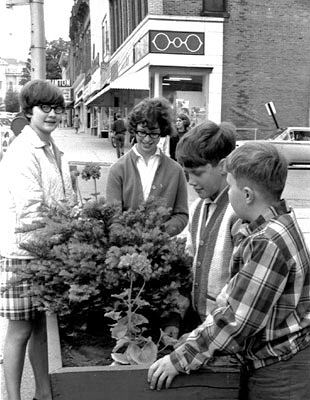
Members of the French’s Corners 4-H Club helped give downtown St. Johns a beauty treatment last week by cleaning up and planting fresh flowers in the six floral boxes that line the sidewalks of the middle block of Clinton Avenue.
Lynda Droste (left) is the club’s teen leader, and the other three members are Marcia Motz, Bruce Droste and Eugene Jones. Several 4-H clubs fixed up flower boxes as a Michigan Week project.
Maralyn’s Pet Corner – Can You Give a Cat Benadryl?
When you have an allergic reaction, it’s easy to just pop a Benadryl to ease your symptoms. Many dogs are given Benadryl to help them fend off allergic reactions. But is this drug safe for cats too?
“It is safe,” says John Faught, a DVM and medical director of the Firehouse Animal Health Center in Austin, Texas. “Benadryl is just an antihistamine, and it’s relatively safe for both dogs and cats.”
Benadryl is the brand name for the drug. The active ingredient is diphenhydramine, which you also can buy if you’re looking for a generic form of the medication. The Benadryl you’d get at the vet’s office is the same drug you’d buy off the shelf at your local grocery store.
How to Give Benadryl to a Cat
The easiest way to dose a cat is to syringe liquid Benadryl, says Faught. But many cats will simply refuse to take it if they don’t like the odor or taste. If your cat won’t take it, you can try going through a compounding pharmacy where the staff can flavor the liquid with chicken, fish or another cat-approved taste, which may increase the chance of your feline taking it. Pills also can be flavored, if you’d prefer to give the medication that way instead. You also could try to mix it up with their food to see if they’ll consume it with the meal.
Faught says his office doses Benadryl at about one milligram per pound. For an average sized cat, you’ll probably want to give half of a 25-milligram tablet. A 10-pound cat will most likely need about four milliliters of liquid (available at a concentration of 12.5mg/5ml) to get the right dose, he says.
What is Benadryl Used for in Cats?
Benadryl is most commonly used for itchy or allergic skin reactions, vaccine reactions or bug bites. Occasionally, the drug can work as a mild sedative that you can use during long car trips. Benadryl can be used as an anti-nausea or motion sickness medication, but Faught cautions that it’s best to use a different medication if that’s the symptom you’re trying to treat.
Precautions to Take When Giving Benadryl to Cats
Just like in people, Benadryl can cause a wide range of symptoms. Your cat may act drowsy. The drug, sometimes, may also cause a cat to get amped up or hyper. Overdoses can lead to seizures, coma, difficulties breathing, and even death.
As with giving any new medication, it’s best to talk it over with your vet to see if Benadryl might be right for your cat and ensure that the dosage won’t interfere with any other medications your cat may be taking.
It’s also best to ensure that the medication is not masking a larger issue, says Faught.
“Oftentimes, you can have mites or infection or something else that’s going on that might be the underlying component,” he says. “Benadryl treats a symptom; it doesn’t necessarily take away an underlying problem.”
If your cat is having a severe allergic reaction—with problems such as trouble breathing—it’s best to contact your vet to discuss the issue instead of just giving Benadryl to see if the symptom disappears.
The Briggs Public Library has seen a steady decline in its operating revenues over the past several years due to various factors including a reduction in state aid and penal fines, and declining property values. As a result, the Library has been very diligent in implementing a number of measures to decrease its expenditures, including the elimination of a full-time staff position, a reduction in the hours of operation (7 ½ additional closure day a year and open 4 less hours per week), and forgoing facility maintenance projects. The Library Board has reached a point where it is dipping into reserves in order to produce a balanced budget.
Throughout this time, the Library Board has sought public input regarding library usage, preferences, and priorities. In the fall of 2014, a patron satisfaction survey was conducted. While in general the results were very positive, patrons did express a desire to have increased hours, more programs for all ages, an increase in electronic resources such as more EBooks, the addition of E-magazines, and more web-based databases.
In light of the survey results and revenue challenges, the Library Board decided to pursue a strategic planning process to further examine the Library’s future course. At the initial strategic plan workshop in June (attended by twenty-three residents from four townships and the city), five objectives were agreed upon by the group. Throughout the fall, task force groups met to develop goals for the Library to work towards, along with action plans to achieve the five objectives. Again, these groups included various township and city residents.
One of five agreed upon objectives was to stabilize and increase Library funding, bringing it closer to the average revenue level of other Class 4 libraries. Briggs Library is one of 75 Class 4 libraries in the state – serving communities with a population of 12,000 to 25,999. According to most recent data, the average revenue for Class 4 libraries was $633,982 – while revenues for Briggs Public Library were only $384,129 in FY2013-2014, compared to $486,318 in FY2006-2007 prior to the economic downturn. This funding gap was evidenced by the reduced hours, services and collections available to our patrons as compared to other libraries in similar-sized communities.
Another funding challenge, though not new, relates to the Library’s funding burden not being borne equally by all participating municipalities – with varying financial commitments coming from each township and the city. The funding task force looked at a number of ways to address this concern. Researched options included a countywide library millage (as successfully pursued in Gratiot County), the formation of a traditional district library to include the seven current contracting townships and the city, and forming a district library along school district boundaries. Upon significant research and consideration, the task force recommended that the Library Board pursue a district library along school district boundaries per the District Library enabling legislation. The Library Board accepted this recommendation and took formal action to move forward.
Public Act 24 of 1989, the District Library Establishment Act, requires that for a district library to utilize school district boundaries, the respective school district board and at least one other municipality must enter into a district library agreement that provides for the formation of the district library board, funding mechanism (appropriation or millage), and distribution of assets, among other things. Also per that legislation, a District Library Agreement was diligently drafted and submitted to the City of St. Johns and the St. Johns Public Schools Board.
Both bodies passed resolutions approving the Briggs District Library Agreement at their March 14, 2016 meetings. As part of this agreement, title to the library property will transfer from the St. Johns Building Authority to the Briggs District Library in October 2016 upon retirement of bonds issued for the initial purchase of the current facility. The District Library Agreement was submitted to the State Librarian for approval. The Library received the approval letter on April 11, 2016 and officially became Briggs District Library on May 1, 2016.
The Briggs District Library is now an autonomous governmental entity which will require its own dedicated funding source. The only long-term obligation the St. Johns City Commission and St. Johns Public Schools Board will have is to formalize appointments to the Briggs District Library Board of Directors. Public Act 24 of 1989 limits the number of Board members allowed.
The District Library Agreement requires that the Board consist of three City of St. Johns residents and four St. Johns School District residents. The four individuals who have been selected from the St. Johns School District are all individuals who reside in four different townships that will be served by the new district. The Library Board’s intent is that through rotation of board members, each township will be represented on the board throughout the years.
Per the agreement, it is incumbent upon the Briggs District Library Board to place a millage request before the voters to fund the district library’s operations. Legally, all residents of the newly defined district have to pay the same minimum millage rate. In reviewing the amount of revenue various millage rates would generate, it was determined that at least .75 mills was needed to provide the level of service required by a community of this size while also helping to ensure long-term success of the library.
At the Library Board’s organizational meeting, the Board passes a resolution to submit a millage proposal to the voters in the library district on the August 2 ballot. The Board is requesting .75 mills for ten years which will generate approximately $464,000 in the first year it is levied. This will allow the Library to maintain its current level of operation, expand services to meet the needs and preferences of patrons, develop additional programs, restore and increase hours of operation, proactively maintain the current library facility, optimize current space, and set funds aside for future capital expenditure needs.
A Yes Committee has been formed to inform the voters about the upcoming millage request in August.
The Briggs District Library Board believes this transition to a district library will allow the Library to truly be a community organization more effectively serving the needs of all of its constituents.
Briggs District Library Fact Sheet
The millage question will appear on the ballot Tuesday, August 2, 2016, and is set at .75 mil (75? per $1,000 of taxable value on all property in the service area). The service area is the St. Johns Public School boundaries.
This millage will replace the previous allocations provided by the residents of the City of St. Johns (1 mil) and Bingham Twp. Residents (.5 mil) not in addition to.
The amount of money generated by .75 mil is estimated to be $464,000 for the first year of a ten year term. This amount constitutes 77% of the operating budget with the remaining 23% coming from state aid, penal fines, library fines and fees.
We are a Class IV library (one of 75 in Michigan) and following are some interesting facts:
State Average
Briggs
Revenue
$633,982
$385,062*
Population Served
17,400
19,008
Annual Hours Open
2,945
2,598
Sq. Footage, per capita
16,646
9,584 (includes warehouse)
Personnel Expenditures
$381,820
$203,849
Collections
74,031
45,380
Visits
93,633
99,044
No. of Public Computers
26
12
*From 2008 to 2015 operating funds have decreased approximately $100,000.
Area Class IV libraries support from residents: Grand Ledge District Library 1.2 mils; Portland District Library 1 mil and .9339 mil; Ionia Community Library 1 mil; Hastings Public Library 1.6 mils; Marshall District Library 1 mil and .6930 mils (actual amounts paid are slightly less due to the Headlee Tax Limitation Amendment)
What Might Briggs District Library Do With This Millage?
1. Restore and increase hours, increase collection (e-books, books, audio, DVD’s, large print books), add e-magazines, add databases. A database enables you to access information on a specialty topic such as languages, genealogy, newspapers, world country facts, etc. with your library card from home.
2. Not dip into reserves to fund operations and actually set aside money for capital maintenance such as carpeting and painting which has not been done since 1998.
3. Add more programs for adults and young adults (grades 7-12).
4. Place book drop boxes throughout the Library District.
5. Renovate and repurpose warehouse space.
6. Increase security due to book theft and vandalism both inside and outside of the library.
PA116: This is a State program for farmers to enroll their farmland for preservation with the promise to be reimbursed for all property taxes in excess of 3 ½ % of income (with the exception of drainage money). Those farmers enrolled will have some of the library taxes returned to them.
The current library building and land will transfer from the city to the District Library by the end of 2016.
There are approximately 5,694 registered voters in the City of St. Johns and 8,987 registered voters in the combined Townships.
I decided to visit the National Honor Society group at the High School. We met in the auditorium with the group and Mr. Stukey their Advisor.
This group is comprised of 50 Juniors and 50 Seniors. It is an elite group that have to meet certain requirements to belong.
Junior year applications need to be filled out and also recommendations from teachers given. The must-haves are a good record of behavior, good grades, volunteer 30 hours in the community. When they become Seniors, they stay in the group. We had this back in the day, but for some reason which will remain secret, I guess I didn’t qualify for all.
Volunteer work and fund raising for charities are some of the things they do. They work with students from the Middle School and have a reality store from which a student picks a job and works with that job with a NHS student. Helping with The Relay For Life this past weekend is one of them.
Presidents for the group are: Jen Eaton and Amulya Jain.
Vice-Presidents are: Brendan Kiel, Blake Koschmider and Olivia Ruppert.
I spoke to a couple of students and asked what they take away from being a member. The answers were that it was an honor to be a member of NHS and the fun they have especially the volunteering and helping people.
I also spoke with Carter Bradley and asked him his thoughts on Mr. Stukey. His reply was, “Mr. Stukey is just a sapling, young and spry at heart!” I agree with that description because Mr. Stukey is well-liked by all of his students.
Thank you, students and Mr. Stukey, for letting me take pictures and for the interview. We all appreciate what you do and wish the Seniors well in their next adventure.
Can you tell us where this is located? Drop us a line at mail@sjindy.com.
203 S. Oakland St. – St. Johns, Michigan
The current owners are Lawrence and Barbara Fisher. Previous owners include Kathryn Durner, Robert and Nancy Moinet, Robert and Denise McConnell. In 1950 the home was owned by Robert J. Kelly.
A Look Back – Anthony Pohl Runs for Sheriff in 1968
by Barry Bauer
Anthony Pohl, one of four candidates for county sheriff in next Tuesday’s primary election, got some enthusiastic help from members of his family in his campaign. Steven, 4, Theresa, 7, and Susan, 12, hiked around town a couple of Saturdays ago with these sandwich boards, and son Jimmie, 2, passed out little nail files with dad’s name on them. Other sheriff candidates in the primary are incumbent Percy J., Patterson, Ramon Terpening and Bruce Angel III.
Maralyn’s Did You Know? – Can I crush medication in my dog’s food?
Getting a pet to take their meds is one of the great challenges in veterinary medicine, and difficulty in pilling is one of the number one causes of non-compliance. Oftentimes people ask if crushing their pet’s medication up in their food is an option.
The first thing to consider is if the medication can be crushed in the first place. Tablets with an enteric coating and capsules are usually meant to be absorbed further down in the GI tract.
Even if you can crush a pill without affecting its potency, you may not be able to get your pet to eat it. Have you ever accidentally bit down on an aspirin? Blech! Mixing that into food that wouldn’t fool anyone. With bitter medicines, most pets realize what’s going on after a few bites and then refuse to eat the rest of the food, leaving owners to wonder what percentage of the dose the pet actually got.
Owners usually find it far easier to hide the pill whole in food or a pill pocket. For pets who don’t like treats, owners can purchase a pill gun or ask the veterinarian for instruction as to pilling techniques.
If none of those tricks work, another option is to have the medication made at a compounding pharmacy, who can create many medications with a very strong flavoring like cheese, chicken, or beef powerful enough to fool even a finicky pet.
Gateway North Elementary, an Ag-STEM school in St Johns, has started a garden project with monies received from a Farm Bureau Grant secured by DJ Logan. The students have helped put the raised beds together, filled them with soil donated by Miller Excavating, and have planted our first crop of green beans.
Throughout the process the students have learned about agricultural concepts in math and science units applicable to their age level. Kindergarten and second graders learned about the germination process as they worked together to plant gardens in a glove. Fourth graders learned about computing perimeter and area as an agricultural link to their math unit.
Student garden helpers will be working throughout the summer to weed, water and harvest our salad type garden.
Watch for updates as our garden grows.
St. Johns Chess Club – Mini Swiss Tournament 2016
by Maralyn Fink
I headed back to St. Johns High School to catch some of the Mini Chess Tournament. The tournament started on Monday and runs two days the first week and two days next week on Mondays and Wednesdays.
There were 16 spots available for this tournament, and these went to the first sixteen to register to be able to compete. In order to register, a $5.00 entry fee had to be paid with the funds going towards the St. Johns Chess Club, specifically, to pay for prizes.
All the games in the tournament will be timed as 30 minutes per player. Thus the maximum length of a game is 60 minutes.
Day 1, – players will be matched randomly.
Day 2 – players will be matched with their second opponent based upon score from Day 1.
Day 3 – players will be matched with third opponent based upon cumulative score from previous days. At the end of Day 3, the two players with the highest cumulative scores are the finalists, and they will compete in a final match on Day 4.
I will return next week for all the action and to see what the outcome will be. So stay tuned next week for my report.
5th grade students earn President’s Award for Educational Excellence
St. Johns Public Schools 5th grade students earned the President’s Award for Educational Excellence this year. These students earned an A, or better, in all subjects. On the Spring 2015 MSTEP state assessment the students also received at least 1 “advanced” rating in Math, ELA, or Science and were at least “proficient” in both Math and ELA, or, they were rated at least “proficient” in the three subject areas of Math, ELA, and Science.
Students receiving this award were:
Front Row (L to R): Grace Lounds, Zander White, Jessi Burgess, Fynn Matice, Caden Ojibway, Isaiah Ramirez, Christopher Kaufmann
2nd Row from Front (L to R): Joshua Pagels, Jack Ballard, Nicholas Doerr, Sidney Zelenka, Allie Brown, Patrick Shaw II, Breanna Pifer, Jordyn Chant
3rd Row from Front (L to R): Samantha LaFleur, Georgia Fromson, Emma Parsons, Preston Longoria, Vanessa Bailey, Emily VanElls, Aaron Medina, Devin Boron, Laura Schloegl
Back Row (L to R): Chaton Pratt, Caleb Longoria, Zach Pierson, Anna Thornburgh, Haley Dassance, McKenna Stewart, Mallory Morrison, Lyric Hein, Jaana Glasmacher
Not Pictured: Drew Alden
This week’s Mystery Photo
Where is this?
Can you tell us where this is located? Drop us a line at mail@sjindy.com.
Readers certainly recognized last week’s mystery house.
Lynne Gregory wrote: “This house is at 503 S Oakland. From circa 1924 until the mid 90s it was owned by George and Bess Osgood. Now owned by Wesley Sovas and his family.”
Robert Ebert recalled, “This is 503 South Oakland. I lived at 509. George and Bess Osgood lived there for eons until their deaths.”
His sister Celia Ebert expanded upon Bob’s recollections:
It is 503 S. Oakland. George and Bessie Osgood lived there for many years. My folks (Bob and Kay Ebert) bought 509 S. Oakland after Bessie’s father, Dr. Conley, died and we moved there is 1951. Neighborhood kids had many wonderful Play Days in the Osgood’s backyard! Always impromptu and always fun with very competitive “RED LIGHT GREEN LIGHT”… Good memories.
Barry says that the current owners are Warren and Irene Germain. Other owners were Clifford Lumbert and Mary Redman.
A Look Back – Earl Slagell
by Barry Bauer
Earl Slagell, left, a foreman at Burton Mixer and Manufacturing Company of St. Johns receives an award Thursday night for 25 years of service to the firm. Giving Slagell the award are plant administrators, Joe Spousta, center, and Charles Dickenson, right. The honor was presented during a special dinner at the L & L Restaurant in St. Johns.
Charles Dickenson was the husband of Eloise Spousta Dickenson. Earl Slagell looks an awful lot like Ollie Slagell who worked at Federal-Mogul.
Letters – CASA says thanks
CASA-The Voice for Clinton County’s Children wishes to express our appreciation and gratitude for all who made our 3rd Annual Superhero 5K Run, Walk, or Fly! a wonderful community event.
An album by Barry Bauer
161 Superheroes for children participated and along with generous event sponsors over $6,000 was raised. All monies raised remain in Clinton County to support CASA (Court Appointed Special Advocates) which serves children who are in foster care.
We hope all who attended the fun, family event and we look forward to seeing the return of Superheroes for children April 29, 2017.
For race results, free race photos available for download, and to learn more about CASA please visit our website ClintonCountyCASA.org.
This event was held on Saturday April 30 from 10 am – 2 pm.
Debi Daoust, owner of Fruits of the Spirit
Debi had furnished different flavors of Herbal Tea to try as well as finger sandwiches and dessert items.
What is Herbal Tea? The tea looks like tea and is brewed in the same way, but not actual a tea at all. Herbal Teas are actually infusions, and are properly called tisanes. Tisanes are made from mixtures of dried leaves, seeds, grasses, nuts, barks, fruit, flowers, or other botanical elements that give them their taste and provide the benefits of herbal teas.
Debi carries 9 different teas, each one for a different medicinal use, such as indigestion, upset stomach, anxiety and so on. Love increases metabolism and warms the heart. Joy, Kindness, Peace, Goodness, Faithfulness, Gentleness, and Self Control. The teas are also caffeine free.
To order any of her teas you can call Debi at 989-493-5824 or message on Facebook.com
Her products are also sold at Andy T’s, Art Gallery, Postal Connections as well in Almont, MI, Clare, Mi and in Farwell, MI.
Thanks, Debi, for sharing your teas and how they are used.
3rd Annual Superhero 5k Run, Walk, Or Fly – an album
by Barry Bauer
This week’s Mystery Photo
Where is this?
Can you tell us where this is located? Drop us a line at mail@sjindy.com.
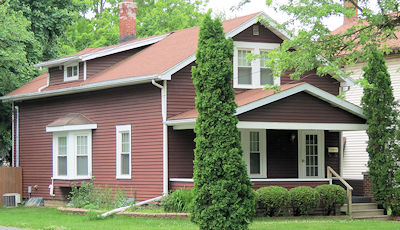
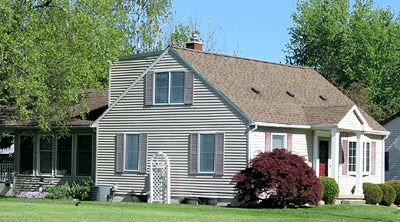
This week Jonathan Pulling writes, “This house is 306 East Walker Street. This house and 304 E. Walker were on my LSJ delivery route.”
Barry adds that the current owners are Vincent and Carolyn Geller. In 1950 Earl Payne lived there.
A Look Back – International Lions Club Award
by Barry Bauer
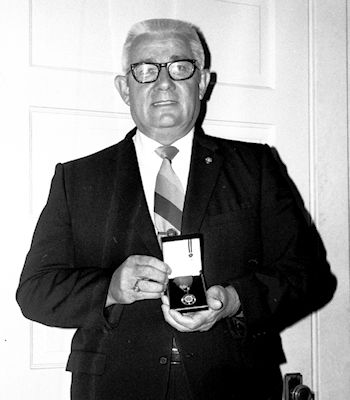
Ralph Lynam, of St. Johns, a director of the International Lions Club organization from 1978-1979, displays an award presented to him from the group for Meritorious Service. He was recently elected to the director post during an international convention last month.
Now and Then – The saga of Jack and Jill and the Brave New World of the Internet
by Jean Martin
Their names aren’t really Jack and Jill. If you know the person we are calling Jack, you have probably heard the story many times already. Like many of us, Jack has a problem; and he’s pretty sure that rewriting history will solve that problem.
About a month ago Jack wrote:
I would like to respectfully ask if you could remove my name from a post on your website dated [date redacted]. The entry refers to a marriage that did not end well, and ongoing health issues resulting from her continued infidelity during the short marriage. I am attempting to remove any connection between myself and my ex-wife.
I feel like my reputation and that of my family suffers as a result. If you could please remove this entry below, I would be most appreciative.
We replied to Jack and tried to explain why we were not able to delete the offending public notice that we had received from the County Clerk’s office. Since that time, Jack’s message has been followed up by several more missives, each one more insistent than the one before it.
We’re guessing that Jack would probably like to have the public record posting of the divorce removed too.
Well, Jack, we’ve all been there. We’ve all done things we wish we hadn’t. We’ve all wished we could set the clock or calendar back and start again. Lesson learned, we hope.
We have actually done that once or twice in the past. Someone neglects to tell the County Clerk that they don’t want their marriage license published, and we make their item of public record public. A panicky plea from the new bridegroom or blushing bride arrives, and we quietly delete the entry. This usually happens within the week, and many readers never even see the entry.
The problem with Jack and Jill is that they made their matter of public record public long before the great SJ Indy crash of last fall. We recovered from that near-disaster, barely. The database record is now corrupted, and we no longer have access to it. We can read it, as can anyone, Here. Alas, we cannot write new records or delete old ones. It has become an archive.
If we wanted to remove the misadventures of Jack and Jill from the archive, we would have to take away years worth of St. Johns history. We’re not prepared to do that.
We’re also not able to remove Jill’s name as Jack’s wife from the legacy.com obituary for Jack’s father from the website of the Morning Sun in Mt. Pleasant. Need we go on?
As a matter of fact, if we were to remove the public records of Jack and Jill from the St. Johns Independent, they would continue to live on somewhere on the Internet. Somewhere out there in Cyberspace, the unfortunate story of Jack and Jill – and yes, some of the unwise things we have all said and done – will live on, cached forever on hundreds or thousands of computers throughout the world.
Public really is public in the age of the Internet, and we’re all just going to have to learn to live as though the things we do have consequences. They always have. This is just one more little reminder.
The Moving Finger writes; and, having writ,
Moves on: nor all thy Piety nor Wit
Shall lure it back to cancel half a Line,
Nor all thy Tears wash out a Word of it.
– Omar Khayyám




 Recently when talking with a community member about the work of CASA-The Voice for Clinton County’s Children encouragement was given to share more about the hard stuff and difficult situations Clinton County children we serve have experienced.

 Researchers analyzed Australian National Kennel Council (ANKC) registration statistics from 1986 to 2013 for 181 breeds. They found that people are becoming increasingly likely to purchase smaller, brachycephalic dogs. In other words, breeds like Pugs and Bulldogs that have a short muzzle, wide head, and prominent eyes.




 I share some of our CASA kiddos’ experiences with caution only because we don’t want to think it, we don’t want to go there. We don’t want to think about a toddler being the caregiver for a younger sibling; a pre-teen being a caregiver for a parent; little ones who disclose sexual abuse and maybe are not believed; little ones in a home with no available food; kiddos who struggle with big emotions; and little ones who have been home during a drug raid.