Features

Halloween 2016 – One to remember

Halloween At The Museum – Sunday, October 30


This week’s Mystery Photo

Where is this?

mystery289

Can you tell us where this is located? Drop us a line at mail@sjindy.com.

914/916 Randy Lane

mystery288

This is a duplex which is two homes that share one common wall.

The 914 Randy Lane owners are Michael and Debbie Paradise. The 916 Randy Lane Current owners are James and Audrey Duzek. Previous owners include Alexa Vitek.


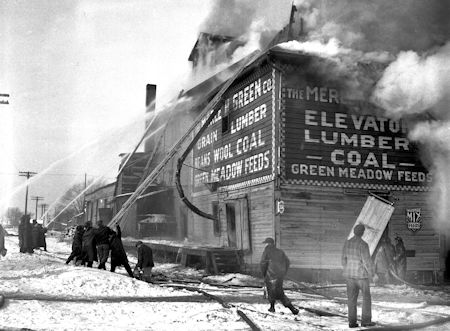
A Look Back – Merle H. Green Elevator Fire

Barry Clark Bauer

lumber

This is the second photo from the Merle H. Green Co. elevator fire in the 400 block of N. Clinton Ave. in St. Johns. This building along with the Houghton Lumber Co. building, adjacent to the north, is long since gone.


Benny and Jessie’s Pet Info – Can Pets Get Cancer from Owners’ Smoking?

You must have been living on a desert island for the last few decades if you are not aware of the danger that smoking poses both to smokers and to the people who come in contact with second hand smoke. Less well known, however, is the effect that a smoke filled home can have on pet health.

First some definitions. Second hand smoke is smoke that is exhaled or otherwise escapes into the air and can then be inhaled by non-smokers, including pets. Third hand smoke is the residue from smoke that remains on skin, fur, clothing, furniture, etc. even after the air has cleared. Both second and third hand smoke can be referred to using the term “environmental tobacco smoke,” or ETS.

Now let’s take a look at the scientific studies that reveal a link between environmental tobacco smoke and serious diseases in cats and dogs.

The Effects of Tobacco Smoke on Cats

A study published in 2002 demonstrated a greatly increased risk of malignant lymphoma (also called lymphoma or lymphosarcoma) in cats with exposure to ETS. The relative risk for malignant lymphoma in cats with any household ETS exposure was almost 2 ½ times higher than that seen in cats who lived in smoke-free households.

For cats with five or more years of ETS exposure, the relative risk climbed to 3.2. In other words, these poor cats were more than three times as likely to develop lymphoma as were cats who lived in a home where no one smoked.

This study and others also strongly suggest a link between oral cancers in cats and third hand smoke. It is thought that cats groom the toxins contained in tobacco smoke out of their fur, which damages tissues in their mouths. This eventually leads to oral cancer.

The Effects of Tobacco Smoke on Dogs

Dogs can become seriously ill after long term exposure to second and third hand smoke as well. Two studies, one published in 1992 and the other in 1998, determined that cancer of the respiratory tract was more common in dogs who were exposed to environmental tobacco smoke. Interestingly, the type of cancer the dogs got was influenced by the shape of their heads.

The risk of nasal cancer increased by 250% when dogs with long noses (picture a Collie) were exposed to tobacco smoke. On the other hand, dogs with short or medium noses tended to develop lung cancer under similar conditions.

When you think about it, these findings aren’t all that surprising. The extensive nasal passages of long-nosed dogs are good at filtering out the toxins contained in cigarette smoke, which protects the lungs to the detriment of the nose. These same toxins pass right through the relatively shorter noses of other dogs and then become lodged in and damage the lungs.

Many other studies underline the damage that tobacco smoke does to the lining of the respiratory tract and a possible link to non-cancerous diseases such as chronic bronchitis and asthma.

Do Alternatives Help?

By now you might be thinking, “I’ll just smoke outside.” While direct research into the effect that outdoor smoking has on pet health hasn’t been performed, we can look at a 2004 study on infants and draw some conclusions. It found that smoking outside of the home helps but does not eliminate smoke exposure to babies. The infants of parents who smoked outdoors but not inside were still exposed to 5-7 times as much environmental tobacco smoke in comparison to the infants of nonsmokers. Similar results could be expected for pets.

And what about vaping? Again, no direct research into the health effects of second and third hand vaping solution on pet health has been done, but according to the American Lung Association:

In 2009, the FDA conducted lab tests and found detectable levels of toxic cancer-causing chemicals, including an ingredient used in antifreeze, in two leading brands of e-cigarettes and 18 various cartridges. A 2014 study found that e-cigarettes with a higher voltage level have higher amounts of formaldehyde, a carcinogen.

It’s hard to imagine that inhaling substances like these or licking them off their fur could be completely risk free for pets.

Conclusions

Looking at the science brings us to the inevitable conclusion that second and third hand smoke exposure is very dangerous for pets. If you must smoke, do so outside or switch to vaping, but know that you are still likely putting your pets’ health at some degree of risk… to say nothing of what you are doing to yourself.


Letters – Reader begs you to give Donald Trump a chance

What is happening to our country? In the last eight years our lives as Americans have been turned upside down. The government tells you that you must purchase health insurance or pay a penalty. Young people have chosen to pay the penalty, which means that middle class working families’ insurance rates have increased to cover those with no insurance. Does that sound fair to you?

Now men can go into women’s bathrooms at Target stores, thanks to an executive order from our President. Unbelievable. Boys can go into girl’s locker rooms if your school board okays it. Thanks again to President Obama. We are paying for transgender operations in the military; i.e., men who wish to become women can have this operation paid for by the United States taxpayers.

Planned Parenthood has been caught selling aborted baby organs and no one in our government does anything about it. Instead, we, the taxpayers, fund Planned Parenthood millions of dollars each year for women’s healthcare. Abortion is not women’s healthcare.

Hillary Clinton will continue all of these policies. She believes abortion should be legal up to the moment of birth. She will reverse the Partial-Birth Abortion Ban Act if she has the votes in Congress to do so.

Four more years of this insanity will destroy our country. Please give Donald Trump a chance to restore our Constitution, its values, and our Christian heritage on November 8th. Does your vote honor Your conscience or a politician’s viewpoint? Thank You

Gail Wadell
Elsie, Michigan

Features

Through the eyes of a foster child

by Johns with CASA

Picture this through the eyes of a young child:

You can see through the window that it’s sunny outside with a few small white clouds in the sky. Your stomach is grumbling for a snack and you’re a little sleepy. You tried to take a little nap but just couldn’t get comfortable.
Then you hear someone knocking on the door.

Your mom goes to the door and you peek to see what is going on.

Its strange people you’ve never seen before. They don’t seem very happy, in fact, a little scary. They are talking to your mom, who is getting really, really mad.

It’s getting really scary. You cannot help but hide and cry.

All of a sudden, the strangers come over to you and pick you up from where you are hiding.

What Is Going On?

They put you in a strange vehicle with your brother and sister. BUT WAIT… Your mom doesn’t get to come along. Why? Why can’t mommy come?

You ride with the strangers to a strange place you’ve never been before. Your clothes are dirty, so they give you some new ones that kind of fit. There are so many strangers here, but there are also toys and a few snacks, which is good because your stomach is still grumbling.

Before too long you get back in that strange van with those strange people. You take another ride that seems like forever this time and it parks in front of another strange building.

Is Mommy here? Where is my mom? Mom . . . isn’t . . . here . . . is she?

You were finally able to get a short nap on the way at least, but you can still barely hold your head up. The strange people take you into the new strange building and guess who is there… More strange people, but not your mom.

These strangers are a little different, though. They look as scared as you feel. Their shoulders are pretty comfy, though. You just keep your head rested on their shoulders. These two new strangers, the scared ones, they’re taking you to their car now. Just when you were getting used to the other strangers, these new strangers put you into another strange car and you take a 5-minute ride in that strange car to a strange home.

This is just so confusing and frightening. Where is my mom? Why isn’t she here? You’ve moved a lot to strange homes, but mom always came too.

The strangers who took you home seem not be so strange anymore. They are feeding you, giving you a bath, and finding ways to make you smile and laugh. You have so much more energy, and sometimes that scares the strangers, too.
But, what’s that? It’s another knock on the door and it’s another stranger. What’s going on now? Why is she here? Hide.
But, this stranger just came to see you for a minute and make sure things are going okay before she leaves. You didn’t have to go with a stranger again. Phew!

During the next few weeks, there would be a lot of strange things. You go to a daycare and meet other children and a few more strangers. You go to see strange people in white coats who make you say “awe” a lot. But, at least the strangers who took you home don’t seem so strange anymore. They’re kind of nice if you think about it. They even sing you to sleep. They don’t sound good, but that’s okay.

Then Another knock on the door comes. Not again. You were just getting used to things. This stranger, she is different than all the others, though. She wants to talk to you and Play with you! You haven’t had a stranger want to play with you, yet. It’s nice to play with one of the strangers. You play for a while and then she says she has to go, but she also says she will be back next week.

It seems like every night there is a new stranger coming. But that stranger who played with you, and said she would come back, DID! In fact she comes back every week. She rarely misses her time to come and play with you. Ms. Liz is so nice. You even decide to give her hugs at the end of your visits. She does so many things with you. She goes to the park with you, she plays Playdough and colors. Sometimes, she even just holds you and talks to you.


This week’s Mystery Photo

Where is this?

mystery288

Can you tell us where this is located? Drop us a line at mail@sjindy.com.

606 S. Baker St.

mystery287

The current owner is Joan Edmonds. A previous owner was Thomas Danley.


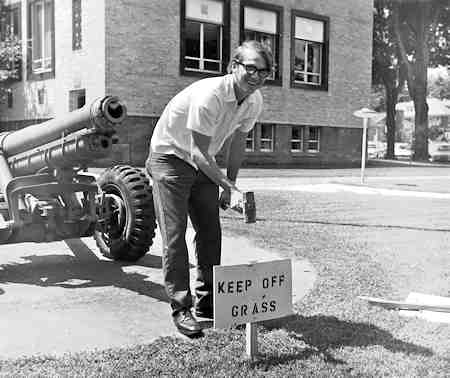
A Look Back – Courthouse Grass

Barry Clark Bauer

canum

This photo comes to us from 1972. A guy named Canum is solving a problem for the County; he’s posting “Keep off Grass” signs. I remember the complaint and it was when students from Rodney B. Wilson cut across the lawn on their way downtown during lunch period.

Today, because of the new Courthouse, it’s no longer a problem.


Benny and Jessie’s Pet Info – Five Ways to Celebrate Halloween with Your Dog

Taking the Fright out of Fright Night

Halloween is celebrated for being the scariest day of the year, but celebrations designed to scare can only be enjoyed by those who are in the know. Since our dogs are not clued in to the symbolism of the day it is up to us to keep them as scare-free as possible. So how do you have a not so scary Halloween while still having fun?

#1 Host a Dogs-only Costume Party

Invite some of the friends your little Ella has made at dog class and at the dog park over to your house for some good music and good eats, with everyone dressed in their favorite costumes. For favors, use paper lunch bags decorated with Halloween stickers and stuffed with dog candy — bone biscuits and jerky treats, of course.

Invite some of the friends your little Ella has made at dog class and at the dog park over to your house for some good music and good eats, with everyone dressed in their favorite costumes. For favors, use paper lunch bags decorated with Halloween stickers and stuffed with dog candy — bone biscuits and jerky treats, of course.

#2 Arrange a Neighborhood Halloween Pet Parade

If you’re lucky to live in a neighborhood with lots of dogs and you all haven’t held a pet parade yet, then it is long overdue. Put up signs on the community boards, go door to door; the more participants there are, the more fun there will be. You might even want to think big and get your whole town involved, with a parade down Main Street or in the local park. Idea: Ask local businesses to donate a few prizes for “best costume” contests.

#3 Host a ‘Scary Dog Movie Night’

This one really gets into the spirit of the day. Pick a scary movie (http://www.petmd.com/sites/default/files/scary-dog-movies-list.jpg), set a room up as a home theater with lots of comfy pillows, a self-serve concession stand with bone cookies (http://www.thekitchn.com/cookies-for-canines-homemade-d-135078) and other treats, bowls or paper filled cones of unbuttered, unsalted popcorn, and decorated bottles of water. Be sure to schedule an intermission for “bathroom” breaks. Buy, print-out, or e-mail invitations along with printable movie tickets for your guests.

#4 Get Out of Town

Maybe Halloween just isn’t your cup of cider. You and your dog really can’t handle the over excitement and would rather get away from home for the night. If we’re lucky, it will still be just warm enough to grab a tent and get out to the campgrounds for a quiet night. Most campgrounds require reservations, so plan ahead. Or, if you have friends in the country, now would be a great time to take them up on that invite. And then there are always out of the way, pet friendly hotels where you can treat yourself and your pup to a night of room service and on-demand.

#5 Keep it Mellow It is possible to have a no-Halloween night at home. Put up a gate at the kitchen door, put a bowl of candy out front for the treaters (or leave all the front lights off), and make cookies and pumpkin soup for yourself and your dog — maybe even invite a friend over for a quiet fall-themed dinner.


Letters – Reader explains election process and CASA says thanks

Recently a claim has been made that cannot go unchallenged. It has been maintained that the election process is “rigged” and therefore corrupt. As a former election inspector, I can assure you that this is simply not true.

The election process is overseen by a group of local citizens from both major parties. They are sworn to uphold the laws, regulations and rules which define the election day activities. The most important elements are the verification of the legal status of voters and the accurate counting and compilation of the votes. All elements of the process are overseen by an election captain and the tasks are carried out by pairs of workers who represent each major political party.

These citizen election inspectors … your friends and neighbors…may well greet you with a friendly smile and an inquiry as to how you and your family are doing as you enter the polling place. After all, they are your friends and neighbors. But do not confuse this civility and interpersonal interaction for a lack of dedication to task or a failure to adhere to the terms of their oath.

It is important to know that every vote counts and every vote is counted just as the voter intended. This process is the bedrock upon which our government and the Constitution which directs it are founded. Those who say otherwise are simply wrong on their facts and do a disservice to not only those who are charged with protecting the process but such statements
are a threat to the very foundation of our country by encouraging the destruction of our trust in the election process.

If you have trouble accepting the fact that the process is above reproach, become an election observer and see for yourself. That, too, is part of our open and honest elections.

In the meantime, feel free to refute those who would cast doubt on our most sacred right as a citizen: The right to vote in a fair, honest and open election process.

Terry K. Clarke
St. Johns, Michigan

******

CASA-The Voice for Clinton County’s Children extends our appreciation to Pam and John Foster, owners of The Wheel Inn in St. Johns. October 25th The Wheel Inn hosted a Halloween Party for CASA and donated 10% of their sales from 5:00 a.m. until 9:00 p.m. We are very thankful to the wonderful staff and patrons of The Wheel Inn and our CASA Supporters for making this a great day.

Nearly $500 was raised in support of Court Appointed Special Advocates. We appreciate our community’s support as we walk a journey with Clinton County children who are in foster care until every child has a safe, permanent home.

For more information about CASA, please visit our website ClintonCountyCASA.org.

Thank you,
Kelly Schafer
CASA Executive Director


Maralyn’s Pet Corner – Black Cats and Halloween: A Scary Mix

Let’s face it, black cats have had a bad rap for a long time. In some countries they are believed to have the magical ability to portend bad luck and death, which has led to them being neglected and abused by less than enlightened people.

Of course not all countries toe that line, though the black cat retains its magical abilities in Britain, Japan, and Scotland, where black cats are a symbol of good luck and prosperity; sailors of old preferred their “ship’s cat” to be black for the same reason.

Negative superstitions have changed for the better in most places, but black cats are still irrevocably linked to that darkest of holidays, Halloween. It’s no wonder then that shelters take extra precautions when adopting out black cats during the month of October, especially in the weeks leading to Halloween. But the better question is whether they should still worry.

“We used to have a policy where we didn’t adopt out black cats during the month of October, but we have since canceled that policy,” said Laurie Hoffman at the Humane Society of Greater Miami. “We take normal precautions with all our adoptions.”

Karen Buchan at the Palm Beach County Animal Care and Control sees it a little bit differently.

“The bottom line is, we are trying to avoid any situation that may put a black cat into an unsafe environment,” Buchan said. “There are satanic sacrificial rituals that still exist in our country and around the world.”

Concrete statistics on black cat torture during October are lacking. In fact, many stories we hear are probably hearsay. The problem remains that these stories and the situations surrounding them can be self-fulfilling. Cruel or naïve people, especially young people, may hear stories of the ritual Satanic abuse of black cats and then go on to inflict harm on these defenseless creatures.

So if you happen to run across a similar ban on adopting black cats this holiday season, don’t become frustrated or upset. Shelter managers think of it as a better-safe-than-sorry policy. And who are we to complain about erring on the side of animal safety? They’ll still be there, waiting for you to give them a forever home in November.


Now and Then -The Myth of Media Bias

by Jean Martin

We are hearing a lot about media bias in these closing days of the 2016 presidential election. This is a myth, but it isn’t necessarily the one we are being led to believe.

A look at the history of local Clinton County newspapering provides an apt example.

The earliest papers here were the Clinton Independent and the Clinton Republican. The Independent wasn’t, and the Republican came right out and said it.

During the Civil War the Republican was promoting a national Thanksgiving while the Independent referred to the Republican as the “nigger press.” If you don’t believe me, take a trip to the Bement room of the Briggs District Library and haul out some of the old bound copies, or check the microfilm.

People supported the two newspapers, swore by them, exactly because they were biased in favor of their own political views. They believed each editor’s news slant because it agreed with them.

A case in point might be the way the two newspapers handled the story of the building of the new Union School, eventually called Central School. Late in 1885 the Republican gave the opening scant coverage. saying simply, “School will open January 4, 1886 in St. Johns’ new Union School, a $30,000 temple of learning.“ Meanwhile the Clinton Independent reproduced sketches and blueprints. Rooms were described in detail, and the planners were lauded at every opportunity. Guess which party was in power in St. Johns during those years.

By 1924 Charles S. Clark was publishing the St. Johns News, the Democratic paper. In that year that newspaper merged with the Clinton Republican News to form the Clinton County Republican-News. By the 1950s the flavor of the old St. Johns News was gone, and who are we kidding? It was the Republican mouthpiece in Clinton County. People who subscribed to it read the Republican slant, or they didn’t read a local newspaper.

So the Myth here is that in days of old the media was pure, presenting only fair and balanced reporting. Today’s media is simply following in the footsteps of their forebearers. Fox wants to be Republican. MSNBC presents the Democratic case. And CNN seems to be casting about at the moment, looking for a place to land.

It was ever thus, and we don’t expect to see anything change anytime soon.

Features

An interview with John Moolenaar

by Maralyn Fink

Recently I met with John Moolenaar who represents the residents of Michigan’s Fourth Congressional District. John brings years of leadership experience in the private and public sectors to Congress. As a public servant he has been elected to the Midland City Council, the Michigan House of Representatives, and the Michigan Senate.

John has contact with people in St Johns through different meetings with Agriculture here. He sends out e-mails to citizens who want to keep informed.

Jobs for economic opportunities are common since policies in Agriculture change.

As for our needs, the 4th District has a strong Agriculture base and Clinton County is part of that with mint among the crops being grown here.

Moolenaar says that in our Government we need to look for common ground and not let partisan policies get in the way of good policy that helps people.

When asked about the Flint water crisis, John says that he met with families from Flint and saw first hand the problems that occurred. After speaking with Doctor Mona Hanna-Attisha, long or short term effects of lead in the blood stream could be a problem. John felt that because the Federal Government was part of the problem, it needed to contribute to part of the solution.

moolenaar2
Jenell Leonard, wife of State Rep. Tom Leonard holds Hannah Leonard during meeting with U.S. Rep. John Moolenaar

John has been in Congress since January, 2015 and spends a lot of road time to cover 15 counties and also travels back and forth to Washington.

Thank you, John, for the interview. It was nice meeting you.

Please get out and vote and help fight out-of-control spending and simplifying the tax code.

Maralyn@sjindy.com


One family’s journey in Foster Care to Adoption

by John

Adoption Day through the eyes of a new father

I can tell you that our Adoption Day will always be special to us. Just as we were fearing it was going to be cancelled due to the weather, the court clerk called and asked us when we could be there, as their entire schedule had opened up due to cancellations. We didn’t know when it would happen, but we knew nothing was going to keep us away.

After an hour of calling everyone to let them know, and taking an hour and a half to drive what should have been an hour trip, we made it. Everyone, the clerks, bailiffs and judge. had waited for us and our extended family to get there. In a stormy winter blizzard, while the entire building was empty, the fourth floor court room was completely filled with people celebrating the new Lambright family. It is the most special day in our family’s life, made even more special through the dedication of the judge and her staff. So special my son frequently asks to return to the court room to see the judge. And when we asked him where he would like to have his birthday party this year, he said, “the adoption place!” When the kids play, you will often hear them playing “judges,” and once in a while, even “CASA advocate.”

While Ms. Liz’s official appointment as our kids’ CASA advocate ended with the adoption-they now have Grandma Liz, whom they can hardly wait for their next visit with. It is so important to recognize the ripple effects of her work with my family. Our children have hope again. They are positive about their futures and look forward to every new day.

Why I give back and support CASA Advocacy in Clinton County.

Directly because of the effects I saw Ms. Liz had on our kids, I became a trained CASA Volunteer Advocate. It became very clear to my wife and I that CASA plays such an essential role in a child’s life-a support person too many foster children go without.

While many of the professionals in foster care change, CASA Advocates do not. This is a big part of why CASA advocates are so important. We are consistent-day-to-day, month-to-month and from home-to-home (as foster homes often change for foster children while in the system for an extended time).

As a CASA Advocate, I am privileged to form trusting relationships with my CASA appointed children that may be relatively impossible for them to have with other adults in their lives due to the trauma they have experienced. In my role, I report to the court how the kids are doing and my recommendations to ensure they continue on their journey to a safe, permanent home-our ultimate goal for “our” CASA kids.

CASA Executive Director’s Note
This is one example of the impact made in Clinton County by a CASA Volunteer Advocate and the ripple effect. The impact made by CASA Advocates in the lives of children who are in foster care can be challenging to verbalize in a meaningful way-we hope this gives you a glimpse.

We do see the significant, positive outcomes for children who have a CASA Advocate in comparison to those who do not have their own support person. We know no child should go through their foster care experience without a CASA Advocate by their side.

With your support, every child like John’s children will be supported and have a voice through their CASA Volunteer Advocate.

About the Author, John
I am a Court Appointed Special Advocate (CASA) Volunteer in Clinton County.
I am also a foster parent and adoptive parent.
My wife and I have had five placements in our 2 ½-year journey of foster parenting. Each of the children have a unique story along with unique abilities and struggles.
I would like to share with you about our three toddlers whom we adopted at the beginning of 2016, and the important role their CASA advocate has played in their journey.


Benny and Jessie’s Pet Info – How to Feed Dogs with Lymphangiectasia

I have a feeling that if you haven’t taken care of a dog with lymphangiectasia you’ve probably never heard of the disease. Here are some definitions that you’ll need if you want to learn about how to feed dogs with this condition.

Chyle n. a milky fluid formed in the intestines. Chyle transports fats and other materials from the gastrointestinal tract to the rest of the body

Lymph n. the fluid that carries lymphocytes, chyle and other substances as it circulates through special ducts and in the bloodstream, surrounds tissues, is filtered by lymph nodes.

Lymphangiectasia n. a disease in which the ducts carrying lymph leak protein and other substances into the intestinal tract. Affected individuals can develop diarrhea, abnormal fluid accumulations and lose weight.

Protein losing enteropathy n. any intestinal disease that results in a leakage of protein into the intestinal tract (e.g. lymphangiectasia, paratuberculosis and inflammatory bowel disease).

Lymphangiectasia can be a primary, idiopathic disease, which means that it develops on its own and we don’t know why. Sometimes, however, lymphangiectasia is a secondary disease, meaning it is caused by another condition, such as cancer or inflammatory disorders that obstruct the flow of lymph within the wall of the intestinal tract. In either case, dietary modification is an important part of treatment.

When fat is eaten, it is transformed into lymph, which must be carried through the intestinal lymphatic ducts that are not working properly when a dog has lymphangiectasia. By limiting a dog’s fat intake, we can reduce the amount of intestinal lymph that is formed, which reduces pressure within these faulty ducts. Less pressure means less lymph leakage and a reduction, or even an elimination, of symptoms. Diets for dogs with lymphangiectasia should not have more than 20% of their calories coming from fat.

The lymph that leaks into a dog’s intestines with lymphangiectasia contains a lot of protein. Therefore, protein is another nutrient of concern with this condition. The amount of protein contained in lymphangiectasia diets doesn’t necessarily have to be any higher than would normally be recommended for a similar, healthy dog, but it should be of the highest quality to maximize the dog’s ability to make use of it. A protein percentage of around 25% should be sufficient.

When dogs have un- or poorly-controlled lymphangiectasia for a long period of time, they may become deficient in cobalamin (vitamin B-12) and the fat soluble vitamins A, D, E, and K. Supplementation may be needed, at least until the dog’s intestinal function has improved to the point where these nutrients can be absorbed more normally from food.

Dogs who can’t be managed with diet alone will usually be given prednisone to reduce the intestinal inflammation associated with lymphangiectasia. Some dogs can eventually be weaned off prednisone, while others cannot. Additional treatments (e.g., immunosuppressive drugs) may also be needed in severe or secondary cases of lymphangiectasia.


Maralyn’s Pet Corner – How to Get a Sick Cat to Eat

The first step in the process is determining why a cat is no longer eating. Sometimes you can figure this out by remembering that most cats hate change. Anything different in the home could be responsible. Visitors, new pets, different foods, a new food bowl, an altered schedule, a different feeding location — you name it and it might be to blame. As much as is possible, return your cat’s diet and environment back to what is “normal” for him or her and see what happens.

If this doesn’t work or you are noticing other worrisome symptoms, it is time for a check-up with your veterinarian. Virtually every disease that cats can get has the potential to turn them off their food.

The fix may be straightforward. For example, a cat with dental disease will usually start eating again once doing so isn’t painful anymore. Sometimes, however, we need to encourage a cat to eat while we figure out what is wrong or wait for treatment to take effect.

While I have just said that cats hate change, it is possible to get them to eat by tempting them into trying something new so long as that something is darn near irresistible (from a cat’s point of view). Try buying a few types of canned food (pate-style, flaked, etc.) in different flavors. Place some on a small plate and warm it slightly. If your cat shows no interest, try adding a little fish oil, chicken broth, tuna juice, or cooked egg.

Make feeding time a social and pleasant experience. Take your cat to a quiet part of your home, ideally with a diffuser emitting feline facial hormone, a natural signal to cats that everything is “okay.” Try hand feeding him or put a small amount of pate-style food on your finger and touch it to his lips. Pet your cat and praise him. If your cat is willing, try dribbling a thin slurry of food into his mouth using a syringe. Do not force the issue, however. Force-feeding is stressful for cats and potentially dangerous for you.

If none of these tricks are successful and you still can’t get your cat to eat, your veterinarian may prescribe an appetite stimulant (e.g., mirtazapine or cyproheptadine) or even recommend placement of a feeding tube. While owners sometimes balk at the thought of a feeding tube, most who have agreed to the procedure are thrilled with the results. Feeding tubes make giving cats all the food, water, and medications they need incredibly simple.

One of the biggest mistakes owners make is waiting too long to make a veterinary appointment for a cat that has stopped eating. The adverse effects of poor nutrition start within just a few days, and the longer you wait the harder it will be to get your cat eating again.

Features

This week’s Mystery Photo

Where is this?

mystery287

Can you tell us where this is located? Drop us a line at mail@sjindy.com.

803 N. Mead St.

mystery286

Cynthia LaChappelle Sweeney writes: I believe it is 803 N. Mead St. My parents built this home in 1960 and sold it in 1986.

The current owner is Carol Riggle Trust. Previous owners include Robert LaChappelle, Theodore and Dina Silvestri, Kevin and Karla Bradley, Tiara Brya and Jeffrey Baert, and Aaron Bradley.


A Look Back – Clinton County Clerk Passes Away in 1968

by Barry Clark Bauer

wakefield
Velma Beaufore, Clinton County Treasurer, unidentified, and Paul Wakefield, Clinton County Clerk.

Funeral services were held last Friday afternoon for Clinton County Clerk Paul Wakefield, who died unexpectedly late last Tuesday evening from pneumonia. He was 62 years old. Mr. Wakefield had been county clerk for 22 years, having been elected to the position in 1945. For 14 years prior to that he was deputy clerk for Clinton County. As county clerk he acted as clerk for the Clinton County Circuit Court, board of supervisors, plat board, canvassing board, tax allocation board, election commission and the gun licensing board.

He served as president of the Michigan Clerk’s Assn. from September 1965 to September 1966 and was vice president of the organization the year before that. He was a member of the executive committee of the Clinton County Republican Party.

Mr. Wakefield’s death followed an illness of only two days. He was taken to Clinton Memorial Hospital late Christmas Eve following a family party at the Wakefield home at 807 E. Baldwin Street and died about 10 p.m. Dec. 26. Funeral services were at 1:30 p.m. Friday at the Osgood Funeral Home, with the Rev Gerald Churchill, minister of the First Congregational Church, officiating. Burial was in Eureka Cemetery.

He was born In Gratiot County March 31, 1905, the son of Elmer and Katherine Dyer Wakefield. He graduated from Eureka School and St. Johns High School and lived all his adult life in St. Johns. He married Cressie Matthews in St. Johns, June 16, 1927. She survives, as do two sons, Dean of New York City and David of Adrian, and four grandchildren.


Benny and Jessie’s Pet Info – Aggressive Behavior in Dogs (and Cats)

Aggressive behavior in dogs (and cats) can, unfortunately, be a source of conflict for humans. A certain percentage of pets will display aggressive behavior toward their owners/caretakers or other humans.

In the canine the fear and aggression occasionally seems to “come on out of the blue” but more often is triggered by getting into the dog’s “space” or protective territory. This unsocial behavior, while it may be “normal” if the dog (or cat) were interacting with another animal to defend territory or signal “leave me alone”, can be dangerous to people. Cats in this fear/aggression mode will bite and scratch…sometimes really terrorizing the owners. And dogs, with eyes glazed, teeth bared and with fearful barking and growling, will back owners into a corner or up onto a kitchen counter! In dogs this is often referred to as rage syndrome and can be a very shocking event for the owner (and I suspect, for the dog as well).

In the feline the aggressive mode may come upon the cat for unknown reasons. The cat will seem to be in a play mode, then the playing turns to more serious stalking, with ears held back and back arched, and often they will growl softly. You can see the fear/anger in their eyes. Or the behavior starts out while the cat is being gently stroked by the owner and the cat begins to become annoyed, then more defensive, then outright aggressive to the innocent owner.

The only way I know to defuse the aggression is to leave the pet’s area — just get out of eyesight. Trying to calm the dog (or cat), or restraining and disciplining him will simply make your pet even more fearful and aggressive.

What is the cause of this aggressive/anger state? It probably stems from very early personality/behavioral development experiences in the pet’s life. Events such as deliberate abuse, accidental trauma from objects falling on the pet, scary stimuli such as thunder and lightning, or other animals frightening the puppy (or kitty) may make a permanent impression on it regarding the world around it.

More aggressive litter mates can have detrimental effects too. The critical age range that these events permanently make their impressions generally is from about four to twelve weeks of age; whatever is programmed into the brain’s “personality structure” during that time span will then be set for life.

As we all know, there are humans with personality disorders — and outright sociopaths who are a danger to others. So it is in the dog and cat world. And as difficult as it is to “pacify” the behavior of maladjusted humans who have the benefit of counseling, therapy and medications, and the love and sympathy of family and friends, much more so is the difficulty in modifying the behavior of dogs and cats who pose a threat to their caretakers.

Let’s face it, these dogs (and cats) cannot help being who they are; their impressions of the world have been shaped by events not of their choosing. (Can we say the same for human behavior?) Nevertheless when living and closely interacting with humans (and innocent children) daily, any behavior that endangers human health and safety is unacceptable.

My experience during thirty years of working with dogs and cats has taught me that many well-intentioned people, certain that their gentle and loving ways will modify the behavior of the fearful/aggressive dog or cat, have learned a hard lesson in animal behavior.

Often the “saviors” of these animals have been injured and even psychologically harmed when they learn that all their love and understanding will not correct the aggressive animal’s behavior.

I am not saying that all dogs and cats with fear/aggression are lost causes; I am saying that a great percentage of them will continue to be a danger to human health and safety no matter who or what attempts to modify the behavior.

So what is an owner to do? Consult with your DVM, breeders, and animal shelter personnel about your particular dog (or cat), maybe even spend a little money on consultation with a professional animal behaviorist about your pet.

If you choose to keep the pet and attempt behavior modification, be prepared for the experience to dominate your entire home life. Every family member will have to contribute to the plan of action and it will be a 24 hour-a-day experience; that dog or cat will be the focal point of your thoughts and activities.

Are you willing to do that? Should you do that? I have witnessed many sincere and vigorous attempts to modify fear/aggression in dogs and cats that have left the animal’s caretakers frustrated, demoralized and injured in their failed attempts to pacify the pet.

At the heart of the problem is the fact that the animal can’t help being who s/he is! S/He can’t reason that the owners do not represent a threat or that the stimulus triggering the fear/aggression is not a real danger … he simply acts and responds as ordered to by a brain that was imprinted with certain directions that the animal will never be able to modify.

Many, many times I have been a part of counseling owners about this fear/aggression problem. If we can rule out and are certain that the animal does not have anything physically wrong that may be triggering pain or discomfort, such as bladder stones, gastrointestinal foreign bodies, tumors or infections, and we are certain that the behavior is personality based, the choice may be to euthanize the unfortunate pet.

Even if the pet is “OK most of the time” and only a threat two per cent of the time…is that an acceptable risk for the family to take? If the cat only scratches someone’s eye occasionally or only bites severely once in a while, is that acceptable? If the dog only attacks “certain” people or gets frightened only by small children necessitating the continuous separation of small children from the dog … is that an acceptable risk to have living in your home all the time?

Regrettably, I have seen far too many empathetic and sincerely-intentioned pet owners make excuses for their dog or cat’s harmful behavior. I have seen children scarred from dog bites that have occurred well after the dog has bitten the child or others in the past. Some pet owners really go too far in excusing the dangerous behavior of their dog or cat, blaming everything but the dog or cat, and these owners fail to see the improper and dangerous priorities they have set.

In the case of a dog or cat being a real threat to human safety, you must set aside emotional attachment and look at the situation objectively. You must ask “No matter how much I love this animal, is it a danger to human health? Am I, as the caretaker and person responsible for this animal, willing to gamble that it won’t ever tear out someone’s eye, bite off someone’s nose, scar someone’s face…or even worse?” You be the judge … and then you live with the consequences of your choices.

I have had entire families come with their pet to my animal hospital where everyone is crying and completely emotionally drained by the absolute necessity of euthanizing their pet simply because the dog or cat has demonstrated itself to be a danger to them and others. Nobody wins in these situations…not the family members, not the pet, not the veterinarian. Simply put, the animal cannot help being who it is. Unfortunately, who it is can be a danger to human health. It’s a no win situation for all involved.

And to give away a pet with fear/aggression personality traits to someone else is not a solution. The innate tendencies of the animal evolved from genetic predispositions and early brain/sensory inputs. You can’t help that — and neither can the dog (or cat).

– T. J. Dunn, Jr., DVM


Maralyn’s Did You Know – Mars Petcare announces voluntary recall

Mars Petcare US announced a voluntary recall of a limited number of CESAR® Classics Filet Mignon Flavor product due to a potential choking risk from hard white pieces of plastic which entered the food during the production process. CESAR® Classics Filet Mignon can be purchased individually, as well as, in flavor variety multipacks. The Lot Codes listed below are the only affected products. All other CESAR® products can be safely consumed.

We encourage consumers who have purchased affected product to discard the food or return it to the retailer for a full refund or exchange. While a small number of consumers have reported finding the plastic pieces, to date, we have not received any reports of injury or illness associated with the affected product. The lot codes indicated below should not be sold or consumed.

Affected product was distributed to retail customers throughout the United States. Mars Petcare US is working with all of our distributors and retailers to ensure that the recalled products are no longer sold and are removed from inventory.

Recalled Pet Food

Two lot codes of CESAR® Classics Filet Mignon Flavor wet dog food with the production codes shown below are included in this voluntary recall. Each product will have a lot code printed on side of the tray that begins with 631FKKC, 631GKKC. A Best Before date 080418 (August 4, 2018) and 080518 (August 5, 2018). https://www.cesar.com/notice


Maralyn’s Pet Corner – Seizures and Convulsions in Cats

It can be very upsetting to see your cat have a seizure. Fortunately a single seizure is usually of short duration, and your cat is unconscious while convulsing. Seizures happen when abnormal electrochemical activity occurs in the brain. They can occur as a single event, as a cluster of seizures over a short period, or on a recurring basis every few weeks or months.

What to Watch For

A seizure usually starts by the cat collapsing onto the ground, going stiff, and then going into convulsions — uncontrolled muscle contractions, which may make your cat look like he’s jerking his body, paddling his feet, snapping his jaw, and similar movements. Your cat may even empty his bowels and bladder during the seizure. Typically, a seizure only lasts a minute or two.

Sometimes a cat will exhibit behavior changes shortly before a seizure (called an aura or pre-ictal behavior), such as pacing, circling, yowling or vomiting. After the seizure (post-ictal), your cat will be disoriented, may show temporary paralysis in one or more legs, seem blind, vomit, or show other behavior changes. These changes are usually short-lived, although it may take several days before your cat seems completely “normal” again.

Primary Cause

Most seizures in cats are the result of previous damage to the brain, from which the cat has recovered and often has no other symptoms. Some seizures seem to occur spontaneously with no discernible cause. These are both forms of epilepsy.

Immediate Care

When your cat has a seizure, your primary goal is to keep him from hurting himself. Most seizures last only a few minutes at most, which means he will probably be over the seizure before you can get him to your car, let alone your veterinarian. Even so, he should still be taken to the vet. You can do the following to help your cat:

– Remain calm.
– Remember your cat is unconscious and making uncontrolled movements, including snapping his jaw. Be very careful not to get bit or scratched.
– If possible, move your cat to a safe place, away from stairs, furniture, etc. Sometimes other animals in the house will attack a seizuring animal; they will certainly be curious or upset, so keep them away for everyone’s safety.
– When the seizure stops, your cat will be disoriented and may not recognize you. This could result in your cat attacking you or running away.
– If the seizure doesn’t stop, or he’s having cluster seizures, your cat needs to go to your veterinarian as soon as possible for treatment to stop the seizures.

Veterinary Care

Diagnosis
If your cat is seizuring when you bring him in, he will be given injectable diazepam, or possibly phenobarbital, to stop the seizure before any examination. Diagnosis is primarily based on the information that you provide, plus direct observation of the seizure.

Most diagnostic tests are to determine the cause of the seizure. These would include blood and urine tests and possibly X-rays. Testing the cerebrospinal fluid or performing MRI imaging may also be recommended. Electroencephalograms (EEG) are rarely done.

Treatment
If your cat seizures while at your veterinarian’s office, he will be given injectable diazepam or phenobarbital. If seizures are severe enough, general anesthesia may be needed. If something other than epilepsy is determined to be the cause of the seizure, that underlying cause will be treated.

A single seizure of less than 5 minutes duration that is determined to be epilepsy is usually not treated beyond stopping the initial seizure. Long-lasting seizures, cluster seizures, or seizures that recur every 2 months (or less) are usually treated long term or even life-long with anticonvulsants. The most common medication for this is phenobarbital. If this is not providing sufficient control, another medication, like diazepam or gabapentin, is added on to the treatment plan.

Other Causes
Hypoglycemia, kidney disease, liver disease, meningitis, tumors and various infections can all potentially cause seizures.

Living and Management

In most cases, if a cat has one seizure he is likely to have another eventually. However, not every cat that has recurring seizures will be put on long-term medication. Because of the stress on the liver that long term anticonvulsant use can cause, the medicine is usually not given to cats whose seizures are more than two months apart.

If your cat is on long-term medication, he will need regular checkups and blood tests to ensure the medications are not causing other health problems.

Prevention

Unfortunately, there is no way to prevent your cat from developing epilepsy. And even if your cat has been diagnosed with epilepsy and is on medication, that may not completely eliminate seizures. Sometimes the best that can be done is to minimize their severity and try to limit them to a predictable schedule.

Features

A true story about Depression

by Maralyn Fink

A short time ago I wrote an article on depression.

This is a true story about a student that I attended high school with and is written by his daughter Amy. Her father’s name was Doug McDowell who was very friendly and was very witty.

He graduated from Rodney B. Wilson with the class of 1960.

******

mcdowell1“I was 13 years old and still a little girl. My dad was my hero – a Vietnam vet, a Michigan grad, a Springsteen fan. He was a brilliant labor lawyer who filed hundreds of briefs for the Supreme Court. I remember being a kid, flying down the road in his Oldsmobile with the windows rolled down and the music cranked up. I looked over and he smiled, his blue eyes sparkling and his black hair blowing in the wind. He played the trumpet and I played the sax, and we would sit, side by side, blaring out duets that sounded amazing to us and probably awful to anyone else.”

mcdowell_amyThis comes from Doug’s daughter, Amy Morrow, as she looks back at the traumatic event that shaped her young life and still haunts it. She explored the story of her father’s hidden depression in an article published in the Washington Post last February.

“I was 13 years old and I didn’t know about depression, didn’t know that my dad had struggled silently with his mental health for years. I didn’t know the name for what started to change him. Why he became so tired, so withdrawn. Why he seemed weighed down with a heavy sadness. I didn’t know why the light went out of his eyes. The music had stopped and in its place I heard a deafening silence.

“Wrung with a fear that I couldn’t name I finally asked him, ‘Dad – what’s wrong?’ His blue eyes clouded over as he said, softly, ‘I . . . don’t feel good.’ Needing to know more, I asked, ‘When are you going to feel better?’ He said nothing as his eyes filled with tears. I had never seen him cry before and it scared me. I raced out of the room and slammed the door like the teenage girl that I was. I expected him to follow, to explain.

“He never did.

“Three days later, he was gone. My childhood ended . . . .”

mcdowell2

In loving memory of Douglas Sidney McDowell. August 31, 1942 – May 1, 1996.

To read the whole article go to the Washington Post story.


This week’s Mystery Photo

Where is this?

mystery286

Can you tell us where this is located? Drop us a line at mail@sjindy.com.

704 S. Baker St.

mystery285

The current owners are Robert and Marie Shrum. The previous owners were Keith and Nancy Barrett.


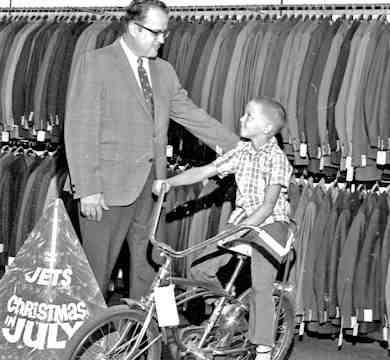
A Look Back Update – Winner of New Bike in 1968

Barry Clark Bauer

rehmann

Eddie VanElls, 9, of West Walker Road, St. Johns, was the winner of a new bicycle given away by Rehmann’s in St. Johns Monday at the conclusion of a contest by Red Bali casual shoes.

John Rehmann queries Eddie about his plans for his new bike. The boy is the son of Mr. and Mrs. Richard VanEIIs of R-2.


Benny and Jessie’s Pet Info – Why You Should Adopt a Pet

The next time you’re in the market for a new pet and wondering where to buy a cat, dog, or other animal, try setting your sights on your local animal shelter. Despite any negative stereotypes animal shelters may have, they actually provide a ton of healthy, happy pet options for your family to take home and love.

Here are 5 things you may have heard in the past about shelter pets, and what the actual truth is.

Myth #1: Shelter pets aren’t healthy.

Truth: In fact, shelter pets can be quite healthy. Dr. Jules Benson is the VP of Veterinary Services at Petplan Pet Insurance. When he recently analyzed Petplan’s claims data he found something interesting: Contrary to popular opinion, the claims data revealed that pets adopted from shelters or rescue organizations are actually 5% less likely to suffer an unexpected trip to the veterinarian compared to pets purchased through pet stores. In addition, many shelter pets are spayed and neutered, and some even come with location microchips.

Martha Smith-Blackmore, DVM — immediate past president of the Association of Shelter Veterinarians and interim president and director of Veterinary Medical Services for the Animal Rescue League of Boston — also stipulates that although there is much variety in animal shelters throughout the country, most good shelters almost always provide excellent vet care for their animals. “In well-run shelters,” Dr. Smith-Blackmore says, “animals receive vaccinations upon in-take, and are fed a high quality diet from a single manufacture so they don’t undergo dietary stress caused from a constantly changing variety of donated food on a daily basis.”

Myth #2: I won’t be able to find a pure breed at a shelter.

Truth: According to Dr. Benson, 25% of all dogs in shelters are purebreds.

Myth #3: Shelter pets are unruly.

Truth: Many shelter pets receive training and socialization before adoption to help make the transition to their new family easier, says Dr. Benson.

Myth #4: I won’t be able to properly get to know my pet from the shelter before I take her home.

Truth: Many shelters offer online pet profiles so that you can get to know the animals that are available before you even step foot in the shelter. “In addition, ” says Dr. Smith-Blackmore, “it’s always a good idea to schedule a ‘get-acquainted’ session with your prospective shelter pet and, if at all possible, have a list of questions you can ask the available shelter staff and the staff veterinarian.”

Myth #5: All the pets in a shelter will be older.

Truth: Shelters and rescues have pets of all ages, promises Dr. Benson, including puppies and older pets, which are usually trained and less initial work for the new pet owner and make excellent companions.

Something else to consider: The cute and appealing puppy in the window of that pet store came from somewhere, says Dr. Smith-Blackmore. “Unfortunately, more than likely, its birth mother spent the majority of her life in a very small cage having litter after litter. Adopting from a shelter or a well-known breeder can help to eliminate commercial puppy enterprises.”

At the end of the day, deciding where to get your brand new family member from is a big decision, but with the right information, it can be made a bit easier.

When you adopt a pet from the shelter, it is important to immediately establish a relationship with a veterinarian to care for that new addition to your family. In fact, your pet needs to be examined at least yearly by a vet even if it appears healthy as many diseases are hidden and not apparent. Remember, it is much cheaper to prevent disease than it is to treat it.


Letters – CASA says thanks

CASA-The Voice for Clinton County’s Children is very appreciative of all who attended and supported our Voices of Hope for Children Luncheon on October 5th.

Special thank you to The Emerald Golf Course for underwriting the event and being wonderful hosts. Thank you to Andy T’s and Simpson Brother’s Greenhouse for the beautiful fall decorations and to Meijer of DeWitt for event supplies.

We thank our guests who heard from Melissa Gibson Board President, Kelly Schafer CASA Executive Director, Judge Lisa Sullivan, CASA Advocate John Lambright, and Katie Eccleton who hosted the lunch. With the generous support from our community, we will provide a Court Appointed Special Advocate for every child removed from their parents’ care due to abuse or neglect.

Kelly L. Schafer, M.S., Executive Director

******

Clinton County Senior Center invites young and old

If you are just reaching senior age, are new in town, or need something to fill up the hours each day, then come and check out the Clinton County Senior Center. The Senior Center, located at 201 E Walker Street in St. Johns is a registered non-profit with 501(c)(3) status that has been in the community since 1979. The center is governed and run daily by a volunteer Board of Directors.

You don’t have to be an “old” senior to attend. Anyone age 55 or older is invited. There are cards, bingo and other games, exercise, library, nutritional meals and meals made onsite, socialization programs, educational/informative program speakers, day trips and more. And the center is always open to new ideas.

The Senior Center is open Monday, Tuesday, Wednesday and Friday of each week between 9:00 am and 3:00 pm and meals are available each of those days.

If you feel you are still “too young” for the center but want to help in some way, consider becoming a volunteer to help at the center or with fundraisers, or consider joining their Board of Directors. For more information about their needs contact their Board Treasurer Brenda Terpening at 989-224-7248 during the daytime hours.

Brenda Terpening
Board Treasurer


Maralyn’s Pet Corner – Natural Ways to Manage Diabetes in Cats

If your cat has been diagnosed with diabetes, there are several treatment options available to help your feline live a long, healthy life. But is there a way for cat parents to avoid regular insulin shots and rely on natural remedies alone?

Not exactly, says Dr. Tara Koble, DVM of The Cat Doctor Veterinary Hospital, in Boise, Ida.

“Some diabetic cats can be managed on a low-carb food alone, without insulin,” says Koble. ”This is the only ‘natural’ treatment that sometimes works by itself. Many cats need a combination of a low-carb food and insulin.”

Most veterinarians agree that natural supplements that tout diabetes remedies don’t work as effective treatment options. Insulin shots may be a necessary means to managing a diabetic cat’s health.

“There is no ‘natural’ replacement for insulin. However, insulin itself is a naturally occurring hormone, and in cats who need it, we are just technically replacing what is lacking,” says Koble. “Other natural supplements that are marketed for diabetes just help support the overall health of the cat but they don’t treat the disease directly.”

On the other hand, there is a natural approach to preventing diabetes in cats that is highly effective. Koble recommends pet parents pay close attention to diet and exercise. “The two best things any cat parent can help do to protect from diabetes would be to feed the highest quality canned, low-carb or raw diet that is possible,” she says. “The second critical thing to help prevent diabetes is to get your cat moving. Exercise is protective against diabetes, and indoor only cats are usually lacking severely in activity.”

What Causes Diabetes In Cats?

Not dissimilar to type 2 diabetes in people, most cases of diabetes in cats occur when a cat’s blood sugar rises because its body is no longer responding to insulin in a normal manner. The pancreas can initially respond by producing more insulin, but the cells that make insulin eventually “wear out.”

While diabetes is more likely to happen in obese, middle-aged, indoor cats, it can affect any feline at any age and weight.

If your cat has been diagnosed with diabetes, there are several factors that could have led to the development of the disease. Koble explains that some of the causes include, “genetic predisposition, a sedentary lifestyle, obesity, diet (high-carbohydrate, dry kibble), and the deposition of amyloid in the islets of the pancreas.”

Koble notes that diabetes in cats is not just caused by one of these issues—it is usually a combination of multiple problems.

How To Tell If Your Cat Has Diabetes

While there are a few things to look out for, Dr. Erika Raines, DVM, CVA, CVSMT, of the Holistic Pet Vet Clinic in Tigard, Ore., says more frequent drinking and urination is the biggest sign of diabetes in cats. She notes that cats may also develop diabetic neuropathy, “where they start to lose nerve function in their back legs and have weak hind legs as a result.” Raines says that the most common sign of neuropathy is a cat who walks flat on his back legs with his hocks on the ground.

A change in eating and drinking routines may also signal the onset of diabetes in cats. “Without insulin, [a cat’s] body can’t use glucose. So in the beginning you notice your cat is really hungry and is still losing weight,” says Koble. “The body also tries to dilute the high sugar by increasing the thirst, so cats that are diabetic will drink and urinate much more than a healthy cat.”

If you notice any of these signs, take your cat to the veterinarian immediately. If untreated, diabetes in cats can lead to severe issues, including weakness in the legs (diabetic neuropathy), diabetic ketoacidosis, infections, cataracts, nausea, kidney failure, severe dehydration, seizures, coma, and even death, explains Koble.

Insulin Treatments: A Common Option

While lifestyle and dietary changes may assist a cat in managing diabetes, Koble notes that many cats will need to receive insulin shots “before going into remission.”

Insulin, as Koble explains, is a hormone that is made in the pancreas that regulates blood sugar (glucose) levels. The more insulin secreted, the lower the blood sugar will drop. The less insulin that is secreted, the higher the blood sugar will remain. When there is not enough insulin, blood sugar remains high, resulting in diabetes.

For cats that do require insulin, most cats need a dose every 12 hours. Koble adds, “All insulin is safe when used properly.”

Any cat with diabetes will have to maintain visits with their vets based on their diagnosis. “Some [vets] require frequent office visits for blood sugar measurements and some prefer to empower clients to do monitoring at home,” Koble explains. “If a cat is well regulated and doing well, there may be up to six months on average between recommended visits.”

Natural Options to Help Manage Diabetes in Cats

While insulin may be necessary to ensure effectiveness in managing diabetes in cats, pet parents can also take a natural approach to diet and lifestyle changes following a diabetes diagnosis.

Raines recommends a low-carb diet without the addition of grains, sweet potatoes, potatoes, and green peas. “If you are feeding raw or home cooking your cat’s diet, definitely make sure that it is balanced appropriately,” she says, “This can be done by purchasing a supplement designed to balance a home prepared diet, or by purchasing commercially prepared complete raw diets.”

In addition to natural dietary changes, Raines says diabetic cats may also benefit from a cranberry-based urinary supplement since “diabetic cats can be at a higher risk for bladder infections.”

When searching for a natural urinary supplement, look for companies that perform independent testing and for products that have the GMP (Good Manufacturing Practices) label. It’s best to work directly with your veterinarian to ensure safe and proper supplementation for your diabetic cat.

Most importantly, never change your cat’s insulin dose or diet without first talking to your veterinarian. Oftentimes, a cat’s insulin needs will change when they start eating a different food. A mismatch between diet and insulin can result in serious and even fatal complications.


Now and Then – Remembering Doug McDowell

by Jean Martin

mcdowell3To say simply that Doug McDowell was a graduate of Rodney B. Wilson High School is not saying enough. Doug was a sprite, a force of nature.

St. Johns was still a small town in the late 1950s. We all knew one another. Doug was a year ahead of me in school, but we all knew one another; we knew everyone’s families.

Kids in the band were almost like brothers and sisters. And Doug was the pesky little brother who was really good at what he did, but he was always skating on the edge of minor infractions. He was always blurting out wise cracks, always in danger of being sent to the office — if only so that class could continue uninterrupted.

And one fine Friday night Doug’s story became a cautionary tale.

It was Band and Orchestra Festival season; and after every Friday home game, whether it be football or basketball, there would be a dance in the gymnasium. One year the band had an unusually early call to get on the buses the next morning and head to Festival.

And so the decree went out from the band director, Frank Jilka, that no band member was to attend the dance after the game. He would come up to the school, he promised, sweep the room, take any band member home and personally put him or her to bed.

Little groups of band members discussed this pronouncement among themselves and weighed the chances of getting caught. Most of us decided that it wasn’t worth the risk. We might not be in bed early, but we weren’t going to be caught in the school gym that night.

The word spread quickly through the buses the next morning that one of us had defied the ban. Of course it had been Doug who had been flushed out of the dance. Urban legend soon had it that Frank had actually escorted him from the dance and personally put him in his jammies and chucked him in bed. We knew that the McDowells were friendly with the Jilkas, and so the story had enough of the ring of truth to it that we were inclined to believe it.

We became believers, and the incident seemed not to make even a blip on Doug’s radar. He knew he was going places, and he did.

mcdowell_doug4

Features

Class of ’56 – 60th Reunion

by Maralyn Fink

On Saturday evening, I attended the “Class of 56” 60th reunion from RBW. This was held at The Emerald Golf Course here in St. Johns.

I attended on behalf of my sister, Rosalie Fink Sharpe. Back in the day, I was always her tag-along.

I was nervous at first; but after I started seeing the faces of people I knew, I just jumped right in.

It was a fun evening and great to see those that use to tease me.

I spoke to Chairman Margaret Peck Schaefer who said they started planning in January. The Committee members were Rosalie Ankeny, Paul Armbrustmacher, Joyce Crosby, Edna Eaton, and Arleita Schafer.

There were 48-50 classmates attending and a total of 80 all together.

Everyone seemed to be having an enjoyable evening and enjoyed the short program.

Thanks, Class of ’56, for letting me take pictures and visit with you. The next reunion will take place in 3 years.

Maralyn@sjindy.com


Ag Program at Gateway

This article, written by Jenn Parker, 4th grade teacher, highlights the 4th grade Farmer in the Classroom partnership with local dairy farmers Kris and Carla Wardin.

******

Farmer in the Classroom

As a part of Ag Stem each grade level at Gateway is paired with a local farmer.

The Fourth Grade is paired with Kris and Carla Wardin to learn all about dairy. So far, students have written letters to Carla with many questions about farming. Carla has written our classroom a letter back which generated more questions, and we have an open communication line.

Carla had a chance to come visit our 4th Graders. During her visit she showed students many pictures of her farm. We learned that cows have beds to sleep on. We got to see a milker and learn all about milking cows. Cows have a nutritionist to make sure that they are healthy and give the most milk possible.

We are looking forward to visiting the farm and the baby calves in the spring.


This week’s Mystery Photo

Where is this?

mystery285

Can you tell us where this is located? Drop us a line at mail@sjindy.com.

407 Meadowview Dr.

mystery284

The current owners: Nathaniel and Kari Simon. Previous owners include Kevin Parker.


A Look Back – A 1968 Winning Team

by Barry Clark Bauer

ballteam

St. Johns’ entry in the Grand Valley softball league finished with a 12-4 league record this year and on Friday and Saturday shut out Continental Bar of Belding twice to advance to the district “C” tournament at Fowler.

Players kneeling are: Dennis Morrison, John Williamson, Dick Root, Tim Graham, Bob Paksi and Jim Graham. Team members standing left to right: Larry Paksi, Morris Sharick, Jerry Sharick and Norm Love.

Other players absent for the picture are Dennis Blakeslee, Les Warner, Larry Crosby, Jeff Martin and Larry Foy.

Sponsors of the team standing from the left: St. Johns Co-Op, Art Romig, Federal Mogul, Mike Hatta, and Clinton Tool &-Engineering, Red Lundy.

Other sponsors were: Roadhouse, Daley’s, Osgood’s, Two Brothers, Central Michigan Lumber Co. and Penney Paints.


Benny and Jessie’s Pet Info – How Cats and Dogs Help People Cope With Social Rejection

What’s in a name? When it comes to naming a cat or a dog, it can actually mean a whole lot to a person who is dealing with social rejection.

In a recent study, researchers Christina M. Brown, Allen R. McConnell, and Selena M. Hengy discovered that when people thought about—and named—animals, it helped them cope with previously upsetting moments of social rejection.

The study, titled “Thinking About Cats or Dogs Provides Relief From Social Rejection,” is the latest from the researchers, whose prior works revealed similar findings.

“All of this started from a paper we published a few years ago. We saw that people who had pets on average tended to be happier and healthier people,” McConnell tells petMD. “In that study, what we found was that on average, pet owners tended to be better off with things like self-esteem, stress-related illnesses, and exercise.”

In this latest study, however, the researchers had their subjects recall a moment of social rejection, look at photos of cats and dogs, and then name the animals. The study measured the subjects’ feelings of self and social connectedness after this exercise.

As it turns out, the subjects “anthropomorphized” the cats and dogs, which is, as McConnell explains, “when we view animals with human-like qualities.”

But, what was perhaps most telling in this study was that people didn’t need to have a relationship with an animal to feel a sense of relief from them. In other words, it’s not just a pre-established relationship you may have with a pet of your own; rather, if you are an animal-lover in general, cats or dogs can help.

“People who thought of names for animals felt better after being socially rejected,” Brown explains.

The study also had its subjects name toys, which garnered similar results. “When we think about anthropomorphizing, it’s a broader sense of elevating all sorts of things, whether its plastic figurines or dogs and cats,” McConnell says. “When you give them a more human-like status it makes you feel less lonely after a rejection experience.”

So what is it about animals that can cause this kind of reaction and response? McConnell theorizes a few reasons:

“What seems to be happening is when people relate to pets, there’s probably a number of social benefits they get from it,” she says. “First, there’s a sense of belonging that this animal ‘gets’ me, I can have a crappy day at work and I come home and my dog’s wagging [its] tail. For some other people it’s probably much more about control. For some its cadence with their pets—taking [the pet] for walks, caring for [the pet]… you have a meaningful role with this animal.”

So, the next time you’re at a party and you’re feeling left out, or you suddenly recall an incident from school that was embarrassing, simply think of a cat or dog, give it a name, and your mood just may change for the better.


Letters – CASA says thanks

CASA-The Voice for Clinton County’s Children would like to express our appreciation to everyone who supported our Mums for CASA Sale at the St. Johns Farmer’s Market.

Big thank you to Simpson Brothers Greenhouse of Ovid for the beautiful fall mums, special thanks to all who volunteered to work at the sale, and appreciation to all who stopped to visit with us and learn more about Court Appointed Special Advocacy for Clinton County Children.

For more information about CASA, please visit our website ClintonCountyCASA.org.

Thank you!

Kelly Schafer
CASA Executive Director


Maralyn’s Pet Corner – 8 Signs of Pain in Cats

Pain it isn’t always obvious to others when you’re experiencing it. Unless it’s a broken leg twisted at a 90-degree angle or a big bruise on your arm, pain is a condition with no obvious external manifestations. Sure, some people are good at going around making sure everyone knows they’ve stubbed a toe or pulled a groin muscle, but other people are more like cats—you’d never know anything was wrong.

Cats are renowned for their ability to mask pain and discomfort. This is a great advantage when out in the wild around a predator, but it’s a big problem in a home when pet owners are unaware that their pet has a problem.

Cat Pain: What We Know

Veterinarians have come a long way in understanding pain in pets. With that understanding comes the knowledge that we are very likely undertreating pets for pain they are commonly experiencing. Arthritis, dental disease, urinary tract disease, bone disease, and cancer are just a few of the common feline medical conditions that are known to be painful. Pain management specialists have a mantra they often repeat: “Assume pain.” If you diagnose a painful medical condition, pain management should be part of the treatment, every time.

Cats may not speak, but they do communicate their pain in their own ways. Although they can’t come up to us and say, “I’m hurting,” cats do exhibit behavioral changes that can indicate they are experiencing pain. The American Animal Hospital Association has pain management guidelines that can help owners and veterinarians manage feline pain.

Recognize the Signs of Cat Pain

Here are some of the most common behavioral signs that might be a symptom of a cat in pain:

– Change in Activity Level

A change in activity level can indicate discomfort. Cats might become less active and sleep more hours than they used to. Stiff, arthritic cats may be reluctant to change positions, or no longer jump onto high surfaces. Conversely, cats may become more active: restless, repetitively getting up and down, and seeming to have difficulty getting comfortable.

– Self Mutilation

While many people associate biting and licking with allergies, pets in pain often repetitively lick and bite at painful areas. They may do it so often that they cause secondary trauma to their body in the form of skin infections and hair loss.

– Vocalizing

Most of us know that a hissing or growling cat is an unhappy cat, but did you know meows and purrs can accompany pain as well? Some cats purr when they are frightened or hurting, and it does not always indicate contentment. This is particularly true for cats with an easygoing or gentle personality.

– Change in Daily Routine

A cat whose appetite suddenly drops may be feeling too much pain to eat, or may be experiencing nausea from a disease process. Cats who have an abrupt onset of soiling in the house after years of using the litterbox may be too painful to get in and out of a box with high sides, or too sore to get to where the box is located. A lap cat who suddenly can’t stand being held may be experiencing pain when they are touched or pet. Any of these changes in their usual personality and preferences may be medical in origin.

– Posture

Cats do a version of the “little old person shuffle” when they are stiff; they walk very gingerly and avoid the usual athletic leaps we are accustomed to seeing. Cats with abdominal pain may have a hunched back, tucking in their abdomen in a protective posture. You may also notice a cat being protective of a certain area of their body, not wanting to be touched or scratched; they may also limp or hesitate to put weight on a sore limb.

– Facial Expressions

Granted, facial expression can be difficult to gauge in a cat, but certain giveaways can indicate pain or discomfort. A vacant stare at nothing in particular, or a “glazed” expression is common. Cats in distress can also have dilated pupils—part of the stress response in the body. Unlike in dogs, cats do not normally pant. If you notice a panting cat, particularly when she is at rest, you should get her evaluated as soon as possible.

– Aggression

Some cats are naturally surly for their entire lives. It can be hard to tell if they are escalating their level of aggression. However, a normally friendly cat who is suddenly hissing, swatting, and biting may be a cat in pain. Out-of-character meanness is a cat’s way of asking to be left alone.

– Poor Coat Condition

Cats are expert groomers, spending up to five hours a day on maintaining their silky coats. However, pain from arthritis can make it difficult to contort themselves into their normal grooming positions, and pain in general can make a cat too uncomfortable or worn out to maintain their normal routine. A cat who stops grooming and starts to look unkempt may be in pain and needs to be evaluated.

– Controlling Pain in Cats

Historically, we have had very limited options for pain control in cats, but fortunately this is changing. Owners must never treat their cat with pain medications meant for people, as they metabolize medication differently and can die from something as benign to humans as Tylenol. If you think your cat might be in pain, get her evaluated by your vet to discuss the best treatment options.

Features

Fowler hosts the Vietnam Traveling Wall

by Maralyn Fink

On Friday, I came across the traveling wall in Fowler.

The Wall started out in Holland and is brought to different communities by Bill Ricketts and Frederick Troost both of Holland.

At 10 am the Patriot Guard Riders met the Wall coming from Holland by Ionia and escorted them to Portland VFW Post. Then they were met by other Escort Riders and was taken to Eagle and through Westphalia and Pewamo. The Wall arrived in Fowler and was set-up across from the VFW.

On Saturday a Flag Raising Ceremony took place with an opening prayer and keynote speaker. Posting the flag at the Missing Man Table was also done.

The Wall had many visitors and was open until Sunday at 12 noon.

The Wall travels through out Michigan and the Upper Peninsula.

I was honored to view this Wall as my husband served in Vietnam.

Maralyn@sjindy.com


This week’s Mystery Photo

Where is this?

mystery284

Can you tell us where this is located? Drop us a line at mail@sjindy.com.

711 N. Ottawa St.

mystery283

The current owners are Jeffrey and Robin Scheffler. Previous owners include Roy Westendorff and Theodore Dunn.


A Look Back – Class of 1919

Barry Clark Bauer

In 1919 nine young women received their graduating certificates from the Clinton County Normal School. In 1968 they met at the L & L Restaurant for a reunion.

1919

Pictured with their graduation picture are: back row from left, Neva Hettler, (Mrs. Donald Pope), Bernice Zacharias (Mrs. Alva Ballinger), and Edna Stockwell (Mrs. Leo Pouch). Seated from left, Eva Jones Leavitt, Harriett Rice Bugbee, and Clara Miller (Mrs. Gordon Bygrave). Missing from the photo are Beatrice Raymond, (Mrs. Stanford Besse), Frances Kinley Smith, who lives in California. One member of the class, Ethel Lewis (Mrs. Earl Rhynard), is deceased.


Benny and Jessie’s Pet Info – How to Stop Your Dog From Pulling on the Leash

We all have that friend, relative, or rival who walks their dog with expert leash-wielding skills. They aren’t being pulled down the block, tied ’round trees, or tangled up with the friendly neighbor dog who’s also out for an afternoon stroll. I don’t know about you, but I silently envy the person and pet that can walk side-by-side without breaking a sweat.

And I have to admit, good leash walking skills are important for more than just showing off your pet-parent talents.

“From a relationship perspective,” explains Sarah Fraser, a certified professional dog trainer and co-founder of Instinct Behavior & Training in New York City, “if your dog is walking nicely on a leash, it likely means that your dog is paying more attention to you, making it easier for you to provide direction and guidance as needed along your walk.”

A leash-puller can also run the risk of accidentally breaking away from your grip, which can pose multiple dangers to your pet if he or she continues to run, not to mention the danger for yourself if you end up face-first on the sidewalk. Having proper leash manners minimizes the risk that you will be pulled over in a moment of overzealous leash yanking and will make the time more about walking and less about tug-of-war.

“Teaching your dog to walk nicely on a leash allows you to take her more places and for longer walks, because it’s more comfortable and enjoyable for the both of you,” Fraser says.

Tips for Better Walking Behavior

Whether your dog is big or small, here are six ways to improve your dog’s behavior on a leash:

Adjust your attitude.

First, ask yourself: “What would I like him or her to do instead?” Instead of teaching a dog to stop pulling, think of it as teaching your dog how to walk nicely beside you.

Remember it’s all about the rewards.

One of the easiest and most effective ways to start teaching a dog to walk properly on a leash is to reward the dog for paying attention to you and for being in the desired position (next to you or close to you) when out for a walk.

“As the dog learns that walking next to you is a pleasant, rewarding experience, she’ll spend less time pulling and more time walking nicely beside you,” says Fraser. Try using very special treats in the beginning, like small pieces of boiled chicken or roast beef, to really get your dog’s attention, she advises.

Play the “follow me” game.

Hold on to your leash and take several backward steps away from your dog. The backward movement is inviting, so your dog is likely to turn and follow you. Say “yes!” as your dog approaches you, then immediately reward him or her with a treat.

“The game helps your dog focus and move with you,” says Fraser. Then back away several steps in another direction. Once again, says “yes!” as your dog approaches and reward him or her with a treat. Repeat this pattern eight to 12 times, until your dog is actively pursuing you when you move away.

Practice on your regular walks.

Once you’ve started your stride, each time your dog looks up at you or walks next to you, says “yes!” and immediately reward him or her with a treat.

Reward often.

“Frequent rewards will help your dog figure out more quickly what behavior you’re looking for and make the learning process easier for her,” Fraser explains.

“The trick to making this work is using very special treats at first, and keeping your rate of reinforcement high, which just means that you are marking and rewarding often — maybe every 4-5 steps at first — for any and all ‘good’ leash behavior.”

Over time, you can thin out your rate of reinforcement, rewarding your dog less frequently throughout the course of the walk, Fraser adds.

Consider additional assistance.

“If your dog is already a practiced puller, consider purchasing a quality front clip harness to provide extra control on walks,” Fraser recommends. But if your dog already pulls hard on a front clip harness, consider working with a certified, positive reinforcement-based trainer.

Finally, remember that walking on a leash is a skill that takes time and practice for both the pet parent and dog, so celebrate incremental improvements and successes!


Maralyn’s Pet Corner – Tick Bite Paralysis in Cats

Tick paralysis, or tick-bite paralysis, is caused by a potent toxin that is released through the saliva of certain species of female tick and which is injected into the blood of a cat as the tick infests the cat’s skin. The toxin directly affects the nervous system, leading to a group of nervous symptoms in the affected animal.

The toxins released by ticks cause lower motor neuron paralysis, which is defined as a loss of voluntary movement and which is caused by a disease of the nerves that connect the spinal cord and muscles. With lower motor neuron paralysis the muscles stay in an apparent state of relaxation.

An infestation of ticks is not necessary for a diseased state to occur. While multiple ticks are usually present on a cat that is showing symptoms of tick paralysis, tick-bite paralysis can take place after being bitten by only one tick. Conversely, not all animals, infested or not, will develop tick paralysis.

In the U.S., this disease is more commonly seen in dogs than in cats. Cats in the U.S. appear to have a resistance to the tick toxin. However, in Australia there is a higher incidence of this disease, and it affects both dogs and cats. Symptoms usually begin to appear around 6-9 days after a tick has attached to the skin of the cat.

Symptoms and Types

There is history of a recent visit the cat has taken to a wooded area, or the cat is living in an area that is endemic to ticks. Symptoms are gradual in nature.

– Vomiting
– Regurgitation
– Unsteadiness
– High blood pressure
– Fast heart rate and rhythm (tachyarrhythmias)
– Weakness, especially in the hind limbs
– Partial loss of muscle movements (paresis)
– Complete loss of muscle movement (paralysis), commonly seen in advanced disease state
– Poor reflexes to complete loss of reflex
– Low muscle tone (hypotonia)
– Difficulty in eating
– Disorder of voice (dysphonia)
– Asphyxia due to respiratory muscle paralysis in severely affected animals
– Excessive drooling (sialosis)
– Megaesophagus (enlarged esophagus)
– Excessive dilatation of pupil in the eye (mydriasis)

Causes

Tick infestation

Diagnosis

You will need to give a thorough history of your cat’s health, onset of symptoms, and possible incidents that might have preceded this condition. For example, your veterinarian will ask about any recent visits you and your cat have made to wooded areas, especially within the last several days and weeks.

Your veterinarian will conduct a complete physical examination, looking closely at your cat’s skin for the presence of ticks or for recent evidence of ticks. If ticks are found to be present on the skin, your veterinarian will remove the tick and send it to the laboratory for a determination of its species. Routine laboratory tests will include a complete blood count, biochemistry profile, and urinalysis. However, the results of these tests are often normal if no other concurrent disease is present along with tick paralysis.

In patients with respiratory muscle paralysis, blood gases will need to be calculated to determine the severity of the respiratory compromise. If respiratory muscle paralysis is occurring, low oxygen and high levels of carbon dioxide will be present in the blood, as the cat will not be able to properly inhale oxygen and exhale carbon dioxide. A chest radiograph may reveal an enlarged esophagus due to the extra effort of trying to breath.

The most important step in the diagnosis is to search for and find the tick that bit your cat so that it can be identified and its ability to transmit disease determined. Your veterinarian will thoroughly search all areas of your cat’s skin to find any ticks so that this can be done.

Treatment

In case of severe disease, your cat will need to be hospitalized for intensive care and nursing support. Respiratory paralysis is an emergency and needs immediate veterinary medical attention.

Identifying and detaching the ticks is the first step to preventing the further release of toxins and aggravating the symptoms. Even if no ticks are found, an insecticidal bath may be used for your cat to kill any ticks that may be hidden in the folds of the skin. In some cases, this is the only treatment required and the cat will soon start showing signs of recovery. However, in cases with respiratory paralysis, oxygen supplementation or some other form of artificial ventilation will be required to keep the cat breathing.

If the cat is dehydrated, intravenous fluids will be given, along with medications that can be used to counter the effects of the toxins on the nervous system, and to relax the muscles enough so that the cat can breathe.

Living and Management

For the best recovery, you will want to keep your cat in a quiet, cool environment. The affects of the toxins are temperature dependent and at high temperatures aggravation of symptoms may increase. Physical activity should also be temporarily avoided, as activity can increase body temperature and aggravate symptoms. Encourage your cat to relax as much as possible until a full recovery.

Some affected cats have problems with vomiting and loss of appetite and are unable to eat. In such cases, food should not be offered until these symptoms are properly managed. Your veterinarian will instruct you on the type of food supplements that should be fed to your cat, and the method you should use to feed your cat (which can be by syringe or tube, for example). Good home nursing care is important for a prompt and full recovery.

During hospitalization, a daily neurological assessment of your cat will be taken. The overall prognosis largely depends on the specie of tick that was found to have infested your cat, but as with any illness, your cat’s recovery may also rest on its health condition and age previous to the tick acquired illness. In some cases, and with particularly toxic reactions, death can occur even with the best treatment.

Features

Gateway North off to a great start

Gateway North is off to an amazing year as a welcoming safe school. Our students are earning SOAR awards for Staying Safe, Offering Help, Acting Responsibly, and Respecting Everyone.

Our school gardens are producing an abundance of green beans, and the kindergarten classes are studying them as our commodity of the month. We have searched the gardens to harvest them and explored them with our five senses.

gateway2

Our Ag-STEM focus is becoming more defined and we are in the process of expanding our opportunities through grants and in kind donations. Our Classroom Farmer program is up and running for the second year and we are looking forward to using Skype to tour some of the facilities that we cannot physically visit.


Athletic Hall of Fame induction ceremony held September 9

with videos courtesy of Guven Witteveen and St. Johns Athletic Dept.


This week’s Mystery Photo

Where is this?

mystery283

Can you tell us where this is located? Drop us a line at mail@sjindy.com.

206 E. Gibbs St.

mystery282

Trefil wrote: In the late forties and early fiftys it was owned by Harold and Dorothy Whitaker. They had two daughters Betty Jean and Helen. Then it owned by Joe and Trudy VaRrooyen.

The current owners are Brian and Sammy Karsten. Previous owners include Dorothy Whittaker, Joe and Carolyn VanRooyen, Gregory Argersinger, and Kevin and Michelle Hafner.


A Look Back – 1968 Soap Box Derby Winner

Barry Clark Bauer

soapbox

Soap Box Derby winner Kris Patterson proudly holds the John Lynam Memorial trophies, while Marv Streit, Chevrolet regional derby director, and St. Johns derby Director Bill McCarthy hold Kris’ big trophy and $500 savings bond.

Kris Patterson, 13, of St. Johns is probably still floating on cloud nine today, reliving his five races downhill on the way to the Clinton County Soap Box Derby championship Sunday evening. The 13-year-old son of Mr. and Mrs. Robert Patterson of 605 W. Cass won the derby by edging out Ron Droste of Westphalia by about two feet in the final heat of Sunday’s sixth annual derby.

As winner, he received a $500 U.S. savings bond, a handsome trophy, and a trip Aug. 24 to Akron, Ohio, to participate in the All-American Soap Box Derby sponsored by Chevrolet.

The 86 heats of racing Sunday afternoon and evening were run in about three hours, and the derby awards program was concluded before dark. Temperatures downtown during the late afternoon and early evening ranged between 92 and 97 degrees, according to the bank clock.

Fifteen of the 85 boys participating shared in prizes offered by the sponsoring St. Johns Jaycees and Bee’s Chevrolet-Olds. Nine of the boys were from St. Johns, five from Westphalia and one from Fowler.

Runner-up Ron Droste of Westphalia received a portable television set as second prize, and Ron’s brother, Ken, was third and won a Polaroid 220 Land camera. Another Westphalia lad, Dan Schueller, was fourth and got a Sting-Ray bicycle.

Other prize winners were:
Kim Patterson, brother of the winner, fifth place, a Wyler wrist watch.
Bruce Kieffer of St. Johns, sixth place, a portable radio.
Bruce Eisler of St. Johns, seventh place, a Polaroid Swinger camera.
Bruce Schomisch of Fowler, eighth place, a Caravelle wrist watch.
Tom Hattis of Westphalia, ninth place, a Johnson rod and reel.
Gary Rademacher of St. Johns, tenth place, a baseball glove.
Roger Harris of St. Johns eleventh place, a model airplane.
Mike Paradise of St., Johns, twelfth place, a portable radio.
Drew Carpenter of St. Johns, thirteenth place, a Zebco rod and reel.
Steve Martin of St. Johns, fourteenth place, a slot car.
Kevin Thelen of Westphalia, fifthteenth place, a football.

An estimated 5,000 persons braved the heat of Sunday to witness at least parts of the derby day program. It included a 43-unit parade, a powder puff derby, crowning of queens, and of course, the races.

The derby winner, Kris Patterson, was participating in his third Soap Box Derby. In the previous two years he didn’t place in the top 15. This year, driving a car sponsored by Woodbury’s Flower Shop, with psychedelic lettering, he won all five heats he participated in. Kris has been working on his car for about three months. He said he changed the wheel base, put on a new front, side and back. He was proud of the fact he built the car himself with no special help from his father. “And I had a good pit crew helping me spin my wheels,” he commented.

Kris also received the John Lynam Memorial traveling plaque as an award for sportsmanship and adherence to the Soap Box Derby ideals. The plaque, and a personal trophy, was presented by Ralph Lynam; it’s a memorial to his son, John, who was struck and killed by a car in Akron, Ohio, after watching the All-American derby the first year of the racing here.

Features

Depression – major depressive disorder

by Maralyn Fink

Today’s information comes to us from the Mayo Clinic

Definition

Depression is a mood disorder that causes a persistent feeling of sadness and loss of interest. Also called major depressive disorder or clinical depression, it affects how you feel, think and behave and can lead to a variety of emotional and physical problems. You may have trouble doing normal day-to-day activities, and sometimes you may feel as if life isn’t worth living.

More than just a bout of the blues, depression isn’t a weakness and you can’t simply “snap out” of it. Depression may require long-term treatment. But don’t get discouraged. Most people with depression feel better with medication, psychological counseling or both.

Symptoms

Although depression may occur only one time during your life, usually people have multiple episodes of depression. During these episodes, symptoms occur most of the day, nearly every day and may include:

– Feelings of sadness, tearfulness, emptiness or hopelessness
– Angry outbursts, irritability or frustration, even over small matters
– Loss of interest or pleasure in most or all normal activities, such as sex, hobbies or sports
– Sleep disturbances, including insomnia or sleeping too much
– Tiredness and lack of energy, so even small tasks take extra effort
– Changes in appetite — often reduced appetite and weight loss, but increased cravings for food and weight gain in some people
– Anxiety, agitation or restlessness
– Slowed thinking, speaking or body movements
– Feelings of worthlessness or guilt, fixating on past failures or blaming yourself for things that aren’t your responsibility
– Trouble thinking, concentrating, making decisions and remembering things
– Frequent or recurrent thoughts of death, suicidal thoughts, suicide attempts or suicide
– Unexplained physical problems, such as back pain or headaches

For many people with depression, symptoms usually are severe enough to cause noticeable problems in day-to-day activities, such as work, school, social activities or relationships with others. Other people may feel generally miserable or unhappy without really knowing why.
Depression symptoms in children and teens

Common signs and symptoms of depression in children and teenagers are similar to those of adults, but there can be some differences.

In younger children symptoms of depression may include sadness, irritability, clinginess, worry, aches and pains, refusing to go to school, or being underweight.

In teens symptoms may include sadness, irritability, feeling negative and worthless, anger, poor performance or poor attendance at school, feeling misunderstood and extremely sensitive, using drugs or alcohol, eating or sleeping too much, self-harm, loss of interest in normal activities, and avoidance of social interaction.

Children with attention-deficit/hyperactivity disorder (ADHD) can demonstrate irritability without sadness or loss of interest. However major depression can occur with ADHD.

Depression symptoms in older adults

Depression is not a normal part of growing older, and it should never be taken lightly. Unfortunately, depression often goes undiagnosed and untreated in older adults, and they may feel reluctant to seek help. Symptoms of depression may be different or less obvious in older adults, such as:

– Memory difficulties or personality changes
– Physical aches or pain
– Fatigue, loss of appetite, sleep problems, aches or loss of interest in sex — not caused by a medical condition or medication
– Often wanting to stay at home, rather than going out to socialize or doing new things
– Suicidal thinking or feelings, especially in older men

When to see a doctor

If you feel depressed, make an appointment to see your doctor as soon as you can. If you’re reluctant to seek treatment, talk to a friend or loved one, a health care professional, a faith leader, or someone else you trust.
When to get emergency help

If you think you may hurt yourself or attempt suicide, call 911 or your local emergency number immediately.

Also consider these options if you’re having suicidal thoughts:

– Call your mental health specialist.
– Call a suicide hotline number — in the U.S., call the National Suicide Prevention Lifeline at 1-800-273-TALK (1-800-273-8255). Use that same number and press “1” to reach the Veterans Crisis Line.
– Seek help from your primary doctor or other health care provider.
– Reach out to a close friend or loved one.
– Contact a minister, spiritual leader or someone else in your faith community.

If a loved one or friend is in danger of attempting suicide or has made an attempt:

– Make sure someone stays with that person
– Call 911 or your local emergency number immediately
– Or, if you can do so safely, take the person to the nearest hospital emergency room

Risk factors

By Mayo Clinic Staff Depression often begins in the teens, 20s or 30s, but it can happen at any age. More women are diagnosed with depression than are men, but this may be due in part because women are more likely to seek treatment.

Factors that seem to increase the risk of developing or triggering depression include:

– Certain personality traits, such as low self-esteem and being too dependent, self-critical or pessimistic
– Traumatic or stressful events, such as physical or sexual abuse, the death or loss of a loved one, a difficult relationship, or financial problems
– Childhood trauma or depression that started when you were a teen or child
– Blood relatives with a history of depression, bipolar disorder, alcoholism or suicide
– Being lesbian, gay, bisexual or transgender in an unsupportive situation
– History of other mental health disorders, such as anxiety disorder, eating disorders or post-traumatic stress disorder
– Abuse of alcohol or illegal drugs
– Serious or chronic illness, including cancer, stroke, chronic pain or heart disease
– Certain medications, such as some high blood pressure medications or sleeping pills (Talk to your doctor before stopping any medication.)


This week’s Mystery Photo

Where is this?

mystery282

Can you tell us where this is located? Drop us a line at mail@sjindy.com.

402 Meadowview Dr.

mystery281

The current owners are Bruce and Gladys Irish. A previous owner is Charles Montague.


A Look Back – Elections in 1968

Barry Clark Bauer

ballots

Clinton County Clerk Ernest E. Carter (right) is shown checking primary election ballots with Alden (Al) Haight (center), Clinton County News business manager, and John Hannah, mechanical superintendent.

A second complexity in producing Clinton County ballots was new county supervisor districts that crossed township lines. There are 11 such districts. Rotation of names is the most time consuming operation for the printer. County News mechanical supt. John W. Hannah said, “Ballots for some precincts were run through the press eight times.” Adding to the confusion was the way Clinton County falls in State House of Representatives districts and in Congressional districts.

In the legislature, part of Clinton is in the 88th Representative District, and part in the 87th District. Both districts have eight candidates running for Republican nomination. The names were rotated. The 88th has only one Democrat, but the 87th lists two. Names of the two were rotated.

In Congress, a portion of Clinton falls in the Third District where one Republican and two Democrats are competing, while another part is in the Sixth District where only one Republican and one Democrat are on the ballot. In the latter case, rotating names isn’t a factor.

Then there are the 11 supervisor districts. Four have unopposed candidates, but seven have races, with as many as four candidates. All four names were rotated.

“Sound complicated,” John Hannah said mid-way through processing the ballots? “I hope they have plenty of room in state institutions, because they just may need it for the people who are printing these ballots.”


Benny and Jessie’s Pet Info – Dog Ingests Gorilla Glue and Undergoes Emergency Surgery

Let this serve as a warning to any pet parent (or parent in general, really) that has Gorilla Glue in their households: keep it far away from anyone or anything that could get to it.

dog

Case in point: A 6-month-old puppy named Lake ingested the extra-strength glue and started vomiting. Lake’s owner called her veterinarian, Dr. Leonardo Baez, DVM, of Midtown Vets in Oklahoma City, Okla., who told them emergency surgery would have to be performed.

“Gorilla Glue is a polyurethane,” Baez explains, “so as soon as it makes contact with anything that is liquid, it begins expanding.” In the case of Lake, the glue was expanding inside of her stomach at a rapid volume.

The vets performed the surgery (which took roughly 45 minutes) and removed the glue, which had formed into a perfect mold of Lake’s stomach. Lake, who was given antibiotics and IV fluids, is now recovering well after the health scare. Baez shares that the dog is already up and running and eating again.

While Lake was lucky, Baez notes that it could have been worse if the glue had gotten stuck in the dog’s esophagus, which could have been fatal. The continually-expanding glue could tear vital tissues if not removed in time. That’s why if a dog does ingest Gorilla Glue, it’s vital that a pet parent takes them in for emergency care. As Baez simply puts it, “Gorilla Glue equals surgery.”

Baez says that dogs eating Gorilla Glue is, unfortunately, not an uncommon occurence and notes that it has a sweet taste that seems to appeal to curious pups. He hopes that the Gorilla Glue company will put a stronger word of warning about the possible risks that the product provides for pets and children alike.


Letters – Lost blanket

Our brown velour throw was lost at the city park on Wednesday, August 31, following the music at the park.

If found, please contact LaRene at 989-224-6973. This is part of a set.

Thank you for returning it, and we will be happy to pick it up.

Rowlan Smith


Maralyn’s Pet Corner – Is It Safe for Your Cat to Eat Bugs?

It doesn’t take a devoted cat or dog person to let you know just how different these two species are—the signs are all around us. While dogs are considered “man’s best friend” and have been domesticated, the social contract between cats and people has a few gray areas. It’s as if cats considered our offer of being fed and having a warm place to sleep and answered, “Ok, we’ll take care of the rodents, but as for the rest of that stuff—you’re on your own.”

While we might view photographs and artwork containing dogs as the picture of domesticity, images of felines often seem to have the auspices of a wild predator lurking just beneath the surface. In our modern world, we’ve indeed taken the cat out of the jungle (or desert, to be precise), but we haven’t been as successful in taking the jungle out of our cats. Whether your cat is always crouched in a corner waiting to attack your feet as your walk by or bringing the spoils of an outdoor hunt to your welcome mats and carpets (or to your bed!), even the cutest moggy is a little wild-at-heart.

Cats love to hunt. They love to stalk, chase, and catch. And having a constantly filled food dish doesn’t seem to quell this desire one bit. For cats living indoors, where wild game is scarce, many will go for the next best thing: insects.

Why Do Cats Chase Bugs?

Chasing bugs is a lot more fun than a feather tied to a stick or a ball with a bell inside. Such cat toys don’t speak to the inner panther in your cat the way that a living creature desperate to preserve its life does, so it’s not surprising that cats just plain love hunting insects. But is this practice harmful to a cat’s health?

According to Dr. Meghan Herron, veterinarian and clinical assistant professor of behavioral medicine at Ohio State University, hunting often has little to do with hunger.

“[Small numbers of] insects don’t provide a major protein source, which is what cats need to eat to survive, as they are obligate carnivores.”

The term obligate carnivore, or true carnivore, is defined as an animal that must eat animal source or protein to survive. Other mammals that are obligate carnivores exist on both the land and in the sea, and include minks, tarsiers, dolphins, seals, sea lions, and walruses. Non-mammal obligate carnivores include rainbow trout, salmon, hawks, eagles, crocodilians, and many snakes and amphibians.

Compared to other mammals of a similar size, cats have a vastly shorter intestinal tract. Raw meat requires very little in the way of digestion (in comparison to grass, for example) to draw out essential nutrients, and over time cats have lost the ability to process carbohydrates that come from plant matter and other sources.

Cats require a high amount of protein to survive, and they get the sugars they need primarily via gluconeogenesis, which utilizes protein, rather than carbohydrates, to make glucose. Pet owners who are vegetarian or vegan sometimes opt to mimic their diet for their pets. While a dog might survive, or possibly even thrive, on a vegetarian diet, this is a downright dangerous diet for cats unless it is heavily fortified and should be avoided. Pet owners who are vegetarian need to accept the fact that their pets’ diets aren’t a matter of conscience or a lifestyle choice—they’re simply nature designed and need to be respected.

So, this bug hunting phenomenon seems to have its basis in behavior and not biology.

“Mostly, I think the chasing and eating of bugs is both fun and instinctual, as bugs are quickly moving small things and cat’s brains are programmed to chase,” says Dr. Herron. “Since they are not quite as well domesticated as their canine counterparts, this innate desire to hunt and practice predatory behavior through play is still quite active in domestic cats.”

But can eating bugs make your cat sick?

Internal Parasites in Bugs

“Internal parasites are not a [big] concern with ingestion of insects,” says Dr. Katie Grzyb, DVM. “The danger from ingesting insects is very small.”

Some types of insects can carry parasites that are able to infect cats, like Physaloptera, or stomach worm, but these cases are few and far between.

Bugs may also have an irritant effect on the gastrointestinal tract of cats. Vomiting and/or diarrhea is the common result. If it is severe or doesn’t resolve on its own in a day or two, make an appointment with your veterinarian.

But Dr. Grzyb adds that “mites and fleas certainly can become a problem when they infest or live on the coat of a feline. Fleas can carry tapeworms, which are transmitted when they bite the feline. Also, ticks can carry tick borne diseases to animals when they bite and attach to an animal.”

There may be more to worry about when it is the bug that is doing the biting. “Bee stings and spider bites certainly can cause an allergic reaction, localized or anaphylactic, which often needs to be treated by a veterinarian.”

Do Pesticides Make Bugs Poison to Cats?

We do our best to keep insects on the outside, and many of us turn to insecticides to combat bugs inside the house. Since these poisons need to be ingested to be effective, and because the purpose of many of these products is to have a wandering insect bring the substance back to the nest to kill en masse, pet owners might be concerned about the effect that eating a poisoned insect could have on their pets. As it turns out, in most cases there isn’t any need to worry.

“The dying bugs have such a low amount of toxin that it is very unlikely that an owner will see any side effects in their pet.” says Dr. Grzyb.

Still when pet owners are going to use any type of chemicals around the home, insecticides or otherwise, a little research is always your best bet. In other words, read the label.

“When using insecticides it is pertinent to make sure that the owner reads the label to make certain there are no pyrethrins or pyrethroids, as [high concentrations of] these can cause severe tremors, elevated temperature, and seizures in some felines,” says Dr. Grzyb.

“I have seen many cases of roach bait ingestion, which almost never causes any side effects in cats; possibly mild gastrointestinal signs, but that’s all. Rodenticide is another story.”

“If an owner thinks that their animal has ingested an insecticide, I recommend contacting their local veterinarian or a Poison Control Hotline, such as the ASPCA,” says Dr. Grzyb. “It is helpful for the owners to have as much information about the product when contacting these sources, such as the bottle in hand to read off active ingredients.”

Do Cats Miss Hunting?

Do our cats miss the daily hunt for game and bugs just happen to serve as a handy replacement for this instinct? Or is it just kittenish behavior that persists over the life our cats?

“Yes, I do believe that cats use insects as a substitute for hunting. Kittens in general are more playful so they may seem to ‘hunt’ more often, but it is really just play time,” says Dr. Grzyb.

“If you watch cats, they oftentimes won’t even ingest the insect; they will hunt, bat, and place them in their teeth, but oftentimes will not swallow it. So, though we will likely never know for sure, domesticated cats seem to be hunting to pass the time.”

So, while your cat’s bug-hunting might be bad news for the insects in your home, it all comes down to cats being cats—staying wild-at-heart and having fun while they’re at it.


Features

The five stages of grief

by Maralyn Fink Woodbury

After the loss of my husband, I went through the 5 stages not knowing what this felt like. With the help pf a counselor and my Primary doctor by adding a second medication, I was finally able to cope with the loss and start leaving the house on a regular basis. This would be just 4 months short of three years.

I urge anyone who is having difficulty with grief to reach out to your doctor and/or a counselor for help. Do not be embarrassed or afraid because it can be a long road. Unless you have gone through this, you have no idea what it is like.

Understanding the Stages of Grief

The 5 stages have been very misunderstood over the past several decades. The identification of the stages was not meant to box in people’s emotions into neat little packages. They are some of the responses to loss that many people have. Just as there is not typical loss, there is no typical response – everyone will grieve in their own way.

The five stages of grief are denial, anger, bargaining, depression and acceptance and they are a part of the process of learning to live without the one we lost. They are tools to help us understand and identify what we may be feeling. Everyone will not go through all the stages and the order may be different. Understanding the stages will help layout a map of the process and better equip people to deal with loss.

Denial
In this first stage, life can start to feel meaningless and overwhelming. We are in a state of shock and wonder how we are going to go on with our lives. Finding a way to get through each day becomes very hard. Denial and shock are coping mechanisms that help us survive. Denial helps us to control the pace of our grief. It is nature’s way of limiting the flood of emotions pouring over us all at one time.

As the reality of the loss starts sinking in you will naturally start asking yourself questions. And with these questions comes the other feelings you were denying.

Anger
A necessary stage of grief is the Anger stage. You must be willing and free to feel your anger, as difficult and endless as it may seem. The more you allow yourself to feel it, the more it will begin to fade and the more you will recover. There are a lot of other emotions under the anger that will surface in time. Anger is an emotion that reaches very far. It can be extended to your family, friends, doctors, your loved one who passed, and even to God.

Anger provides strength and it can be like an anchor that gives a temporary structure to the feelings of nothingness you are experiencing. Grief can at first make you feel lost with no direction or connection to anything. Then anger sets in and is directed at someone like a family member, the doctor; it could really be anyone for any different number of reasons. The anger you place on someone else suddenly gives you some sort of structure. The anger becomes a connection to hold on to that feels better than nothingness. We are usually better at suppressing anger than openly feeling it.

Bargaining
During the time leading up to the loss of a loved one it seems as though we would do anything to stop it from happening, including trading places with them and make promises to God asking him to spare them.

Our mind become crowded with a flood of “If only…” or “What if…” statements. We want life to be as it was and for our loved one to come back to us. We want a “do over”, a chance to go back and do things differently like: go to the doctor more frequently, find the illness sooner and start treatment sooner, stop the accident from happening, and so on. These thoughts lead way to a heavy burden of guilt and we blame ourselves for the things we could have done differently. People sometimes think the stages will last a few weeks or months. The feelings in each stage can last for minutes or hours and we can bounce in and out them several times a day. It is not a linear progression.

Depression
This next stage moves us squarely into the present. Emptiness and grief grow stronger and deeper than we ever thought it could. This depression feels like it will never end. It’s important to know that this type of depression is not a sign of mental illness. It is the natural response to suffering a loss of this magnitude. Depression after a loss is wrongly seen as unnatural and as something that needs to be fixed or snapped out of. The first question to ask yourself is whether or not the situation you’re in is actually depressing. Not experiencing depression after a loved one passes away would be unusual. When the loss fully sets in, and the realization that your loved one is not coming back becomes real, depression will naturally follow.

Acceptance
Acceptance is wrongfully assumed to be the point where everything is all better now. This is not true. Most people don’t ever fully and completely get over the loss of a loved one. This stage is when we accept the reality that our loved one is physically gone and we recognize our new life’s permanent reality. We won’t ever like this reality, but we eventually accept it. In an effort to resist the new normal, many people will at first try to maintain life just as it was before. In time, through small doses of acceptance we realize that we cannot continue to do this. Life has been forever changed and we must readjust.

Real progress may be just having more good days than bad ones. Many people feel as though they are betraying their loved when they begin to start living and enjoy life again. Nothing can replace what has been lost, but we can make new connections with others and start a new. We shouldn’t suppress our feelings. We listen and respond to our needs, move on, change, grow and evolve. We invest in our relationships with others and in ourselves. We can’t begin to truly live again we have given grief the time to heal.


This week’s Mystery Photo

Where is this?

mystery281

Can you tell us where this is located? Drop us a line at mail@sjindy.com.

******

705 N. Ottawa St.

mystery279

The current owner is Rhonda Hart. Previous owners include Geraldine Workman, John and Rebecca Kennedy and Rebecca Kennedy. In 1950 Parrish Floyd owned the house.


A Look Back – Two Custodians Retire in 1968

Barry Clark Bauer

retiring

Two long-time custodial men with the St. Johns Public School are retiring this year, and many of their co-workers honored them last Thursday with a dinner at the L & L Restaurant and presented them with retirement gifts.

Charles Stevens (standing second from right) with 20-years of service and Bill Puetz (third from right) with 16-years were the honorees. Others at the head table were Administrative Asst. Steve Bakita (left), Supt. Earl Lancaster, Custodial Supervisor Lawrence Fish, Mrs. Puetz, Asst. Principal Duane Wirick, Principal B. Stanley Pocuis, and Mrs. Stevens.


Benny and Jessie’s Pet Info – Can Grass Kill Your Dog?

When it comes to risks to the health of our dogs, the culprits are literally all around us. While a nice walk is quality time for both and dog and owner, it too can be fraught with potential danger.

While you might be on the lookout for squirrels, skunks, porcupines, and other denizens of the forest, there are just as many hazards that make their homes closer to the ground, including the ground itself. One such hazard is the grass awn.

What is a Grass Awn?

Whether you call them awns, timothy, foxtails, cheat grass, June grass, Downy Brome, or any other number of colloquial names, to dogs they generally mean one thing, and that’s trouble.

An awn is a hairy, or bristle-like, appendage growing from the ear or flower of barley, rye, and many types of widely growing grasses. These spikes and sharp edges serve a purpose—to stick and hold fast to surfaces so that they can propagate and spread their seeds to surrounding areas.

While part of the purpose of awns is to have them attach to passing animals and be distributed to other areas, this relationship is by no means symbiotic. These sharp ends can allow the awn to act like the barb on the quill of a porcupine, moving it ever forward into the skin and tissues of a dog.

How Do Grass Awns Injure Dogs?

Pretty much any contact a dog has with grass awns can be potentially hazardous. Grass awns can be inhaled, become lodged in the ears, swallowed, or even just imbeded in the coat or skin. It is when they are not quickly removed by the owner, or expelled by the animal, that they become problematic.

Obviously this risk has quite a bit to do with where you live. A city dog is far less likely to come across awns, but even the most urban locales still have areas that have become overgrown with all types of vegetation. So, a working dog used for tracking or hunting might come across awns regularly, but an urban dog that spends a few moments exploring a neglected back alleyway might be even more at risk. The problems occur mainly when dog owners are unaware of the affect that awns can have to their dogs.

“When I practiced in Wyoming, I saw a number of dogs with grass awns in their noses. I think the combination of lots of tall grass in the environment and dogs running off leash was to blame,” says Dr. Jennifer Coates of Fort Collins, Colorado.

“Dogs tend to ‘lead with their noses’ when they’re exploring, so it’s not too surprising that a sharp seed head from a long piece of grass might get lodged up there.”

What Are the Symptoms of Grass Awn Infection?

If a dog has an awn stuck in its nasal cavity, sneezing is usually among the first symptoms, says Dr. Coates. After a while, the problem might result in nasal drainage or infection. A dog might also excessively rub its nose.

According to Veterinarian Dr. Patrick Mahaney of California, some of the symptoms of plant awn imbedding include inflammation, redness, irritation, and draining sores on the skin which have a clear or purulent (pus) discharge. He also says to be on the lookout for draining tracts (an opening to the skin surface from which clear or purulent discharge drains), licking, scratching, chewing, or pawing at the site, lethargy, depression, and a decreased appetite.

How to Remove a Grass Awn from Your Dog – And When You Should Not

So are awns something about which you should always consult your veterinarian? Well, that can be difficult to answer.

According to Dr. Coates, “If you can see the grass awn protruding from your dog’s nostril and you have a very cooperative dog, you can try grasping the awn with a pair of tweezers and pulling it out. In any other case, leave the removal to a veterinarian.”

Removing an awn from a dog’s nose can go beyond tricky.

“An owner can attempt to remove a plant awn from their dog’s nose, but I don’t suggest doing so,” says Dr. Mahaney. “Foxtails and other plant awns typically have barbs (side hooks) that firmly grasp any fabric or tissue with which they come into contact. As a result, the plant awn stays bedded in tissue and attempts to remove the awn can lead to breakage at some point along the length of the awn and retention of the awn in the dog’s nose.”

Further explaining the danger of incomplete removal, Dr. Mahaney added that “the imbedded awn not only causes inflammation and infection at the site, but the awn generally continues to move in a forward direction and can travel great distances through body cavities from the site of imbedding.”

Worst Case Scenarios with Grass Awns

Like many other issues, the real danger to dogs suffering from grass awns is a lack of action on the part of the owner. Once these issues become serious, it takes little time for them to become serious, if not life threatening.

“Grass awns can penetrate the skin,” says Dr. Coates. “Usually, the initial wound heals uneventfully and owners are not even aware that anything has happened, but the awn is now trapped and can start to migrate throughout the body. They can end up almost anywhere, including the lungs, the spinal cord or brain, and within abdominal organs.”

“Migrating grass awns produce infection and inflammation and disrupt normal body functions, says Dr. Coates.

“Symptoms depend on the part of the body that is affected. I remember one case of a dog that was lame and had pus draining out of a muscle in his shoulder.”

“A course of antibiotics and exploring the drainage tract for foreign material while the dog was anesthetized didn’t work,” said Dr. Coates. “Eventually, a board-certified veterinary surgeon was able to locate the grass awn and remove it, and a lot of infected and damaged muscle. The dog recovered, but only because the owner was willing to keep trying.”

Getting your pet to the vet early in the course of a grass awn infection will greatly improve its chances for avoiding the kinds of complications that can happen when owners hope that time will heal the wound.

“When untreated, it’s likely that the clinical signs of irritation and infection will worsen,” says Dr. Mahaney. Due to the potential for plant awns to travel through body tissues, there’s the likelihood that if the awn moves far enough it can come out the opposite site of a limb or enter into the body cavity and cause more severe clinical signs.”

Dr. Mahaney relates, “I’ve seen a case where a foxtail imbedded in the skin of the chest and wound its way through the intercostal muscles (between the ribs) and entered the chest cavity, causing severe inflammation, infection, pleural effusion (fluid accumulation between the lungs and the chest wall), lung collapse, and other serve secondary problems. The dog was ultimately euthanized, as the owner was not able to continue to pursue the required treatment (drainage of fluid from the chest cavity, exploratory thoracic surgery, hospitalization, laboratory testing, diagnostic imaging, etc.).”

“A plant awn that enters the nasal cavity is definitely concerning because it can potentially migrate through the nasal turbinates (scroll-like structures of sensitive mucosal tissue lining the nasal passages) and butt up against cribriform plate, which is a bony structure that separates the brain from the nasal passages,” says Dr. Mahaney. “I’m not aware of the ability for a foxtail to penetrate the cribriform plate and enter the brain, but I guess one can never say never.”

How to Protect Your Dog from Grass Awn Injury

Unfortunately, there’s very little that a dog owner can do to protect their pets from the affect of grass awns. For working dogs, or for dogs that spend the bulk of their time outdoors, there are commercially available vests that cover the chest and abdomen, as well as full head coverings that look a bit like the spit masks that are placed over the heads of unruly prisoners.

It’s wise to examine your dog after you’ve returned home from a walk or play time spent outside—for urbanites, remember that grass can grow between the cracks of sidewalks, too.

A grooming brush can go to great lengths to remove a tangled awn from a dog’s coat, and this is a good time to also inspect the dog’s snout and between its toes for any foreign materials. Keeping the fur between your dog’s toes trimmed will also help.

Carefully examining your dog after walks and time spent outside is the best first line of defense against grass awns. And don’t hesitate to get your veterinarian involved if you suspect that your dog has might come in contact with them.


Maralyn’s Pet Corner – Why Does My Cat Bite Me When I Pet Her?

It’s a conundrum, for sure. One minute your beloved kitty is over the moon with pleasure as you scratch her favorite spot and the next thing you know you’re left staring at tooth marks on your arm.

You’re not the only one suffering. Many pet owners call this common behavior “Love biting,” but feline behaviorists have given it a more formal name: Petting-induced aggression—and it’s a poorly understood topic.

Typically, a friendly cat seeks out human attention, only to turn on his lavisher of attention once the affection seems to have gone on for too long. Owners describe these cats as changing from friendly to feral “like a light switch.”

Despite the perplexing nature of this uniquely feline way of acting out, a couple of possibilities have been proposed to explain why cats might do this:

It may be a manifestation of so-called status-induced aggression, in which cats seek to control a situation.
There may be some neurologically significant negative stimulus associated with being petted at length that affects these cats in particular.
These cats may be especially subtle at letting humans know when they’re unhappy, so that their change in attitude appears more sudden than it truly is.

Whatever the cause, the good news is that this behavior does not necessarily mean you can’t interact with your cat meaningfully. Your veterinarian can coach you to recognize the very subtle warning signs associated with your cat’s displeasure before it reaches the biting point.


Now and Then – We found the Elders

by Jean Martin

We returned to the Upper Peninsula last weekend, and this time we found the Elders — and the youngsters too.

There have been pow wows around Michigan off and on over the years, but it had been more than 40 years since we attended one in Cross Village. This year when we went to St. Ignace for the Rendezvous Pow Wow, we learned that pow wows were actually illegal prior to 1978 when President Jimmy Carter signed the American Indian Religious Freedom Act.

jilka

After the pow wow, we hopped on a ferry – well, maybe we lumbered onto a ferry to Mackinac Island to meet friends Greg Jilka and Carol for dinner. There was some visiting, some carriage riding, some eating and more visiting. It’s always great to reconnect with old friends.