2016 in Review

January

SJHS graduate Erin Fedewa selected as Fulbright Scholar

Erin Fedewa, a 2008 graduate of St. Johns High School, is heading to Trinidad and Tobago in February as a Fulbright Scholar, doing research in marine sciences, specifically fisheries.

VanRooyen named Chair of Emergency Medicine

Interim Emergency Medicine Chair Michael VanRooyen, MD, MPH, has been appointed chair of the Department of Emergency Medicine at Brigham and Women’s Health Care (BWHC), effective Jan. 1.

Arts Council Gallery undergoing renovations

Gallery renovations are well underway. The floor and wall repairs have been completed. All the walls have fresh paint. New flooring is being installed today. We look forward to re-opening on schedule January 28th!

At the Wilson Center Auditorium

The Wilson Collective is a program that presents all-ages concerts and events for the St. Johns area that benefit Michigan musicians using a wonderful, historic venue, the Wilson Center Auditorium. The Collective is looking to form an all-ages community with a passion for local music, making contemporary music available to all, especially teens who normally aren’t able to attend live performances.

SJPS hosts community forums on district facilities study

St. Johns Public Schools is hosting a pair of community forums next week to provide information on the district’s school buildings and potential changes based on the findings and recommendations of the Facilities Study Committee. Meetings are planned for January 26 at Gateway Elementary School and February 4 at Oakview Elementary School. Both meetings are open to the public and begin at 6:30 p.m.
Community forums have already taken place at East Olive Elementary School and the Wilson Center.


February

Wilson Center Auditorium update

The Wilson Center Auditorium Renovation Committee continues its efforts to complete the restoration project. With the additional funds raised last fall, the main floor seating area is now complete with 140 newly renovated seats being recently installed. “It completely changed the personality of the auditorium once those seats were in,” says committee member Darryl Schmitz. “It looks absolutely stunning!”

City Commission honors Police and Firefighters

At last night’s City Commission Meeting the Police Chief and Fire Chief presented awards. From the Police Department, Officer Pierson, Officer Helms, Officer Dedyne and Officer Verlinde were recognized. From the Fire Department, Firefighter Michael Zlotek was recognized.

About the proposed Castle

A senior housing development is being proposed for the downtown area. This structure will consist of 30 units and 30 private parking spaces. Tenants must be 55 years or older and qualify as low to moderate income under state guidelines. The private developer proposing the project will invest approximately three million dollars in construction of this housing development.

Closed, stay home if you can

A good chunk of Michigan was closed on Wednesday and into Thursday after the latest snowfall.


March

Court Appointed Special Advocates for Children fundraiser

by Maralyn Fink

Watercolor Technique Classes at Gallery – begin Thursday March 31

Working with watercolors requires a measure of skill blended with a heap of patience. Those gifts may be acquired in the coming weeks when classes and workshops in water color techniques will be offered at Clinton County Arts Council Gallery.

On to the Breslin Friday!

The St. Johns Redwing Girls Basketball Team defeated Port Huron Northern 48-35 in Tuesday night’s MHSAA Class A Q-Final at Fenton High School.

Coach Mark Lasceski’s Redwings now advance to the MHSAA Class A Semi-Finals on Friday, March 18 – 1 p.m. at Michigan State University’s Breslin Student Events Center.

Habitat to host Gala

Habitat for Humanity’s DreamBuilders Gala is a signature event that will help build two houses in Clinton County this year. The Gala is held at Eagle Eye Banquet Center in Bath and will have a casually elegant denim and western theme – strolling supper, silent auction, “Dancing with the Stars” event – local musicians – and lots of fun!

Konan Art Exchange Exhibit – month of March

Step into Briggs Public Library in St. Johns during the month of March and you will be surrounded by art.


April

Mobile Soup Kitchen Open House kicks off season – April 3

His Cup Runneth Over, a mobile soup kitchen will be starting it’s Free soup days in April. They are hosting an Openhouse/kick off event on Sunday April 3, from 1 p.m. to 3 p.m. St. Johns Train Depot Rotary Pavilion, 107 E Railroad St., St. Johns. Free meal served to everyone.

Come and see what their mission is about. They will be collecting canned goods and paper products that can be used for the upcoming season.

Ducks Unlimited Tour a success

The Clinton County Michigan Chapter of Ducks Unlimited Migration Tour at the Maple River State Game Area, Saturday morning, April 2nd., from 9am til noon was a big success

Smith Family Funeral Homes acquires Osgood Funeral Homes

According to a posting on the Osgood and Smith Funeral Homes websites, a change has taken place.

Smith Family Funeral Homes has announced the joining of two long time family owned funeral homes. On March 17, 2016 Sam and Carol Smith, owners of Smith Family Funeral Homes, along with their daughter Hannah (Smith) Schmidt acquired Osgood Funeral Homes. This addition to Smith Family Funeral Homes will continue to serve families in Elsie, St. Johns, Ithaca, St. Louis and now Ovid, Fowler and Maple Rapids.

Spring Break, 2016

Aloha to the SJHS Redwing Marching Band on their return from Hawaii. Over Spring Break they performed at a festival, as well as a home for the elderly. They also were able to tour the USS Arizona Memorial, the Polynesian Cultural Center, as well as other sights on Oahu. Congratulations to these fine musicians!

Joint Spring Concert will be April 29

A spring concert will be presented by the Mint City Singers and Vivo Cantando Children’s Choir.

The free concert begins at 7:30 pm on Friday, April 29th at the First United Methodist Church, 200 E. State Street, St. Johns. Ellen Hoard, the director for both groups, will present delightful musical numbers for your enjoyment.

SJHS Science Olympiad

by Maralyn Fink

The SJHS Team attended the State Finals on Saturday, April 30 at Michigan State University.


May

Briggs Public Library becomes district library

Briggs District Library now accessible to all residents within St. Johns Public Schools district boundaries
The new Briggs District Library will benefit a significantly larger population as of Sunday, May 1, 2016. Formerly Briggs Public Library, the new district status means the library now operates independently and will provide all residents within St. Johns Public Schools boundaries access to the books, technology, and programs provided by the library.

Community Forum to look at Wilson Center

The St. Johns Area Community Fund will hold its annual meeting May 10, starting at 7 p.m. in the Wilson Center Auditorium. The SJACF is an important community organization that raises money to support new initiatives, programs and projects to improve and promote the quality of life in the St. Johns area.

Relay For Life

by Maralyn Fink

On Saturday I attended the Relay For Life at the park. Mother nature was not kind this year as it had sleeted a couple of times as I arrived there.

This was the 21st year of the Relay and is projected to raise as much as $124,000 over all. Money had not been counted as of this writing. Team Fitzpatrick alone was expecting to raise $650,000 this year.

Armed Forces celebration at Depot

Clinton Northern Railway Museum at the St. Johns Depot will host a celebration of our men and women who have served or are currently serving in the armed forces on Sunday, May 22, during its regular open hours: 1 – 3 PM. This is in recognition of Armed Forces Day on Saturday, May 21 and Memorial Day on Monday, May 30.


June

St. Johns Concert in the Park summer series begins June 15

It’s official. We have lived through another winter. And we know this because the Concerts in the Park are coming.

The weekly summer music series began June 15 and concludes Aug. 31. There is no admission charge for Concert in the Park shows that begin at 7 p.m.

Patrons of the Shell Buttons on sale

Area residents can show their support of the William E. Tennant Performance Shell Concert in the Park summer series by purchasing and wearing 2016 POTS (Patrons Of The Shell) buttons, designed by local artist, Marti Cooper.

POTS-button

City Manager placed on leave of absence

The City of St. Johns recently completed a 12 month investigation regarding the administration of and adherence to city policies and procedures. As a result of this investigation City Manager Dennis LaForest has been placed on a 30 day leave of absence without pay commencing June 1.

The investigative findings revealed that certain policies were not followed. As a result of these findings, it has been determined the St. Johns City Commission will review all policies and revise/delete and generate new policies for all city employees, elected and appointed officials which will include ethics and donation policies for the City of St. Johns.

Special Olympics Area 28 Golf Outing – June 11th

Mark your calendars June 11, 2016 for the 20th annual Special Olympics Area 28 (Clinton County) Golf Scramble at the Emerald Golf Course – Continental breakfast, 18 holes with cart, luncheon, raffles, prizes… all for only a $65 entry fee!

Village of Fowler Groundbreaking

by Maralyn Fink

On Tuesday of this week the Village of Fowler broke ground for the construction of a replica of the Depot that was in their town for many years. It will be built on the site of the original depot.

Pool and Summer Programs set to begin June 20th

The City of St. Johns Recreation Department is offering a variety of pool and summer programs that will keep adults and children active all summer long.

Come to Eat and to Meet your Clinton County Historical Society

The CCHS Board, Archives and Paine-Gillam-Scott Museum volunteers would like to get to know you and share a little about what we do and try to answer any questions you may have.

Longtime Briggs Library staff member receives recognition

Marie Geller was awarded the 2016 Patron Services Award on May 5, 2016 in front of approximately 500 librarians at the Loleta Fyan Small and Rural Libraries Conference. The award is given at the bi-annual conference recognizing a librarian from a small or rural library who has made significant contribution to, and a positive impact on, library services to patrons through outstanding program(s) or services.

SJPD make arrest in thefts

The St. Johns Police Department recently arrested Justin McMahon, an 18 year old Detroit resident, for the July 4, 2015 theft of three zero-turn lawn mowers from Bee’s Sports and a van stolen from Bee’s Auto, both located in St. Johns. The arrest came from solid police work by officers from the St. Johns Police Department.

SJPS lauds retirees

St. Johns Public Schools would like to congratulate and express our deepest appreciation to this year’s retiring teachers. Congratulations to Mrs. Bernie Wagner – 38.5 years in SJPS, Mrs. Andrea Makarauskas – 30 years in SJPS, Mrs. Cindy Deveau – 22 years in SJPS (35 total years).


July

Oh Mi Organics opens downtown store

Oh Mi Organics Grand Opening last Saturday featured chocolate samples and prizes.

Charlie’s Gang 4-H Club supports CC 4-H endowment fund

A fund-raising bake sale by the Charlie’s Gang 4-H Club resulted in a mathematics lesson that will benefit all Clinton County 4-H’ers far into the future via the “Make the Match for Clinton County 4-H” endowment fund campaign.

Burning ban in effect for St. Johns area

The St. Johns Fire Department has issued a burning ban because of extremely dry conditions. This ban is for the department’s entire coverage area including the City of St. Johns, Bingham Township and the east half of Bengal Township.

Rare Concert in the Park

Motown Legend & Rock ‘n’ Roll Hall of Famer Martha Reeves and The Vandellas, will be doing a very rare concert in St Johns, MI on Wednesday, July 13th, 2016 at the William E. Tennant Performance Shell within the St. Johns City Park at 7pm

Arts Council sponsors Spray Park mural

There is an exciting mural designed for the green part of the pool house building at the Spray Park…but the design is a secret. To solve the mystery, we need you to paint a portion of the Spray Park Mural.

Help make our Spray Park beautiful by painting your 5″x5″ piece at one of the listed painting events. For just $5 per tile, you can be a part of St Johns history.

Car show Cruise In is July 13

Next Wednesday July 13, the SJHS Auto Program is hosting the 46th Anniversary Cruise In from 5 – 9 PM in the high school parking lot.

Bomb threat at HIFCM found to be misunderstanding

On Saturday, July 9th, 2016 at 2:02 PM the St. Johns Police Department responded to a bomb threat at Hazel Findlay Country Manor, a long-term care nursing home. A call was received by an employee at Hazel Findlay indicating the possibility of a bomb.

Due to the vague threat and following the Hazel Findlay Bomb Threat Plan, the facility was searched by employees and three Police K-9 Bomb Dogs. No suspicious items were found on the property.

First Congregational Church holds prayer vigil

The tidal wave of murder, disorder and discord triggered our vigil this time. All through the day and night of Saturday and into Sunday’s worship service, people took a turn at praying by words, music, walking meditation, visual expression and other nonverbal forms.

4-H Youth Fair


August

Mint Festival Tournaments

It is that time of year again! 2016 St. Johns Mint Festival will be here before you know it! The CO-ED Kickball Tournament will be held on Saturday, August 13th and Sunday August 14th at the Main Field in St. Johns City Park.

St. Johns to participates in National Night Out

St. Johns area residents are invited to take part in our 23rd annual “National Night Out” event Tuesday, August 2, 2016, 6:00 p.m. – 8:00 p.m. at the St Johns City Park. Bring the whole family out to get to know your neighbors and join forces against crime. We will have food and drinks, ice cream, inflatables, laser tag, a DJ, a water spray area, and giveaways – all free!

Minty Grand Marshals: Dennis and Pat Koenigsknecht

Being front and center isn’t a priority for Dennis and Pat Koenigsknecht, so helping lead the St. Johns Mint Festival Parade that begins at 10 a.m., Saturday, Aug. 13, definitely takes them out of their comfort zone. Working behind the scenes as volunteers in a wide range of community organizations and service projects is more their style, and a key reason why the well-liked couple is being honored as the 2016 Mint Festival Grand Marshals.

Mint Festival, 2016 – an album

Briggs District Library Proposal passes

Yes 1,691 53.80%
No 1,452 46.20%

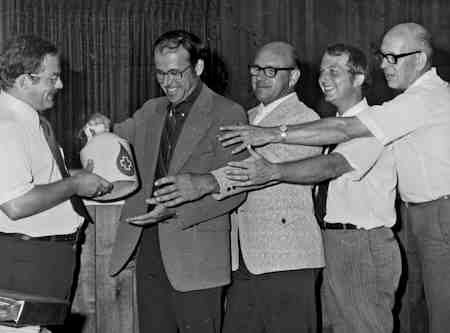
Random Notes – A lifetime of service is legacy of Bill Richards

by Rhonda Dedyne

It’s impossible to know how many people Bill Richards helped during a lifetime of service that involved a wide range of organizations across Clinton County and beyond its boundary lines. His passing August 17 leaves a void – but not really.
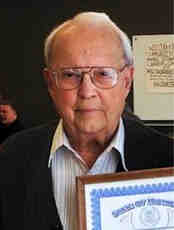
richards2All those people Bill aided over the past decades are continuing to build up the structures he helped create: Community Resource Volunteers, Clinton Transit, Clinton County Arts Council and on and on and on. They are giving his words of encouragement, smiling his smile and emulating his always helping hands – the circle keeps going.

A story that published on Indy in March of 2015 came to mind yesterday when Guven Witteveen emailed the news of Bill’s death. I recalled his reaction at the surprise open house that was organized by friends and associates to recognize and honor his years of community service – to say he was surprised is an understatement.

We say with the Gospel writer, “Well done, good and faithful servant . . . enter into the joy of thy Lord.”

Rest in Peace.

Bellingar Packing moves to Hitching Post site

The Hitching Post is closing, but that doesn’t mean the building will be vacant for very long. Bellingar Packing is getting set to expand its meat and poultry food operation at the prime highway site.

Behind the scenes at Band Camp, 2016


September

His Cup Runneth Over receives $2,400 grant

Today His Cup Runneth over announced that it has received a grant of $2,400 through the “Feeding Those in Need” program, which aims to help feed those who are hungry or have food insecurity.

SJHS Hall of Fame inductees named

The inaugural class of inductees for the St. Johns High School Athletic Hall of Fame has been selected. This group, chosen by the Hall of Fame committee, includes individuals and teams that made significant contributions to the success of the school’s athletic program.

The inductees include: Jim Makarauskas, Paul Sternburgh, Beth Swears, the 1949, 1950 and 1951 football teams, the 1978-79 boys swim team, Dale Knight, Gina Mazzolini, Anne (Brocker) Pierson, Jenny (Poff) Pruett and Levi Rost.

Fowler Hosts The Vietnam Traveling Wall

by Maralyn Fink

On Friday, I came across the traveling wall in Fowler. The Wall arrived in Fowler and was set-up across from the VFW. On Saturday a Flag Raising Ceremony took place with an opening prayer and keynote speaker. Posting the flag at the Missing Man Table was also done.


October

Farmer in the Classroom

As a part of Ag Stem each grade level at Gateway is paired with a local farmer.

Two arraigned on Child Sexually Abusive Activity charges

According to Chief Kyle Knight, during the investigation of Plowman, it was determined that images taken with his phone that contained Child Sexually Abusive Material were transferred to the phones of Carol Boak, a 50 year old St. Johns resident, and Kenneth Lee Thelen, a 43 year old Fowler resident.

Senior Center To Hold Annual Rock-a-Thon

On Wednesday, October 13 the Clinton County Senior Center will hold their 14th Annual Rock-a-Thon. The proceeds from the event are used to pay the heat bills during the cold winter months.

Castle Groundbreaking Ceremony

by Maralyn Fink

It was a crisp morning on Friday October 21 for the ceremony, but all went off fine.

This was done for St. Johns’ newest community, Castle St. Johns. The independent living community is for those 55 and older.

St. Peter Fall Fest

The community is invited to join us at St. Peter Lutheran School on Friday, October 28th from 6-8 pm for the annual Fall Fest and Trunk-or-Treat.


November

Sister Act comes to SJHS

by Maralyn Fink

On Thursday I went to St. Johns High School to attend the dress rehearsal for the upcoming Drama Club play Sister Act.

Big Boy® To Honor Veterans with free breakfast

The St. Johns Big Boy® will be honoring area veterans with a free breakfast on Veteran’s Day.

Community Thanksgiving Day Dinner offered

The annual Community Thanksgiving dinner will be held in downtown St. Johns on Thanksgiving Day, November 24 at First Congregational Church. The meal is prepared by and for community members and everyone is welcome. Area churches, sponsors and volunteers make this event possible.

St. Johns Police Department receives good news

The St. Johns Police Department recently received two pieces of good news.

First, we were advised that we received a grant to help purchase new portable radios. Secondly, Officer Ben Helms, a 5-year member of the St. Johns Police Department, recently received a 2016 MADD Outstanding Officer Award at the 2016 MADD Lifesavers Award Luncheon.

Hospital reconfigures old entrance

Sparrow Clinton Hospital is constructing a new entry way for the MRI Scanner. This is located at the north end of the building where the old emergency room entrance was located.


December

14th Annual Christmas Festival December 3

The 14th Annual Christmas Festival, coordinated by the Clinton County Chamber of Commerce will be December 3 at the CC RESA Building (1013 S US 27 in St. Johns). This annual event will have something for the entire family.

Holiday Music Spectacular coming up Friday, December 9

The St. Johns Community Band presents the 2016 Holiday Music Spectacular on Friday, December 9, 2016 at the Wilson Center Auditorium. The program begins at 7:00pm. Admission is free. Scheduled to appear are the Vivo Contando Children’s Choir, the Mint City Singers and the St. Johns Community Band. Donations accepted for the Wilson Center Auditorium Renovation Project.

Paine-Gillam-Scott House Museum Old Fashioned Christmas

The Paine-Gillam-Scott House Museum invites you to Christmas at the Museum. The house has many Christmas related artifacts on display including the Carnival Glass punch set in the dining room. Fresh greens are throughout the house with a live tree decorated in the era of the house.

Mailing letters to Santa at St. Johns Depot

In the middle of getting ready for the holidays, don’t forget there is a great place for children to mail their letters to Santa down by the St. Johns Depot.

Festival of Lights Parade

courtesy of City of St. Johns on Facebook

Snowy crash kills Ovid teen

A car-truck crash happened in snowy conditions on Shepardsville Road between Kinley Road and Faragher Road in Ovid Township just before 1 p.m. on Sunday, December 11.

The southbound car driven by 59-year-old Ida Bontrager from Ovid lost control on the snow covered roads and slid sideways into the path of a northbound pickup truck, driven by a 34 year old man from Elsie.

Polar Express at the depot

The City of St. Johns Recreation Department hosted their second Christmas Event on Saturday, December 10, 2016.


Favorite Features of 2016

Here are some of the Features we really enjoyed in 2016.

Barry Bauer’s A Look Back

How Sweet It Is

poliocube

Over 900 youngsters in the St. Johns School System are receiving their second dose of oral polio vaccine last week and this week. Friday morning school nurses Mrs. Gertrude Buehler (left) and Mrs. Princess Parker (right) concentrated on Swegles School in St. Johns where kindergarteners Jimmy Barrett, Stephanie Meyer, Brent LaBar, Michael Fettig and Jeff Brown are shown receiving their sugar cube and vaccine.

Looking on is the teacher, Mrs. Jean Gibson.

Merle H. Green Elevator Fire

lumber

This is the second photo from the Merle H. Green Co. elevator fire in the 400 block of N. Clinton Ave. in St. Johns. This building along with the Houghton Lumber Co. building, adjacent to the north, is long since gone.

Sealed Power Open House in 1968

Over 800 persons toured the St. Johns plant of Sealed Power Corp. last Thursday evening as the local division observed its 20th anniversary here. Guided and semi-guided tours of the plant were featured, capped with refreshments.

The 20th anniversary celebration is actually a misnomer. The 20th anniversary actually came two years ago, but the plant was in the midst of a huge expansion program and the official observance was delayed.

Lawrence G. Sexton, plant manager, expressed the company’s gratitude for the fine turnout and interest in the local plant.

Bates bore operator, Kenneth Cramer, explains the functions of the huge Sealed Power Corp. equipment to visitors touring the St. Johns plant last Thursday evening during an open house in observance of the firm’s 20th anniversary in St. Johns. The Bates bore turns the inside diameter of the piston-rings the firm makes, and this is about the half-way stage of the ring through the processing at St. Johns.

sealedp5

Lawrence Sexton left, plant manager of the St. Johns Division of Sealed Power Corp., chats with officials of the company during last Thursday evening’s open house observing the 20th anniversary of the plant in St. Johns. With Sexton are Warren Carter, vice-president for manufacturing;
Paul C. Johnson; chairman of the board of directors; and William Oliver, vice-president for industrial relations.

Sealed Power manufactures piston rings, pistons, cylinder sleeves and other related parts for the original equipment and replacement trades in the automotive field. Its annual sales are approximately $50 million.

The St. Johns Division of Sealed Power is devoted exclusively to the manufacture of piston rings, primarily for the larger engine builders of the country. The major share of the production here is shipped to General Motors, Ford, and Chrysler.

Since its establishment here, Sealed Power employment has increased from 35 to 232, and payrolls have increased 20-fold. The plant has had three major expansions, the last of which increased capacity by 75 per cent when completed in 1967.

Management personnel of the St. Johns division include Sexton as plant manager, Emil Flermoen as superintendent, Robert “Bob” Gill as personnel supervisor, Hugh Wallace as production and office supervisor, Charles Coletta as manufacturing engineer, Herman Bosma as plant engineer, Elston Hicks as maintenance foreman, Richard Wilson as process engineer, William Aldrich as tooling engineer, Stanley Smith as Inspection supervisor, Donald Messer as industrial engineer and Charles Rasdale as steel press engineer. Machine shop foremen include Dale Baker, Walter Baxter, Arden (Jack) Birdsley, John Fedewa, Charles Olson, Edgar Prowant, Stan Plaza and Roman Rademacher.

Sealed Power went through a couple of name changes; first they became Dana and currently is known as Mahle.

1912 North Ward Kindergarten

northward1

This photo was taken at North Ward Elementary School in 1912. The students are identified but the pencil writings are very faint. I know my Uncle Ellsworth Gillson is one of the students. – Tom Beechler

The chalkboard sign being held by one of the students looks like it says: St. Johns North Ward Kdgn.

The names on the back, as Tom describes, are illegible. A few do stand out, Dutch Eckert, Berthea Kasper, Harry Fields, Edith Fields, Helen Kasper, Glendon Fitzpatrick, Gaylord Corkins, Beatrice Heafty, and Ellsworth Gillson. Dutch Eckert was listed twice and I wonder if he was related to long time friend, Steve Eckert.

See whether you can read more of the names by clicking here.

northward2

The North Ward school building was replaced by Perrin Palmer which is also gone.

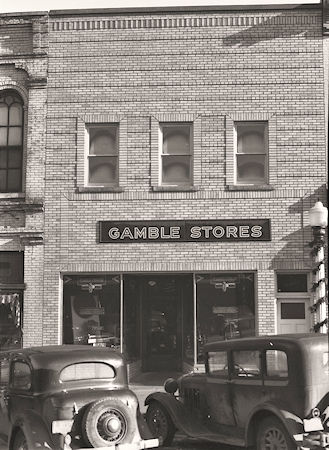
Gamble Store

gamble

The Gamble Store at 108 N. Clinton Ave. I’m not sure when this was taken but can guess by the cars it was sometime in the 1930s. There’s garland wrapped around the light pole on the right which indicates this was around the Christmas holidays.

Ray Osborn was at one time the manager/owner of the store but at this time I’m not sure who it was.

Located on the left was Hunt’s Drug Store.

[Editor’s note: Ray Osborn became the owner of the Gamble Store in 1928.]

1968 Soap Box Derby

soapbox

This group of kids and Soap Box Derby cars lined up in front of the old Clinton County Courthouse are waiting their turn to make a run down Clinton Ave.

Noticeable in the photo are some of the cars in the rear that were propped up off the pavement. I don’t know if that was to prevent flat spots on the tires in hot weather or not.

Old No. 2, The Movie Star

train1

Richard Rogers, a hostler on the Cadillac & Lake City Railway Co. steam train when it came through St. Johns last Friday, took 8-year-old Neal Heathman, son of Mr. and Mrs. Edward “Spud” Heathman, into the cab of the locomotive for a look around.

train4

St. Johns had a rendezvous with the past for about half an hour Friday. The occasion was a switching stopover of an old steam locomotive being hauled to Chicago for the making of a United Artists movie, “Gaily, Gaily,” a story about Ben Hecht.

The old locomotive is the old No. 2,” owned by the Cadillac & Lake City Railroad and used as an excursion train during the summer months according to Richard Rogers, a “hostler” on the engine as it came through St. Johns, the railroad is leasing another old engine from a southern rail line to use while this one is making its movie debut. Starring with the locomotive in the movie will be Brian Keith, Melina Mercouri, Jack Kennedy, and Beau Bridges. “The engine will be used in Chicago, Milwaukee, and Galena, Ill, and the moviemakers are expected to finish with it in late August,” Rogers said.

train6

“It will be in Detroit during September and October, and then the Cadillac & Lake City Railroad will get it back,” Rogers said, “Old No. 2 was built in 1912 and was one of the first locomotives to be built especially as an oil burner instead of using coal.” The engine belonged to a west coast lumber
company before it was acquired by the Cadillac and Lake City Railroad.

There were no large crowds to welcome the old engine to St. Johns, but there was a little knot of people around for the half an hour or so it was here.

Cameras were popular.

train8

The locomotive and its tender were near the end of a dozen-car train heading west from Owosso. The train stopped in St. Johns to switch some of the other cars onto sidings.

Rogers explained his job as hostler was to take care of the engine while the crew was not working it. The locomotive kept steam up and made enough power to keep it from being a drag. It was in St. Johns about 1:30 p.m. Monday. Rogers said they were scheduled to be in Chicago Saturday evening.

The next stop for the old steam locomotive Friday was to be Ionia where the fire department was going to be ready to fill the train’s water requirements for the time being. It had gotten a fill of oil in Owosso.

This took place in the summer of 1968.

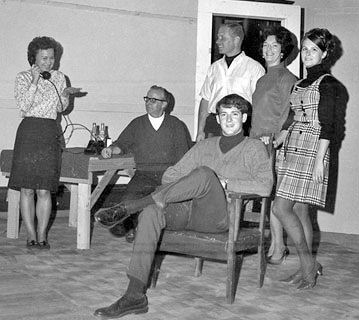
Come Blow Your Horn

back
Vicki Rowell, Wayne Hicks, Gene Livingston, Barbara Rann, Alyce Duski-Cramer and seated is Phil Anderson.

They were upstairs in what was then the E. F. Boron Co. building practicing their roles in the play, “Come Blow Your Horn.” This was Neil Simon’s first play on Broadway and was later made into a film starring Frank Sinatra.

Thanks to Gene and Carol Livingston for the information.

City Commission Meeting

irrer

Gerald “Jerry” Irrer, on the left, was a well known, well liked, local barber. He was also an antique dealer/collector. The story I remember most about him was the time a car was driven into his shop from the street and resulted in a remodeling job.

On the right is Rex Sirrine, local banker and father of the late Bob Sirrine who owned the Osgood Funeral Home.

One thing they had in common was they were both City Commissioners at the time of this 1968 photo.

Dr. Paul Stoller

stoller

This is a presentation between Dr. Paul Stoller and the two unidentified ladies on the left.

Dr. Stoller had a practice in Fowler before moving to St. Johns. His last office was located at 308 N. Mead St. He passed away at a young age of a heart attack.

Update: Thanks to one sharp-eyed reader we have the full story for you:

Kathleen Cornell (left), of rural St. Johns received a $500 scholarship from the Clinton County chapter of the National Foundation last week, and it was presented to her by Dr. P. F. Stoller, chairman of the scholarship
committee. Looking on is Mrs. Lyle Fenner, outgoing chairman of the chapter”

J. D. Robinson

jd
Bob Pratt and J. D. Robinson

When a man becomes president of the Rotary Club, serves as postmaster, and has a variety of hobbies and other organizations to serve, he is what one might call a “busy man.” J. D. Robinson has been a member of the Rotary Club since 1952 and served as vice-president last year and is president this year. The club was organized originally in 1926 and the members meet every Tuesday noon at Walker’s Cafe. They have a present membership of 49.

Theme of the international organization is “Club, Community, Vocational and International Service.” Twice a year the men honor their wives at special dinners and the local group has been especially helpful to the youth of Clinton County. They also aid crippled children, send students abroad to further their college education, and annually sponsor a “Youth Talent Show” where students enter projects in science, arts, and crafts. This year they will help sponsor the 4th of July celebration at the city park and they recently served on the city street clean-up.

To join the club one must be sponsored by a club member, and if his classification can be cleared, the last requirement is approval of the club members. The club requires 90 per cent attendance at all meetings.

Other officers of the club this year are: Bruce Fowler, vice president; Dwane Wirick, secretary; and Ken Munger, treasurer. The board of directors includes: Fowler, Jim McKenzie, and Paul Nobis for one-year terms and Roy Briggs, Don White, Stanley Cowan and John Rumbaugh for two-year terms.

Robinson has been employed at the post office for 28 years, beginning as sub-clerk and carrier. He has served as postmaster for the past ten years. He lives at R-3, St. Johns, and his family includes his wife Erma, one daughter, Jean Martin of St. Johns, two step-daughters, Sharon Huggett of Marlette, and Barbara Waggoner, a senior at the University of Michigan, and six grandchildren. Camping is their favorite hobby and they belong to the “Starcraft Campers Club.” Photography and stamp collecting are other interests, but Robinson has little time to pursue either in depth.

J. D. has lived in Clinton County since he was 4 years old, is a veteran of the Air Force (serving during World War II), a member of the American Legion, and serves on the executive board of the United Methodist Church in St. Johns. He’s also a member of the National League of Postmasters, the National Association of Postmasters and is presently serving as area director of the seventh district.

Robinson says the outstanding memories he has on his career at the office is the big fire they had in July 1962 that caused extensive damage throughout the building. The post office now has 27 employees, three supervisors, six rural carriers, five city carriers and one city auxiliary carrier. They serve 1,927 deliveries on the rural routes and make 2,735 daily stops in the city, for a total service to approximately 15,000 residents per day.

Another interesting item about Robinson is his name. J. D. is all there is to it and people are constantly telling him they want his complete name and not just his initials.

This article is from 1969.

Muriel Gilson and Friends

russell
Maureen Russell (Lyle) Canum, Edith Russell, and Muriel Gilson

Shown in this photo are Maureen and Edith Russell, daughter and wife of Dr. Sherwood Ross Russell who was Chief of Staff at Clinton Memorial Hospital. Muriel was a well known St. Johns personality and worked as Dr. Russell’s nurse.

Muriel, Dr. Russell, and Mrs. Edith Russell have since passed away.


Letters – Reader has questions about the Sugar Bowl

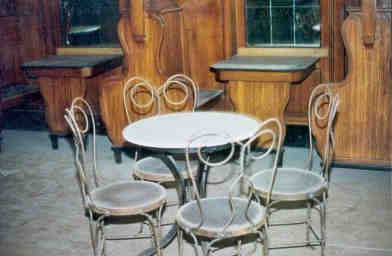
Nearly 20 years ago my husband and I had occasion to be in St Johns. We found the “main street” charming and took a walk down it.

We came across a storefront which looked to have been a candy or ice cream parlor from the turn of the century. A counter, display cases and table and chairs were left seemingly as they would have been over 100 years ago. It was absolutely beautiful. We were curious about the place but as we lived out state we never did find out what it was or what had become of it.

Upon learning that my niece will soon be taking a position that is located in St Johns, it revived our memory of that quaint place.

Does anyone in your organization have an idea what this place was, what it was called or what became of it?

sugarbowl


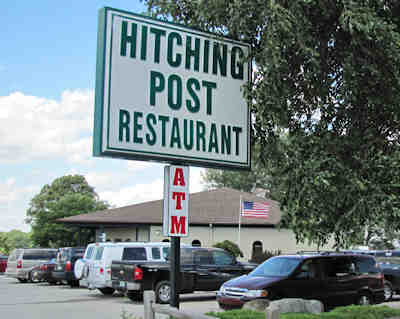
Random Notes – Hitching Post Restaurant to close August 10

By Rhonda Dedyne

When the Hitching Post Restaurant closes its doors on August 10, owner Shirley Henning says it will be “a day like every other day here – no special farewell celebration.” That may be true, but odds are good there will be a few tears shed along with lots of happy laughter as memories are exchanged from the past 53 years that Shirley and her family have operated the business on BR-127, a few miles north of St. Johns.

hitching3

There’s no way of knowing how many satisfied customers have enjoyed the restaurant’s good food and conversation over the years, although Hitching Post “regulars” like Wanda Lockwood and Dixie Lee Kosloski believe it must be “many, many thousand.”

“Everybody knows the Hitching Post as a welcoming place where the food is great, the wait-staff is the best and the coffee is always on,” Lockwood says with a laugh while Kosloski smiles in agreement as they enjoy a cup of afternoon java with regulars and groups of travelers headed to or from Michigan’s “Up North” on family vacations.

Those vacationers will miss the Hitching Post as much as area residents. A multi-generational family from Detroit is a prime example. The group was saddened to learn this would be the final time the restaurant would be part of their vacation itinerary, Henning says. “They’ve been stopping to eat for years and the grandfather wanted to have the family’s picture taken when they were here recently so we did that for them.”

Travelers on the major north-south highway have been part of the Hitching Post’s history for more than a century. The original building was located slightly north and closer to the highway. That was torn down and the existing building was constructed in 1994 after Henning purchased the business from her father in 1981. “My dad, Richard Clandening, bought the business in 1963,” Henning says about her father who relocated to the St. Johns area from Fowlerville. “I was 12 years old when he and I moved here, so I’ve basically grown up in the business.”

The Hitching Post’s reputation revolves around a family-friendly menu where omelets and skillet meals are served all day, not just for breakfast. “Those are certainly among the favorites of our customers. I have no idea how many thousands of omelets and skillets we’ve served total,” Henning says.

Ditto for the number of people that have been employed there over the years. “We’ve been fortunate to have so many great people working here – some for more than 20 years – and I will truly miss them,” the owner says, citing one person as being particularly important. “My daughter, Melissa, grew up in the business like I did, and I’m so thankful for her help. It’s been special working with her.”

hitching1
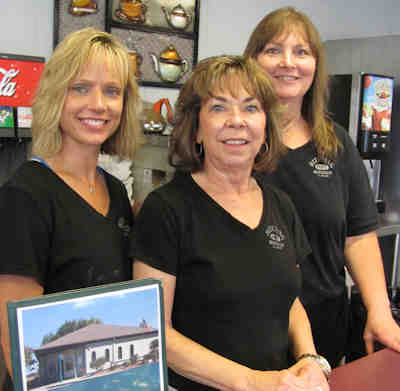
Shirley Henning and two members of the Hitching Post “family,” Robin Sample and Kristal Davis, are getting ready to say farewell to a St. Johns area restaurant landmark.

Henning’s employment of area residents and positive impact on the overall area has not gone unnoticed by Hitching Post patrons like Kosloski. “Shirley has done a lot for many people – she’s the best.”

Henning returns the compliment, thanking customers for their support and patronage. Still, after being on call seven days a week for all those years she’s ready for the next stage in life. “My husband Mike and I will probably travel a bit, but we don’t know for sure exactly what we will do. It will be a change for sure. We will miss our customers and our employees. We are like a family here.”


Jean Martin’s Now and Then

Beyond the Lilacs

It’s that time of year again on Mackinac Island, the time when that special blend of lilacs, fudge and horse manure tell us that it is Lilac Time.

But off Main Street, away from the hordes of tourists and school groups, there is another Mackinac Island. Up in the middle of the Island we can find the newly-restored Ft. Holmes that opened last fall. The old standards, Sugarloaf and Arch Rock, still stand and wait for those who have the gumption to look for more than fudge and trinkets.

Don’t want to climb up that first daunting hill? We recommend that you take a taxi. Have them take you to Fort Michilimacinac or the cemeteries. You will have a nice carriage ride; and half the work, the really difficult half, is done for you. You could even choose to walk back to town along the East Bluff and enjoy some spectacular views that those who are stuck on the main drag would never dream existed.

Chad Rehmann diversifies

Over the years we have grown accustomed to telling you about movies and television shows that Chad Rehmann has scored. Now we learn that he is also composting contemporary music for the concert hall.

Here is an excerpt of a new piece that has premiered at South Dakota State University last month. It will be published by Bachovich this summer.

The son of Gery and Sheila Rehmann of St. Johns, Chad is a graduate of St. Johns High School (1999) and Michigan State University (2003). He currently lives in Los Angeles with his wife Kari (Wieber) and three children.

Purely Michigan in Auburn Hills

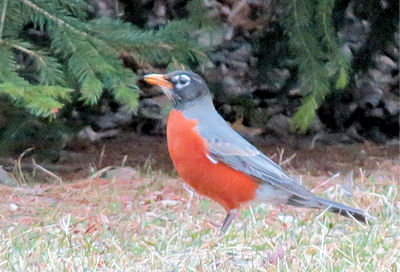
Barry saw his first robin this week.

robin2016

In completely unrelated news . . .

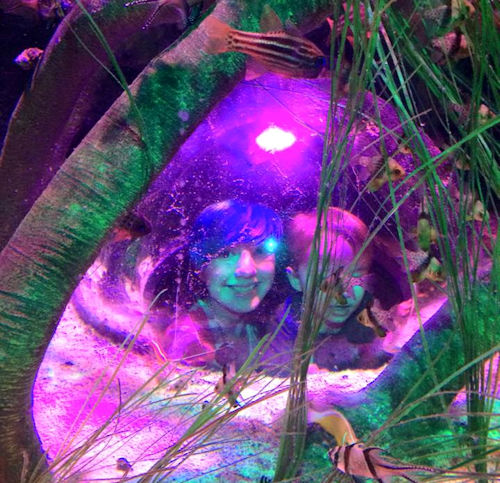
It seemed like it was finally safe to take a short road trip to Great Lakes Crossing and the Sea Life Aquarium in Auburn Hills.

It might take 3 or 4 days to do a really thorough job of a visit like this; but by following a 3-year-old around we were able to accomplish the whole thing in about 4 or 5 hours.

08


Maralyn’s Back in the Day

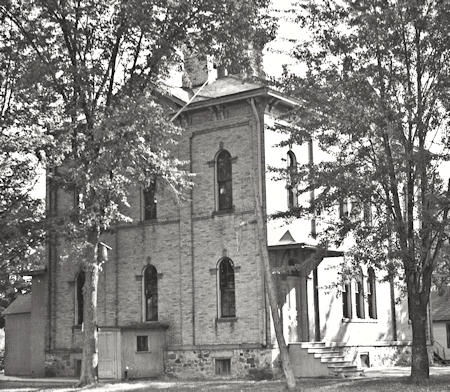
Central School

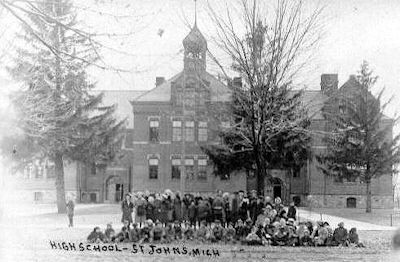
The first school in St Johns was held in 1855. Two years later the school district was organized and land donated at the corner of Walker and Mead for a schoolhouse. Because of dissatisfaction over the site due to bears and other wild animals frequenting the area, land was purchased from Alonzo Plumstead and a building erected in 1865. After it burned in 1885, Central High School was built on the same site the next year.

At one time this building housed grades 1-12 and County Normal Teacher training school. The Class of 1909 had a total of 20 students, 7 male and 13 female classmates. In 1925 the high school was moved to the Rodney B. Wilson building for grades 9-12.

central
The students of Central School in 1910

This brings me to the time in 1946 when my mother told me I had to start kindergarten. What? I thought I was doing just fine the way things were. I was not looking forward to leaving my home where all “my things” were to go to that building.

The day finally came, and my mother walked me to the school one-half block away to meet my teacher, Martha Duffer. All of these kids were in the room, staring at each other.

With my lips quivering and a tear running down my face, I met Miss Duffer. She assured the group we would be fine and that we would have snacks, games and would even have a rest period for only half the day. Hmm, snacks, okay I can do this.

I looked around for my mother, and she was gone along with the other mothers. Well, I don’t live far, I thought. Maybe if I didn’t really like it I could just leave like my mother did.

In later years during war time, a tower was constructed on the flat roof part which was made into a Civil Air Patrol lookout and volunteers donated their time with binoculars for any suspicious activity. My Uncle Art Halfmann was one of the volunteers.

maralyn@sjindy.com

City Park Pool

In 1916 the city of St Johns spent $6,000 to purchase sixty wooded acres on the west side of town, part of “Emmons Woods,” for the purpose of creating a park. In the 1930’s a band shell, picnic pavilion, football field, comfort stations, and a caretaker’s home were added. Bricks from the abandoned local factories were reused for these structures.

pool1

The Veterans Memorial pool on the north side of the St Johns City Park was dedicated on August 14, 1950,to honor the veterans of World War II. Several recent gravel pit drownings had prompted the community to support the construction of a safe swimming facility. Unfortunately the pool was closed after the 2009 season.

Back in the day opening day at the swimming pool was an anticipated happening among towns people – and also the kids of our community. Jean and I frequently were in that pool, at a cost of 10 cents per visit. Boy, was it crowded.

There were rules. You had to shower inside before going into the water; and when you came out of the shower, feet were also inspected. I remember getting “brave enough” to go into the deep end or jump off the diving board.

parkhouse

Afterwords we walked up to the house where Squeak Hyler and his wife lived and ran the concession stand. If you had pennies you could by a lot of candy, gum and other things.

[Editor’s note: Hey, swimming makes you hungry.]

A great ending to our day. Thankfully we didn’t live far from the park so we could walk or ride our bikes.

Just another great memory from back in the day!

maralyn@sjindy.com


Maralyn Fink’s Remember When?

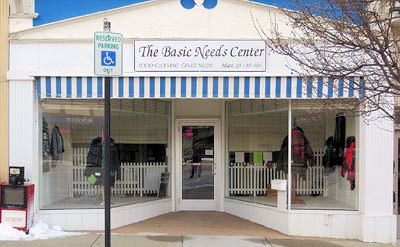
Clark & Hulse Clothing Store

hulse1

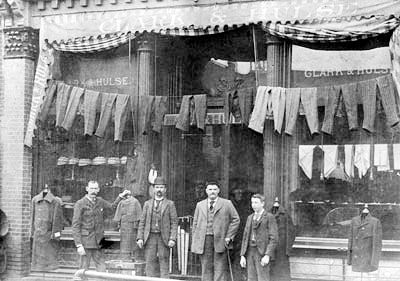
Charles A. Hulse started Hulse Brothers about 1870. The store was located 215 N. Clinton St back in the day.

clarkhulse
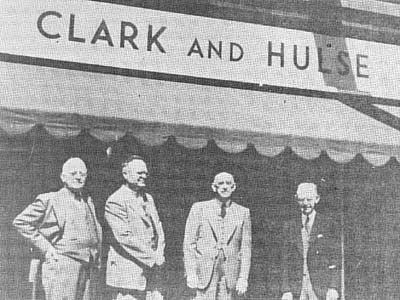
Ray Trempter, Harry Hulse, R.G. Clark and Guy Eaegle

Harry Hulse was associated with Clark & Hulse Men’s Clothing Store for more than 40 years. R.G. Clark became a partner succeeding his father, Robert S. Clark in the business in 1935.

hulse2Harry Hulse died on May 10, 1960. Both gentlemen were customer orientated and very nice gentlemen. Customers were their top priority. There was a huge assortment of shirts, ties, dress-wear, casual, shoes and hats that their store provided and I believe that men’s suits were their pride and joy.
Mr. Clark lived at 200 W. Cass St while Mr. Hulse lived at 605 E. Cass St.

Jean reminded me that her mother had taken her to that store to get a man’s shirt and black tie for her Jr. High band uniform. Mr. Jilka did not want girls blouses but men’s stiff colors so that their ties would look right.

Oh, for the good ole days.

hulse3

MacKinnon and Son Dry Goods

mackinnon2

I remember this store back in my day located next to the Hick’s Clothing Store. What I thought was neat is that it had a stairway leading up to partial second floor. I wondered if they would let me slide down that banister. My mother said don’t even try it. Where was her sense of humor?

mackinnon4

The store sold women’s clothing, dresses, blouses, skirts etc and probably some under things. Material for the sewers around was a delight for them to shop.

fraserEdward and Fraser MacKinnon

I remember Fraser MacKinnon who was well liked and always greeted his customers when they came in.

My mother purchased clothing there for herself and probably my sister and me. I was still buying there in the middle 60s to into the 70s.

It is sad for me to think back to the day and compare it to what we have now. I only wish that everyone would have had the chance to really experience that period and hold it dear as I still do.

Today the store is Nicole’s Beauty Salon and Spa and the character inside remains as it was Back In The Day.

nicholes

Features

Guardians of the great white pine

Rooted in the center of the Michigan Library and Historical Center is a 60-year-old white pine, a tree affectionately nicknamed Carl by the crews who have cared for him over the decades.

“I’ve been here long enough to see the tree being enjoyed by generations,” said Tim Palmatier, a Building Operations employee. “We have parents coming through with their kids on field trips and talking about how they remember the tree from when they were in grade school.”

Carl’s unusual location has made it difficult to keep him healthy. At times when the tree has been in distress, a team of employees, arborists, professors of forestry and volunteers have worked together to return Carl to health.

In 1986 Louis and Alice Tank donated Carl to the state. The tree was about 30 years old when it was extracted from their property near Flint and transported to Lansing on a massive trailer. An 80-ton crane lowered the pine into a pit to take root. Unfortunately for Carl, work on the building was just beginning. Securing the tree in the center of a construction site exposed Carl to a lot of stress.

Many needles and branches on the lower section of the tree were scorched by asphalt heating. Ed Irish, the contractor who moved the tree to Lansing, continued to come back to water Carl and clean up dust when needed. He was an outspoken voice for Carl when designers wanted to cover part of the tree with a tarp during work on the building’s interior. Blanketing part of the tree while leaving the other half exposed to sunlight would have be detrimental to its natural growth.

Even after construction was over, many more unforeseen issues threatened Carl’s life.

Shortly after the building opened, it became apparent the copper-coated walls surrounding Carl were not ideal. The shiny surface reflected sunlight and made the enclosed courtyard sizzle. Workers sprayed the walls with an acidic substance to speed the aging process and dull the copper, giving Carl a break from the scorching sun. But the corrosive chemicals left pine needles damaged and discolored. It took the work of state employees and local arborists to restore Carl’s health.

When a crack in the foundation leaked water and deprived Carl of key nutrients, building manager Don Hover led a team to create a new watering system. Employees and local tree professionals engineered a bobber system that helped caretakers monitor water levels.

With its huge archways, the architecture of Carl’s home allowed air to flow through the outdoor courtyard. On one bitter day, this airflow turned into whipping winds that snapped one of Carl’s supports. The gusts lifted Carl, nearly destroying any chance of recovery. The same loyal team that rescued Carl in the past responded immediately. In a time of crisis, they hastily repositioned the tree and stabilized the support cables.

Mother Nature would strike again years later, almost killing Carl. Pine bark adelgid growth and an infestation of Eriophyidae mites required help from tree-care professionals. After collaborating with DTMB employees, a delicate herbicide and pesticide mixture successfully eliminated the problems without further harming the tree. After this incident, Stephen Woods, of Wood’s Arbor Solutions in Grand Ledge, joined the team of caretakers. Woods offers his equipment to maintain support cables, aerate the soil, fertilize the tree and control disease and insect issues.

Dr. James Kielbaso, a Michigan State University professor of forestry, takes great pride in volunteering his service to the tree. He has a passion for trees and has been working with the team of state employees to care for Carl for 30 years.

“I want to get its color back to a lettuce green,” Kielbaso said. “I want the pines so plush that they look like you can pluck them off a branch and put it on a salad.”

Today, Carl’s estimated height is about 65 feet. Although Carol has lost branches over the years and soil it’s difficult to keep the soil at the target 5.5 pH level, the tree is in good shape.

Through all the adversity, the unwavering constant in Carl’s life has been sustained by the people who dedicate their time to caring for the white pine. Caretakers at DTMB are projecting a bright future.

“Carl’s not going to die – not on our watch.”

[This was written by a graduate from St. Johns High School, Mitch Marier, Communications Student Assistant with the Department of Technology, Management and Budget for the State of Michigan.]


This week’s Mystery Photo

Where is this?

Can you tell us where this is located? Drop us a line at mail@sjindy.com.

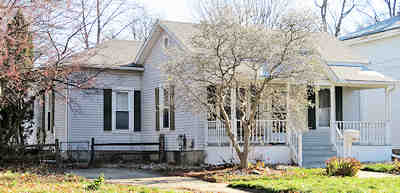
921 N. Oakland St.

The current owners are Mark Pope and Julie Manzagol. The previous owners were Richard and Diane Western.


A Look Back – Mint Festival Gazebo

Barry Clark Bauer

This is a circa 1985 photo of the Mint Festival information Gazebo. The Mint Festival started out on the Courthouse Square and eventually moved to the St. Johns City Park.


Letters – CASA and Habitat say thanks

CASA-The Voice for Clinton County’s Children extends gratitude to our community which has so greatly supported our work during 2016.

We are also very appreciative of those who have helped to make the holidays a little brighter for our CASA families. One CASA Volunteer Advocate shared she understands not everyone is able to serve as a CASA Advocate, but the community support shows her their work of providing a voice to Clinton County children who are in foster care is appreciated.

I could not agree more. With the continued commitment of our entire team and the community’s support we will reach our goal of serving 100% of Clinton County children who are in foster care. Thank you for all you do to support our Court Appointed Special Advocacy Program.

For more information please visit our website ClintonCountyCASA.org. We wish you and your family a wonderful Holiday Season and look forward to a bright 2017.

Applications are now being accepted for our Advocate Volunteer Training which will be held early in 2017. Please visit our website for more information.

Yours in Service,
Kelly Schafer,
CASA Executive Director

******

The holidays mean different things to different people. Whether you’re celebrating your faith, your family, your friends, your good fortune, or your health, there is a common thread. Much of how we celebrate takes place right in our own homes, or the homes of loved ones.

That’s why we are reaching out to you this season – because Habitat for Humanity of Clinton County believes to our core that homeownership is a basic human right. That is exactly why Millard Fuller created Habitat for Humanity back in 1976: “To rid the nation and the world of poverty housing and provide a simple, decent place to live-for everyone.”

Will you help us to do just that? Whether your donation helps us buy a doorknob, a room, or a roof, every gift counts, because what we are truly building is hope, relationships, neighborhoods and communities.

Next time you gather at home with loved ones to celebrate, look around you; you’ll see why the concept of Home has been a constant in human history. It is a special word in any language. Help us make it a reality for our homebuyer partners. Please donate today.

Thank you and the best of wishes from your local Habitat staff

from (l to r) Michael, Ron, Jason, L. Quinn and Meredith.


Maralyn’s Pet Corner – Cat Hairball Problems?

Hairballs are the bane of cat ownership. These clumps of hair bond together in the stomach and then are vomited up in our shoes, carpets and floors. But are cat hairballs normal, and is there any way to prevent them in the first place? Let’s take a look.

Are Cat Hairballs Normal?

Technically speaking, cat hairballs are not normal. Cats have been grooming themselves for thousands of years and their digestive tracts are built to handle the hair that is inevitably swallowed. Hairballs should move through the digestive system and come out the other end. However, when this process goes awry, the hair can clump together in the stomach and does not pass into the intestinal tract. It causes enough irritation that a cat will usually vomit up the wad, and voila … you have a hairball.

When I’m presented with a cat that brings up the occasional hairball and absolutely everything else appears to be perfectly normal, I don’t initially recommend an exhaustive work-up (that would take gastrointestinal biopsies). I will perform a physical (looking for both GI problems and dermatological conditions that could increase shedding), run a fecal exam, and if I feel they’re warranted (or the owner wants to be especially thorough), recommend a comprehensive panel of blood work (including a check of thyroid levels) and a urinalysis.

Why Do Hairballs Occur?

Cat hairballs can occur for a few reasons, but the vast majority of cases can be attributed to:

1. Ingesting more hair than normal.

Skin diseases (e.g., external parasites, infections, and allergies) can all cause cats to shed and/or groom themselves excessively, which in turn may lead to hairball issues. Extreme grooming can also be associated with stress, boredom, compulsive behaviors, and concurrent illness that is seemingly unrelated to the skin or gastrointestinal system. For example, a cat with osteoarthritis may attempt to soothe herself by stimulating the release of pain-relieving endorphins through repetitive grooming behaviors.

2. Altered gastrointestinal motility.

When a cat’s gastrointestinal tract is not functioning correctly, it may not be able to process even a normal amount of hair in the way that it should. Hairballs can be associated with inflammatory bowel disease, internal parasites, pancreatitis, hernias, foreign bodies, cancers, and other potentially serious diseases.

What are the Best Ways to Prevent Cat Hairballs?

If your cat is having an issue with hairballs, consult a veterinarian. Assuming your cat’s veterinarian finds nothing unusual during an exam, the following is typically recommended:

1. Add fiber to the diet.

The bulk of additional dietary fiber essentially “sweeps” hair through the digestive tract, preventing it from clumping together in the stomach. Discuss with your veterinarian on the best method to add fiber to your cat’s diet. One option is to choose a diet specially formulated with soluble and insoluble fibers to increase digestive activity.

2. Changing diets to a formula with fewer potential allergens.

Gastrointestinal inflammation (often caused by food allergies and/or inflammatory bowel disease) is at the bottom of many chronic cases of hairballs. A prescription, hypoallergenic diet is ideal, but over-the-counter limited antigen foods can be tried as long as owners understand that if a cat’s response isn’t ideal, a more restrictive food trial will still be necessary.

3. Take on some of the grooming ritual yourself

Increasing the number of times per week the cat is brushed will help any of the above solutions work better since any hair that is removed during the brushing sessions are not swallowed by the cat.

As long as your cat is not losing weight or vomiting up hair more than once a week or so, feel free to try some or all of these recommendations before calling your veterinarian. But if they don’t work, it’s time to make an appointment. Your veterinarian can look closely for any health conditions that may be playing a role in the formation of hairballs and make appropriate treatment and dietary recommendations.

Features

This week’s Mystery Photo

Where is this?

Can you tell us where this is located? Drop us a line at mail@sjindy.com.

504 E. State St.

The current owner is Roxanne Osga. The previous owner was Beth Canum Ernst.

Update:

Jim Pierson wrote: Just a note to let you know that this home was built in about 1950 by George and Billie Pierson. They and their three sons, James, David and Jon lived there until they sold the home to Ken Price in 1965. George, Billie and their boys moved into their new home at 805 N. Mead St. Just thought you might like “the rest of the story”.


A Look Back – 1972 Hospital Board

Barry Clark Bauer

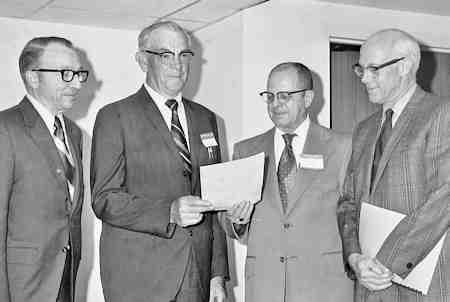
From left to right: John Rumbaugh, Clinton National Bank; Lorenz Tiedt, Wolverine Stock Yard; Alan Dean, Dean’s Hardware; and Earl Lancaster, St. Johns School Superintendent.

Certainly a list of Who’s Who in St. Johns in 1972.


Benny and Jessie’s Pet Info – How to Make a DIY Paw Salve for Dogs

The cold weather can wreak havoc on our dogs’ paws causing cracks, bleeding, and, if left untreated, an infection. We have a simple routine to keep all the paws in our home properly cared for during the cold winter and hot summer months.
Why Paw Care is Important

Our dogs spend most of their day standing on their paws, so it’s important to keep their paws healthy. Winter is harsh, because of the cold temperatures, snow, ice and ice melt chemicals. Summer brings sunshine, hot temperatures, fertilizer and weed treatments. Keeping our dogs’ paws healthy will help to prevent soreness, swelling, and cracks.

DIY Paw Salve for Your Dog

The following recipe was originally shared by Frugally Sustainable and is safe for dogs and cats:

Supplies

· 6-1 oz tins
· small digital kitchen scale (optional)
· small pot

Ingredients

· 2 oz. (approx. 2 tbsp.) olive, sunflower, or sweet almond oil
· 2 oz. (approx. 2 tbsp.) coconut oil (I recommend Nutiva extra virgin coconut oil)
· 1 oz. (approx. 1 tbsp.) shea butter
· 4 tsp. beeswax

Method

1. Melt the oils, shea butter, and beeswax in a small pot over low heat. Stir continuously until all is melted and well blended.

2. Pour the mixture into the tins.

3. Allow the tins to cool on the counter until hard.

4. Cap each tin and label (include the date).

This paw salve recipe will make enough salve to fill approximately six 1 oz. tins. It is the perfect amount for multi-dog homes and/or gifts for friends. When storing the paw salve, keep it away from extreme heat and make sure to use it within 1-2 years.
Using Your DIY Paw Salve

We massage a paw salve into our dogs’ paws before bedtime and after their last potty break of the evening. We want to avoid attracting what the dogs walk on (dirt, leaves, twigs) whey they’re outside, therefore, we apply it when we know they’ll be in for the night.

As with any new product for your pet, take the time to confirm that the ingredients are safe for your dogs or cats and test a small amount of this salve on your dog’s paws to ensure that there will not be an allergic reaction.


Maralyn’s Pet Corner – 8 Tips For Caring For Your Pet This Winter

Living in a Winter Wonderland?

Unless you’re one of the lucky ones living in one of the balmier states, you’ve felt the cold chill of winter arrive. For some of us, cold weather is regarded as a mere nuisance; for others, it’s a fun time filled with snowboarding, skiing and other winter joys; and still others will find this time of bone-chilling weather and huge piles of snow a veritable nightmare to endure.

Whatever your viewpoint on winter, one thing remains the same for all of us with pets: it’s a time when our beloved babies need a little extra care. Luckily, PetMD has compiled a list of tips to protect your pet from the dangers of winter.

1. In or Out?

Does your pet spend most of the time in the backyard? You might want to keep her indoors during the freezing months, especially if you live in bitterly cold areas. No one wants an icicle for a pet — they’re simply not that cuddly.

2. Bare Naked Truth

If you must keep your pet outdoors, consider this: Would a fur coat alone (even if it is faux mink) keep you warm against the elements? No? Well, your pet’s fur coat isn’t enough protection for your pet during winter, either. Be a pal and provide your dog with a warm, dry, and draft free shelter outside; the shelter should also comply with any state laws that apply.

3. No More Frozen Dinners

Because it takes more energy to stay warm when it’s cold, outdoor animals eat more during the winter. Likewise, fresh, running water is vital for maintaining your pet’s health. Keep an eye on the water bowls and make sure they haven’t turned into little skating rinks for fleas. While ice pops might be a fun treat, your pet really doesn’t want to have to lick a frozen lump of ice to get his water.

4. Latest Fad Diet?

Indoor animals, meanwhile, have different dietary needs. They conserve energy by sleeping more in the winter. Dogs and cats also exercise much less when they do go outside, so you may need to adjust the amount of food accordingly. After all, no one wants an overweight pet.

5. Frosty the Biting Snowman

We’re not talking about the latest horror movie offering from Hollywood. Frosting is a serious problem during winter, especially for paws, tips of tails, and ears. This makes it even more important in keeping your pet warm, especially if they’re an outdoor pet. Get special booties, coats, and maybe a hat for your pet during her walks, and look for early warning signs of frostbite such as firm, waxy skin and blisters.

6. The Deadly Drink

The worst of all the wintertime chemical spills is antifreeze, which often leaks from a car’s radiator. It may taste delicious to your cats or dogs, but it is extremely deadly — even the smallest sip can be fatal. If your pet starts acting “drunk” or begins to convulse, take him to the vet immediately. Better yet, keep all pets away from the garage and clean up any accidental spillage. You should also not let your dog wander too far during his walks. Who knows what dangers lie in your neighbors’ driveways?

7. Salty Solution

Do you live in an area with cold and icy winters? Then you are probably accustomed to salt on the sidewalks and roads. However, the types of salt (typically calcium or sodium chloride) used to melt ice and snow and keep it from refreezing are somewhat harsh on delicate paws — not to mention they corrode concrete and damage the beautiful vegetation. Protect your pet’s paws, and keep him warm during walks, by outfitting him with booties.

8. Joy Ride

Cars are particularly attractive to animals in the winter-time, especially frigid cats that love to climb up under the hood and curl up on the warm motor. This, as you can imagine, has led to many mishaps when motorists start their car … ouch! Avoid such accidents by tapping your car’s hood before starting the vehicle. Sure, you may wake Kitty from her deep slumber, but she’ll thank you in the long run.

Wintering with your pet is mostly common sense. If you’re cold, your beloved pet will most likely be cold too. So snuggle up, keep your pet warm and safe, and sooner than you can say “Jack Russell,” we’ll all be hitting the beaches for some summertime fun.

Features

Festival of Lights Parade

courtesy of City of St. Johns on Facebook


This week’s Mystery Photo

Where is this?

Can you tell us where this is located? Drop us a line at mail@sjindy.com.

819 Spring St.

Lostbackpacker says, “looks like Brooke and Mike Pawlowski house at 809 N Spring Street.”

Barry says the current owner is Brooke Bennett. Previous owners include James Leland, Craig Smith, and Beth Bennett.


A Look Back – Ron Hyler

Barry Clark Bauer

A photo taken in 1971 shows Ron Hyler packing up his car to make his country mail deliverers. I’m not sure whether the mail delivery employees still use their own vehicles for country deliveries but in town they drive a post office vehicle.


Benny and Jessie’s Pet Info – Do Dogs Get Colds?

According to the U.S. Centers for Disease Control and Prevention, each year in the United States, there are millions of cases of the common cold. The CDC states that adults have an average of 2-3 colds per year, and children have even more. So, with human colds being so common, it’s natural to wonder whether our dogs can catch colds too.

What is a Cold?

First some background about colds in people.

Many different viruses can cause the common cold, but rhinoviruses are the most common…. Other viruses that can cause colds include respiratory syncytial virus, human parainfluenza viruses, and human metapneumovirus.

Symptoms usually include sore throat, runny nose, coughing, sneezing, watery eyes, headaches and body aches.*

Do Dogs Get Colds?

Determining if dogs get colds depends on whether we focus on the causes or symptoms of the illness.

The viruses that cause colds in people are generally species-specific. Except perhaps under the rarest of circumstances (for example with large doses of certain types of parainfluenza), the viruses that make people sick with a cold are incapable of causing illness in dogs. So if you’re wondering “can dogs get sick from humans,” the answer is almost always “no,” at least with regards to cold viruses. On the other hand, reports of humans and dogs sharing infection with some types of influenza viruses (the cause of more serious infection we call “the flu”) have recently been published. Previously, we did not think dogs could come down with human flu, so keep in mind that things do change in the world of viruses. Practicing common sense hygiene like washing your hands frequently when either your or your dog is sick is always a good idea.

But now let’s look at the “Do dogs get colds?” question for the point of view of the symptoms that develop. Many viruses and even a few bacterial species that do infect dogs (e.g., canine adenovirus type 2, canine respiratory coronavirus, canine parainfluenza virus, and Bordetella bronchiseptica) cause clinical signs in dogs that are almost indistinguishable from those seen in people who are suffering from colds. Dog cold symptoms like sneezing, congestion, watery eyes, coughing, runny nose, and just feeling “off” are quite common, it’s just that different infectious agents are generally involved when a dog rather than a person gets sick.

Cold Remedies for Dogs

When dogs look like they have a cold, we need to assess just how bad they feel. If a dog is still eating and drinking and wants to be relatively active, it is reasonable to try symptomatic care and home remedies. Encourage your dog to rest, drink, and eat so his immune system has the resources to fight off the infection. Wipe your dog’s eyes and nose with a warm, damp cloth to keep him comfortable. Breathing humidified air can also ease dog congestion, so why not keep your dog in the bathroom with you while you take a long, hot shower. But do not give your dog human over-the-counter cold remedies without first consulting with your veterinarian. Many are potentially quite dangerous when given to dogs.

If at any time your dog is not eating and drinking well, appears uncomfortable, has difficulty breathing, or fails to return to normal within a week or two, it is time to make an appointment with your veterinarian. He or she can rule out other causes of your dog’s congestion, sneezing, coughing, etc. These might include pneumonia, nasal foreign bodies, inhaled irritants or allergens, tumors, nasal mites, fungal infections, and more. If your veterinarian does diagnose your dog with the equivalent of a cold, he or she might prescribe antibiotics (only if a bacterial cause is likely), cough suppressants, decongestants, or anti-inflammatories to make your dog feel better and hopefully speed his recovery.

Finally, dogs who are congested, sneezing, and coughing are often contagious to other dogs. Always isolate a sick dog to help prevent the spread of disease.


Maralyn’s Pet Corner – What’s Ailing Your Cat?

Cats may have nine lives, but you want to make sure kitty hangs on to all of them for as long as she can. No matter how much love and care you give your furry companion, things happen. But by knowing how to recognize the most common conditions affecting cats, you may just be able to save your pet’s life.

10. Hyperthyroidism.
The most likely cause of hyperthyroidism is a benign tumor on the thyroid gland, which will cause the gland to secrete too much of the hormone. Take your cat to the vet if it starts drinking and peeing a lot, shows aggressive and jittery behavior, suddenly seems hyperactive, vomits and/or loses weight while eating more than usual.

Treatment depends on other medical conditions but can range from using drugs to regulate the overactive gland, surgical removal of the gland, and even radioactive treatment to destroy the tumor and diseased thyroid tissue.

9. Upper Respiratory Virus.
If your kitty is sneezing, sniffling, coughing, has runny eyes or nose, seems congested and has mouth and nose ulcers, chances are it has an upper respiratory virus. The two main forms of the virus are the feline herpesvirus and calicivirus. Once at the vet’s office, the cat may receive nose drops, eye ointments and antibacterial medication, especially if it has a secondary infection.

8. Ear Infection.
Ear infections in cats have many causes. These might include mites, bacteria, fungi, diabetes, allergies and reactions to medication; some breeds are also more susceptible to ear infections than others. So it’s definitely a good idea to have your kitty checked if it’s showing symptoms such as ear discharge, head shaking, swollen ear flaps, stinky ears and ultra sensitivity to ears being touched. Treatment, of course, depends on the cause, but will include eardrops, ear cleaning, ear and oral medications and in severe cases, surgery.

7. Colitis/Constipation.

Colitis is a fancy word for inflammation of the large intestine. While the most obvious sign of colitis is diarrhea, sometimes it will hurt the cat to poop. Thus, in trying to hold it in, the cat may develop constipation.

There are many causes of colitis, including bacteria, fungi, viruses, allergies and parasites, among other diseases. Signs include straining to poop, lack of appetite, dehydration and vomiting. Your vet will test for the underlying cause and treat it accordingly. This may include a more fiber-rich diet, de-worming, antibiotics, laxatives and/or fluids.

6. Diabetes.
Like humans, cats suffer from diabetes, too, though this is usually seen in older, overweight cats. Symptoms include increased thirst and peeing, peeing outside the litter box, lethargy and depression.

While causes of feline diabetes are not really known, there is a link with diabetes and being overweight. Treatment, therefore, includes daily health monitoring, diet changes, exercise, and depending on the cat’s needs, either daily oral medications or injections.

5. Skin Allergies.
Kitties, like you, are known to suffer from allergies, although their allergies show on the skin. If your cat scratches, or chews on its skin a lot, has a rash or loses hair in patches, a trip to the vet is a good idea.

Causes of skin allergies vary from reactions to food, fleas, pollens, mites, and even mold and mildew. Treatments may include allergy shots, diet changes, medication and antihistamines.

4. Intestinal Inflammation/Diarrhea.
Diarrhea is a sure sign of an intestinal inflammation. It affects either the cat’s small or large intestine and may due to a variety of factors, including diet changes, eating contraband foodstuffs, allergies, bacteria overgrowth, worms and even kidney disease.

Symptoms include diarrhea, lack of appetite and vomiting. A visit to your vet will sort out the cause, and treatment may include hydration therapy, a bland diet, dietary changes and anti-diarrhea medications.

3. Renal Failure.

This is a serious condition, which is common in older cats. While the underlying causes are not yet understood, recent research suggests a link with distemper vaccinations and long-term dry food diets. Make sure you request blood tests on your regular wellness checkups, since symptoms often don’t show up until 75 percent of the kidney tissue is damaged.

The main symptom is excessive thirst and peeing, but the cat may also show signs of drooling, jaw-clicking, and ammonia-scented breath. While it’s not curable, renal failure (when not severe) can be managed through diet, drugs and hydration therapy. Kidney transplants and dialysis can also be used.

2. Stomach Upsets (Gastritis).
An inflammation of the cat’s stomach lining is simply referred to as gastritis. This condition may be mild or severe, but regardless of its type, make sure you bring your cat to visit the vet if it doesn’t show improvement in a day or two, or if the symptoms are severe.

Gastritis has many causes, from eating spoiled food to eating too fast to allergies or bacterial infections. If your cat is vomiting, belching, has a lack of appetite or bloodstained poop or diarrhea, a visit to the vet will help straighten things out. Treatments depend on the cause, but generally include medication, fluid therapy and even antibiotics.

1. Lower Urinary Tract Disease.
Coming in at No. 1, lower urinary tract disease can turn very quickly into a life-threatening illness for your cat, especially if there’s a blockage caused by crystals, stones or plugs. When total blockage occurs, death can occur within 72 hours if left untreated.

Therefore, whisk your cat off to the vet or emergency center ASAP if you see any of the following signs: peeing outside of the litter box, straining, blood in urine, crying out while attempting to pee, not being able to pee, excessive licking of genitals, not eating or drinking, yowling while moving and lethargy. These signs will generally occur regardless if the urinary tract disease is due to stones, infection or urethral plugs. Treatment includes catheterizing to drain the bladder, medication to dissolve stones or blockages, and in recurring cases, surgery.

Features

Laurenza Riojas recalls 32 Years in MSU Student Affairs

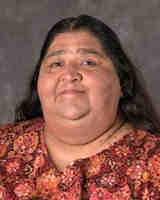
riojas[Editor’s note] Laurenza Riojas attended St. Johns High School and studied psychology at Michigan State University. Here she is being interviewed by the website http://servicelearning.msu.edu/
What is your current role at MSU at how did you get here – what’s your “career story”?

My current role is Informational and Statistical Analyst. I work with databases and survey information. I also coordinate transportation for some of the service-learning students. I have been with the CSLCE since 1997 and until 2015 I was an office manager. I came to the Center after being a secretary in the Office of Judicial Affairs for 14 years. I have been with MSU and in the Student Services Building for 32 years.

In addition to her statistician duties, Laurenza coordinates transportation and manages six drivers to help Service-Learning students to get to area schools

How do you describe your job to your friends and family?

To my friends and family, I describe my role as a database and data manager – I rarely give my title, because people always ask what that means. I also tell them I coordinate transportation and manage six drivers for some of the Service-Learning students to get to area schools and community centers, because that is a big part of my job. (Editorial note: I often think of this part of Laurenza’s job almost like that of an air traffic controller – coordinating lots of moving parts while moving students all across Greater Lansing!)

What do you like best about your job / position at MSU?

The best thing about my job at MSU has always been the people with whom I work, both on and off campus – students and community partners. I also love the growth in technology and how far we’ve come in the 32 years I’ve been on campus. I started out with an electric typewriter and I remember the data reports we worked on back then and how they compare to what we can do now. We’ve come a long way!

What is your favorite quote?

“Keep looking up, that’s the secret of life . . .” -Snoopy

What in your life makes you happy or are you most proud of?

My family life makes me the happiest. I’m so proud to be a mom and wife. My family came together by way of adoption and through marriage. We have seven children all together: two girls and five boys and one granddaughter. Five of the children still live at home.

Courtesy of CSLCE – November 29, 2016


This week’s Mystery Photo

Where is this?

mystery293

Can you tell us where this is located? Drop us a line at mail@sjindy.com.

704 N. Clinton Ave.

mystery292

The current owner is Sara Geller. Previous owners include Michael Galvach, Dorothy Knight, Dean Mazzolini, Richard Brunner, Estella Boak, Patrick and Pamela Walsh.


A Look Back
– Jaycettes

by Barry Clark Bauer

jaycettes

This group was elected Jaycette officers in 1974.

3rd from left is Diane Evitts Sharick, 5th from left is Janet Martin Scott, and 6th from left is Diana Sillman Woodbury.

The remaining ladies are unidentified.


Benny and Jessie’s Pet Info – Retractable Leashes: Are They Dangerous?

Once you have bought the items that’ll make your furry new family member feel welcome in your home—like beds, treats, and toys—it’s time to make decisions about practical things—like which leash you will use for walking with your canine companion.

There are the traditional leather or nylon leashes, which come in enough colors and lengths to suit any pet owner’s style, and there are retractable leashes, which also come in a host of different styles to suit individual preferences. The main goal, however, should be to choose the safest leash for your dog.

While it can be said that there are pet owners who are happy with their retractable leashes, before you make that final decision, consider the pros and cons of these devices.

The Pros of Retractable Leashes

Some dog owners prefer using a retractable leash over a standard leash when walking their pup. For Josh Manheimer, a direct mail copywriter for J.C. Manheimer & Company in Vermont, using a retractable with his 2-year-old basset hound Stella makes sense so she can still explore all the smells she wants.

“The benefits of extending leads are clearly that dogs can have more interesting walks and poorly trained dogs can still be prevented from running off and into danger,” says Dr. Roger Mugford, animal psychologist and CEO and founder of the Company of Animals.

There are benefits for both the dog and the human walking them, says Phil Blizzard, CEO and founder of ThunderWorks, which makes a retractable ThunderLeash. In addition to exercise, Blizzard says a retractable leash allows the human to keep a steady pace while the dog can freely sniff things that interest them.

The Cons of Retractable Leashes

The main drawbacks of retractable leashes revolve around training and safety.

Blizzard realizes that retractable leashes can be a safety concern. To help this, the ThunderLeash comes with a booklet to help dog owners use it more safely. The ThunderLeash can also be arranged to be a “no-pull” leash, wrapping around the dog’s torso to discourage pulling, says Blizzard.

“You need to be paying attention if you have the retractable on the open setting where it can go to the full length,” he says. “If you’re in the city you need to make sure you’re keeping your dog on the sidewalk, out of danger, and not running up to somebody. It’s not a good multi-tasking device as they’re currently designed.”

Manheimer says he hasn’t had any issues while walking Stella, but he’s still cautious. “My biggest concern is if Stella absentmindedly wanders after an attractive scent, or worse, lunges for a squirrel.” Cars are another issue, he says. “Neither of us is aware of the stealthy Prius in electric-mode.”

Safety Factors to Consider with Retractable Leashes

Not all pets, or pet owners, are good candidates for retractable leashes. Veterinarians say they see a lot of injuries related to retractable leashes.

“The most common are neck injuries, since a pet might start to run before the owner can lock the leash,” says Dr. Duffy Jones, DVM, of Peachtree Hills Animal Hospital in Georgia. “Many times the dogs have a full head of steam before the owner locks the leash, so it creates a good deal of force on their collar when the leash finally locks.” Reports of lacerated tracheas (windpipes) and spinal injuries are relatively common.

Other injuries include dog fight injuries due to a dog being too far away for the owner to bring it back quickly enough, and although Jones says never treated a dog that’s been hit by car due to a retractable leash, he says it’s easy to see how such things can happen.

“A few years ago I was driving home in my neighborhood after dark and I saw a man walking on one side of the street,” he says. “As I got closer, I realized his dog was on the other side of the street with a retractable leash. Luckily, I was able to stop to allow him to retract the leash and get his dog back on the same side of the road as himself.”

And it’s not only pets that can be injured by a retractable leash, humans can be injured by getting wrapped up in a long leash and falling, Jones says.

Mugford says that some of the safety issues with retractable leashes come because people don’t know how to use them properly.

“Too often, people don’t get the hang of thumb controls, and they panic and lose control of the dog,” he says. “Owners reach forward to grab the line of the extending lead with their free hand and can then sustain nasty rope burns.” In one case that received attention a few years back, a woman had her index finger cut off by a retractable dog leash.

It’s clear that leash manufacturers understand that retractable leashes come with safety concerns.

Mugford’s company makes the HALTI Walking retractable lead, which he says alleviates the rope burn problem with soft tape. The company also takes safety into consideration with reflective thread in the leash and an ergonomic handle.

Another retractable leash manufacturer, flexi, offers written directions and a video on their website so owners will better understand how to use retractable leashes. The directions cover possible safety issues like falls, face injuries, and finger amputations, and tells people how to avoid these dangers.

How Retractable Leashes Affect Training

Even if you’re committed to using a retractable leash while walking, you may want to reconsider it if you’re looking to train your dog, trainers say.

“As a trainer, one of the biggest things I see people coming in for is loose-leash walking,” says Merritt Milam, founder and head trainer at Wags ‘n Whiskers in Alabama. “It’s what everyone’s worried about, but a retractable leash literally teaches a dog to pull.”

If you want to train your dog for loose-leash walking but have been using a retractable leash with your dog, Milam says it’s harder to reverse the behavior. It’s also difficult to train other behaviors while using a retractable leash because the dog is so far away.

“If they’re four to six feet away, they’re still in your vicinity and you can talk to them and give them cues as you need to,” she says. “[Retractable leashes] might not teach them to ignore, but it gives them the opportunity to ignore as much as they want.”

Instead of retractable leashes, Milam recommends a four-to-six foot flat leash. “Just a regular leash that’s not going to let them drag their owner 15 feet, that’s my favorite.”

She uses longer leashes for training sometimes, such as a 20-foot leash, but notes that she can make them shorter if necessary and isn’t relying on a button to do so, like on a retractable leash.

Even dogs who are used to walking with a retractable leash can learn loose-leash walking, Milam says. “It just takes more time and patience.”

Overall, there are clearly concerns about retractable leashes when it comes to both training and safety. If you have specific questions, talk to your veterinarian or trainer to see which option will work best for your dog.


Letters – Giving Thanks and a reader needs genealogy help

Dear friends of the Community Thanksgiving Day Dinner,

This year our feast included 80 people of all ages and walks of life. It was a good chance to share a little time together and make new friends, too. In our busy time of history, it now seems to be a rare thing to stop and make a grand meal from scratch and then to relax in the company of people we know, as well as those we do not yet know. Something special happens when you share a meal with others and most everyone who came sensed that.

So we want to thank you for your part in bringing the feast together this year. Donations over $200 came in to support the work of Basic Needs Center downtown, who also came by Friday to gather the things we did not serve for others to enjoy the delicious food. Our promotional effort was not as energetic as 2015 and so the number of diners and volunteers together was less than last year. In debriefing our steering committee decided to reach out to our donors and volunteers so they, too, can make personal invitations to more people so the goodness can be shared more widely.

Guven Witteveen


My name is Patricia Miller. I was raised by David and Catherine Felzke and for a time in the homes of Mary Joann Gunther and Gary and JoEllen Teegardin. My Grandmother was Patricia Zerba. I am trying to do our geneology but have met wall after wall.

I was born on August 17, 1968 in Sparrow Hospital of Lansing Michigan.

My family live in Hubbardston and the surrounding area now. I have a brother in Arizonia as well. The Dad who adopted me lives in Ionia.

I did send the same type of e-mail to the Celtic Path in Hubbardston because I was told that is the Historical Center there. A man told me today that I need to contact a 72 year old man named Jim Wohlfert for answers. I cannot find his phone number. The two phone numbers posted online are disconnected.

Can anyone direct me to a historian that can shed more light on this for me?

Sincerely,
Patricia Miller
(724)355-0505
P.O. Box 246
Connoquenessing, PA 16027
Patricia F. Miller on Facebook

Features

This week’s Mystery Photo

Where is this?

mystery292

Can you tell us where this is located? Drop us a line at mail@sjindy.com.

803 N. Lansing St.

mystery291

The current owner is Roger Wright. Previous owners include Mel Warren, David and Brenda Post, Amber Wells, David Post, Amber Simmons, and Coral Johnson.


A Look Back – How Sweet It Is

Barry Clark Bauer

poliocube

Over 900 youngsters in the St. Johns School System are receiving their second dose of oral polio vaccine last week and this week. Friday morning school nurses Mrs. Gertrude Buehler (left) and Mrs. Princess Parker (right) concentrated on Swegles School in St. Johns where kindergarteners Jimmy Barrett, Stephanie Meyer, Brent LaBar, Michael Fettig and Jeff Brown are shown receiving their sugar cube and vaccine.

Looking on is the teacher, Mrs. Jean Gibson.

Features

Workin’ on the railroad

by Maralyn Fink

I’ve Been Working On The Railroad was the song that came to mind as I was passing by the Depot.

I decided to turn in the drive and speak to the workers. They are in the process of laying more track as they have another car waiting in the wings. This was very interesting to watch and well worth it.

Now I await the new car.

Maralyn@sjindy.com


This week’s Mystery Photo

Where is this?

mystery291

Can you tell us where this is located? Drop us a line at mail@sjindy.com.

209 N. Lansing St.

mystery290

The current owners are Donald and Drucilla Rademacher. Previous owners include David A. Rademacher. In the 1950s this was the home of popular teacher and coach Bob Marble and his family including Biff the dog.


A Look Back – Blood Drive

Barry Clark Bauer

blood

These local businessmen were kicking off the Red Cross Blood Drive in 1972.

Left to right: Roger Beebee; local bank officer, Gayle Desprez; Clinton National Bank vice-president, [Virgil Zeeb], Barry Dean; Dean’s Hardware, and Marv Barclay; shipping supervisor at Federal-Mogul.

Update: Barry Dean tells us, “The person not identified in the photo is Virgil Zeeb, Zeeb Fertilizer owner and a long time Rotarian and hard worker on community projects.”


Benny and Jessie’s Pet Info – Destructive Behavior Problems in Puppies

Pediatric Behavior Problems in Dogs

Undesirable behavior exhibited by dogs between puppyhood and adolescence, such as destructive chewing, jumping on people, and play biting, is medically referred to as pediatric behavior problems. Though these behaviors may be perceived as a “normal” trait of a puppy, it is often not acceptable behavior for a pet. It is important to address this as early as possible with behavioral modification therapies while the puppy is still impressionable.

Genetics do play an important role and behavior of young pups is likely to be similar to those of their parents. Certain breeds inherit certain problems like unruly, activity problems in working breeds of dog. However, such behavioral problems have been found to be more common in urban areas where opportunities for exercise and play are limited.

Symptoms and Types

Destructive Chewing

Initially, the pup may chew and damage furniture and/or other household items in the presence of family member, but after being caught and punished, he may continue be destructive when no family member is around.

Play biting

Play fighting may be started by a family member initially, but can further escalate or become spontaneous afterward. This is a problem because the deciduous teeth of puppies are still sharp and can cause injury if it bites the hands, legs, and/or clothing of family members. Growling and barking may also develop, but usually differ from the acts associated with fear or justified aggression.

Jumping on People

Jumping on people and placing paws on visitors and/or family members typically occurs during greetings and when she is excited, but may occur when the pup wants attention or something in the person’s hand.

Getting on Counters/Furniture

The pup may get on the counters or furniture to grab an object to chew or eat. He or she may also jump on furniture during play, to get attention, or to rest.

Causes

While many behavior problems in puppies are species-typical, there are some causes that can worsen behavioral issues — many of which are related to inadequate supervision, control, training, exercise, and/or the pup’s general environment. Specific factors that may lead to the categories listed above include:

Destructive chewing

Poor nutrition or inadequate food provisions
Presence of mice or other small mammals in the walls or flooring
Spilled food on carpet or furniture
Insufficient or uninteresting toys
Escape behavior

Play biting

Teasing and rough play (i.e., encouraging pup to bite)
Long confinement periods, especially in small enclosures
Excited greetings by visitors or family members

Getting on Counters/Furniture

Insufficient or uninteresting toys
Desired foods or objects left on furniture
Uncomfortable floor surfaces or inadequate sleeping areas

Diagnosis

You will need to give the veterinarian a thorough history of your dog’s health, including the onset and nature of the symptoms. The questions will particularly focus on the pup’s environment, new additions to the family (including other animals), and other related topics. Laboratory tests, meanwhile, are often not conducted unless a concurrent disease or condition is present.

Your veterinarian will discuss the various behavior modifications techniques like rewards and punishment. It is, however, never advisable to strike the pet, shake it by the scruff, thump its nose, role it on its back or squeeze its lips against its teeth to stop mouthing or biting. Such approaches are detrimental to existing behavioral problems and may aggravate the condition due to fear and aggression.

Vigorous exercise can also be extremely helpful for pups with these types of behavioral problems. Involving these puppies in healthy games like fetch/drop, for example, lets the pup know that the human is in control. Certain medications may also be used especially in cases not responding well to behavioral therapy. Other tips your veterinarian may recommend include:

To Discourage Destructive Chewing

Experiment with various toys and look for those that interests your pet, especially those than have compartments for food
Keep forbidden objects out of reach
Close doors to deny access to forbidden areas
Interrupt any unacceptable chewing with a sharp “no”

Play biting

Provide plenty of exercise and activity
Use toys to distract the pet during the act of playbiting
Leash and halter can be used to provide minimal restraint
Avoid games that encourage playbiting behavior
Put your puppy in puppy classes as early as possible
Take control of resources and train your pup to sit before receiving toys, food, attention, and food
Ignore any pushy social behavior like barking, whining, or pawing for attention

Jumping on People

Teach the pet to sit on command
Avoid games and play that may encourage it to jump on people
Gain your dog’s attention with a loud, sharp noise when it does jump
Head halter can also be used to provide minimal restraint

Getting on Counters/Furniture

Keep your counters and furniture free of any food or other objects that might get attention of the pup
Move dog to a confined area when it does misbehave
Provide interesting toys for mental stimulation, and a comfortable living space

Living and Management

It is important you follow-up with your veterinarian to ascertain the effectiveness of the behavioral therapy program. Prognosis in most cases is good; in addition, the frequency and intensity of such behaviors typically decrease with age.

If the dog is still misbehaving after several weeks, your veterinarian may recommend a trained behavioral therapist for a more intense training program.


Maralyn’s Pet Corner – Ingestion of Feces and Foreign Objects in Cats

Coprophagia and Pica in Cats

Pica is a medical issue referring to a craving for non-food items and the subsequent eating of them. Coprophagia is the eating and ingesting of feces. Generally, neither of these conditions are the result of an underlying disease, but may be the result of a mineral or vitamin deficiency. Fortunately, there are treatment options in these types of cases, or behavior modification practices that can be implemented if it is a non-threatening issue.

Symptoms and Types

You may observe your cat eating dirt, clay, rocks, soap, or other items that can endanger the animal’s health. The largest organ system that is affected by this behavior is the gastrointestinal tract, especially if foreign objects are being swallowed. You may notice that the animal is vomiting, has loose stools, or has diarrhea. There may be weakness and lethargy in the animal.

Causes

There are several possible reasons for why an animal would eat feces or other non-food items, including malnutrition, vitamin deficiency, increased appetite, or conditions such as diabetes or thyroid disease. Parasites, too, can be another of the causes for this behavior.

Sometimes an animal will eat its feces if there are remaining undigested articles of food in the stool. Mothers with newborns will also commonly eat the feces of their newborns; this is a normal part of their grooming behavior. As such, puppies may also eat feces as an observation of the mother’s behavior, or as part of exploration. In addition, an animal may eat feces as a response to recent punishment, to attract attention, because it desires to clean its environmental area, or because it is hiding its mistake.

Medical Causes:

Inflammatory bowel disease
Diabetes
Intestinal parasites
Anemia
Increased hunger
Neurological disease
Vitamin deficiency
Malnutrition
Thyroid disease

Diagnosis

Your veterinarian will need to distinguish between medical and behavioral causes. will need to begin by giving a thorough history of your pet’s health and recent activities. A complete blood profile will be conducted, including a chemical blood profile, a complete blood count, and a urinalysis. If it is not due to a medical condition, your veterinarian will need a full history on your cat, including its diet and appetite, handling practices, and information about its environment. This will assist your veterinarian in developing a proper treatment plan.

Treatment

Treatment will depend on whether the underlying cause is medical or behavioral in nature. For instance, if it is behavioral in nature, your veterinarian may recommend changing your cat’s environment, or using forms of behavior modification, such as a muzzle. Limiting access to any non-food items in the home may also be necessary if it proves to be too difficult to prevent your cat from eating inappropriate items.

Living and Management

Follow up is recommended during the first few months following initial treatment of the animal.

Prevention

Prevention of this type of behavior will require limiting your cat’s access to non-food items, or applying a bitter or pungent taste to such items to discourage regular consumption or chewing. Keeping your cat’s living areas clean, and disposing of waste promptly, will also bar access to feces.

In addition, dietary needs must be organized so that you can be sure that your cat is being supplied with all of its vitamin and nutritional needs, and that it is being eating the required amount of food.

Features

This week’s Mystery Photo

Where is this?

mystery290

Can you tell us where this is located? Drop us a line at mail@sjindy.com.

610 Traver St.

mystery289

Jan Bensinger writes: “The home shown in this weeks SJ Indy is located at 610 S. Traver St. in St. Johns. It is currently owned by Joe Chamberlain and was previously owned by Norbert and Lucille Mueller. I have forgotten the name of the people that owned it before the Muellers. Our house was the first one on this block, and we watched this home being built.”


A Look Back – Students leave for Study Tour in Europe

Barry Clark Bauer

tour

St. Johns Mayor Charles Coletta presents a large gold key to the city to David Feldpausch to be given to the mayor of a European city during this student group’s governmental study tour of Europe. Left to right are Rick Warren, Bob Cartwright, Cathy Nuser, Doug Barker, Jane Allaby, Dave Feldpausch, Kurt Hildorf, Mrs. Beatrice Barnum (chaperone), and Pete Allaby. Missing for the picture was John Salemi. Nine local students to leave June 19 for a six-week study tour in Europe.

Nine St. Johns High School students and one from Grand Rapids will be leaving June 19 for, a six-week study tour of Europe under auspices of the Foreign Language League Schools, Mrs. Beatrice Barnum, elementary teacher at Swegles School, will be their counselor/chaperone for the second year in a row.

The students are: Cathy Nuser, daughter of Mr. and Mrs. James Nuser of 902 E. State St., Jane Allaby and Pete Allaby, daughter and son of Mr. and Mrs. A. T. Allaby of 410 E. Baldwin St., Bob Cartwright, son of Mr. and Mrs. Robert Cartwright of 407 E. Higham, Douglas Barker, son of Mr. and Mrs. Elmer Barker of 307 S. Mead St., David Feldpausch, son of Mr. and Mrs. Bernard Feldpausch of Sevey Road, Rick Warren, son of Mr. and Mrs. M. E, Warren of 307 E. Clark St., Kurt Hildorf, son of Mr. and Mrs. Robert Hildorf of 405 Meadowview Dr., John Salemi, son of Mr. and Mrs. Robert Dlanda of 207 E. Baldwin St. The Grand Rapids student will be Deborah Cady.

The St. Johns group will join forces with other students from Muskegon and Saginaw June 19, and will fly from Detroit to Philadelphia where other groups from all over the United States will join to make up a charter flight of about 180 people. The purpose of the trip will be to study various governments and compare them. The students will reside on campuses in London, Rome, Florence, Munich, and either Holland or Belgium. Due to the strife in France, the League is in the process of making alternate arrangements for the 12-day stay in Paris.

Many excursions and field trips are planned, including Windsor Castle, Stratford-on-Avon, an opera at Caracalla (ancient baths of Rome, turned into an open-air theater), a visit to Pisa, Salzburg (scene of filming of “Sound of Music”), and a visit to the famous Bavarian castle of Neuschwanstein. The last 10 days will be spent in a picturesque Bavarian village high on a hill above the Inn River Valley with some of the World’s most impressive Alpine scenery serving as a backdrop. The facility is a converted castle which is now a boarding school. The location is only a short distance from Munich, Salzburg, and Oberammergau.

David Feldpausch will represent the St. Johns group on the Foreign Language League Schools student council and will have an opportunity to present a key to the City of St. Johns to a mayor in one of the cities visited.

The students will return to the United States by jet from Munich on July 31 and will fly home from Philadelphia the following day.


Benny and Jessie’s Pet Info – Can the Noroirus be Passed from Dog to Human?

Norovirus—the word alone might be enough to make you a little nauseous. According to the United States Center for Disease Control and Prevention (CDC), noroviruses (there are many types) are the “leading cause of illness and outbreaks from contaminated food in the United States.” People can also become infected with norovirus through touching contaminated surfaces or by having contact with someone who is infected with norovirus. The CDC estimates that as few as 18 virus particles may be enough to cause illness in people, which explains why norovirus infections (often mistakenly called the “stomach flu”) tend to be highly contagious, rampaging their way through homes, schools, businesses, cruise ships, etc.

The symptoms of norovirus infection in people are downright nasty. Vomiting, diarrhea, fever, headache, and body aches are common and tend to last anywhere from one to three days. If you’ve lived with dogs for long enough, you’ve probably observed them having similar symptoms, perhaps even right before, during, or after you’ve been sick. Under these circumstances, it’s reasonable to wonder if dogs can get norovirus and, if so, whether the virus can be passed between people and dogs.

First some clarification is needed. Dogs (and cats) appear to have several of their own species of norovirus that cause gastrointestinal symptoms similar to those described above. The question we’re asking here is whether or not viruses that we’ve assumed can only infect one species (or closely related species) can actually move between dogs, cats, people, etc. Why is this important? If it proves to be true, we would know that when dogs in a household become infected with norovirus, people could be at risk for infection, and vice versa.

A few scientific papers have recently been published that attempt to answer this question.

In 2012, a group of researchers in Helsinki, Finland looked at 92 stool samples from dogs living closely with people who had recently experienced symptoms of vomiting and diarrhea. They screened those samples for several different types of human norovirus and found human norovirus in “four faecal samples from pet dogs that had been in direct contact with symptomatic persons…. All NoV [norovirus]-positive dogs lived in households with small children and two dogs showed mild symptoms.”

The study’s authors concluded that human noroviruses “can survive in the canine gastrointestinal tract. Whether these viruses can replicate in dogs remains unresolved, but an association of pet dogs playing a role in transmission of NoVs that infect humans is obvious.”

Another interesting paper appeared in 2015 and was titled “Evidence for Human Norovirus Infection of Dogs in the United Kingdom.” The research showed that human norovirus could indeed bind to canine gastrointestinal tissues and that 13% of the dogs in the study had antibodies against human norovirus in their bloodstream, an indication that they had been previously infected. Interestingly, the types of human noroviruses that the dogs had been infected with closely mirrored the types of noroviruses that had been circulating in people in their communities.

While the scientists did not find evidence that human norovirus could be transmitted through dog feces, this study does show that it is at least theoretically possible for dogs to act as a reservoir for human norovirus.

Since then, there have been no further reports of human norovirus infections in dogs (or cats), but this certainly is a topic that deserves more attention. And until we know for sure whether noroviruses have the ability to move between species, it only makes sense to practice meticulous hygiene if anyone in the family develops vomiting or diarrhea.


Letters – His Cup Runneth Over thanks community

His Cup Runneth Over, a mobile soup kitchen, just completed it’s 2nd season. They had 90 stops this year from April-October at 6 different locations. We would like to thank Carson City United Methodist Church, Pompeii United Methodist Church, Middleton Community Church, First Baptist Church/Beacon of Hope St. Johns, First Congregational Church of St. Johns, and Suntree Apartments St. Johns for being our host locations.

3,772 meals were served during the season. We ‘d like to thank some very generous donors for their donations of food used in preparing the meals: Salvation Army, Wilson Farm Fresh Meats, Gary Zehr, Postal Carriers food drive, Michele Welch cardio drumming group, Smile FM Hometown tour stop, and girl scout troop.

We had many generous supporters this year also and would like to thank the following: First Congregational Church St. Johns, First Church of God St. Johns, Maple Rapids Congregational Christian Church, Maple Rapids United Methodist Church, Two or More Christian Church St. Johns, Middleton Community Church and Ithaca Church of God.

Thank you to the numerous individuals who served at soup days by baking, cutting bread, bagging dessert, dishing up fruit, serving meals, setting up and tearing down, and hauling the trailer.

We have been blessed by all the support and donations and thank everyone for their generosity.

2017 soup season will start up again in April 2017, so watch for details as the time gets closer.

Kris and Jenny


Maralyn’s Pet Corner – Alternatives to Declawing Your Cat

Declawing is a misnomer. Yes, a correctly performed declaw surgery does remove a cat’s claws, but it doesn’t stop there. To prevent the claws from regrowing, the bony top of each digit (finger or toe) must also be amputated. It’s not too surprising then that declawing has fallen out of favor with many pet parents.

But that doesn’t mean problems associated with cat claws have disappeared. Thankfully there are far better ways to deal with cat scratching than declawing.

The first thing we have to accept is that cats are going to scratch at things. It is a perfectly normal feline behavior. Our goal is not to stop the scratching but to direct it toward appropriate surfaces and to reduce the damage that might occur if a cat strays from those surfaces. Here are five alternatives to declawing that actually work.


1. Invest in Scratching Posts . . . Lots of Scratching Posts

Cats need to scratch, but they can be rather finicky about what they deem worthy of their attention. Some cats prefer scratching on carpet, others like the feel of corrugated cardboard, wood, or rope. Some cats want to scratch vertically and others favor horizontal surfaces. Buy several different types of scratching posts and scatter them around your home near the areas where your cat spends the most time scratching. As you get a feel for your cat’s preferences, you can switch entirely to the types of posts that are getting the most use.

Also, your cat should never have to make much of an effort to reach an appropriate surface on which to scratch. Keep a scratching post in every room where your cat spends significant amounts of time.

2. Keep Your Cat Away from the Old Favorites

Prevent access to the areas where your cat has been scratching inappropriately. Keep doors shut to these rooms whenever possible. Two baby gates stacked on top of each other can do the trick in a pinch. Electronic pads that deliver a harmless zap when stepped on (e.g., ScatMat) are another good option. Place the pad directly in front of the problem area so your cat can no longer stand or sit where he usually does to scratch. You can also make the old scratching surfaces unattractive to your cat. For example, cover the corner of your sofa with double sided tape or aluminum foil.

3. Trim Your Cat’s Nails

Learn how to trim your cat’s nails, and do so at least once a week. Using a nail trimmer with sharp blades will make the process more comfortable for your cat. Make sure you praise and reward her when she cooperates. When you bring home a new kitten, start trimming nails immediately so the process becomes routine.

4. Use Nail Covers

Rubbery nail covers (e.g., Soft Paws) can be a good option for some cats. You can either learn how to apply them yourself (you do have to trim the cat’s nails before every application) or make an appointment with your veterinarian. Nail covers generally last between four and six weeks before they have to be replaced.

5. Train Your Cat

If you catch your cat in the act of scratching somewhere he shouldn’t, you can loudly tell him “no” or make another startling sound to stop the behavior, but do not physically reprimand him in any way. Positive reinforcement is always better than punishment, so when you observe your cat scratching on his post, don’t miss the opportunity to praise him or give him a little treat for doing the right thing.