Features

The Nest – with an album by Maralyn Fink

Do you know about The Nest? No? Well I have the answers for you.

The Nest is a SJ Redwing store located in the High School located on the west side of the school, athletic entrance.
I checked this out and as you can see, this is a great place to do some Christmas shopping or just for yourself.
The Redwing Athletic Boosters were given the store location after the high school construction project.

It is only open during home basketball games and events held where parents attend, for example Curriculum night, conferences, etc. However Mary Donald, who is the Secretary for athletics, is at her desk across from the store and is awesome about helping people during the school day. The Nest is also run by volunteers.

They have many Redwing items on hand with anything you could want to support the Redwings. Items include stadium chairs, dufflebags, sweatshirts, flannel bottoms, knitted hats, gloves, umbrellas, blankets, anything in shirts, water bottles, glassware, eye black, tattoos for games, Christmas ornaments and scarves to name just a few. All have the Redwings logo on them.

If you have not checked out this neat store I urge you to give it a try. You won’t be disappointed, and you will also be helping the athletes who participate in sports as well as the Booster Club.

Thank you to Jan Motz and Mary Donald for your input; I really appreciate it. Go Redwings!

https://picasaweb.google.com/110845930262453987007/151201?authuser=0&feat=directlink


This week’s Mystery Photo

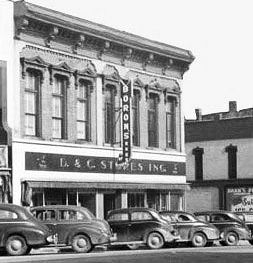
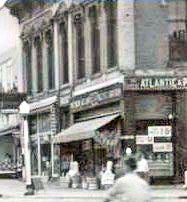
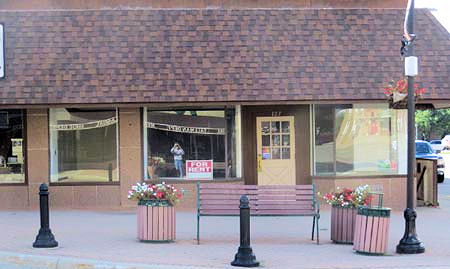
Where is this?

mystery243

Can you tell us where this is located? Drop us a line at mail@sjindy.com.

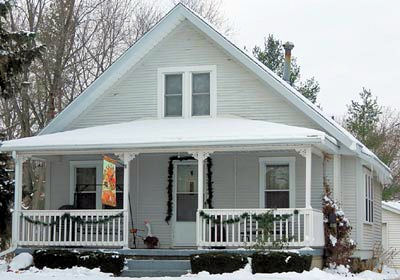
709 N. Swegles St.
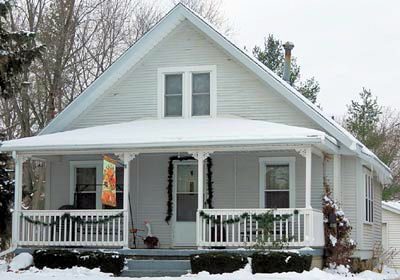
mystery242

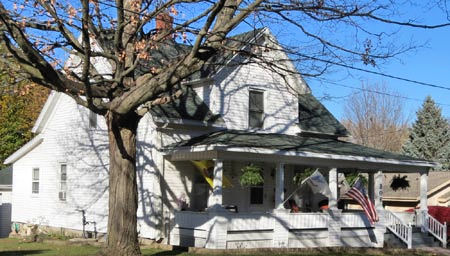
The owners: Dana and Sheri Garrod. Previous owners include Crystle Ormston, and Jerry Green.


A Look Back – Clinton Area Career Center Gets Donation

by Barry Bauer

career1

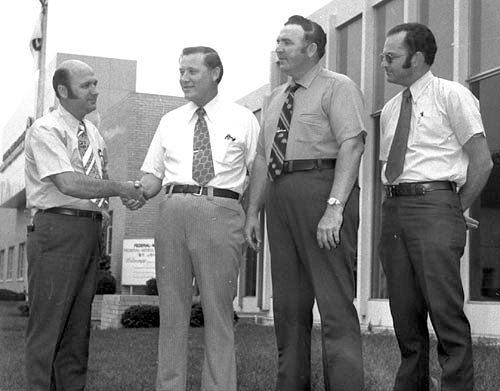
Two of the donations received last week at the Clinton Area Career Center are these 1972 engines. Displaying the 6 and 8 cylinder engines are (from left) Roger Enyart, auto instructor; Ion Keefer, auto instructor; John DeCarli, Ford representative; and Lewis Kramer of Egan Ford.

career2

Inspecting the 1973 Cougar training unit received at the center are (from left) Lewis Kramer, John DeCarli, Roger Enyart and Ion Keefer; Enyart termed the donations a good way for “students to get their feet wet before working on a live car.”

The Clinton Area Career Center was given several automobile parts last week by Egan’s Ford in St Johns and the Ford Motor Company. The Center, located in downtown St Johns(old Bee’s Chevy & Olds building), received the engine and front end of a 1973 Cougar to use as a training unit, a 1972 8-cylinder engine with automatic transmission, a 1972 6-cylinder engine, and two 1972 differential units.

The Cougar was on a train which was involved in an accident in Owosso recently. It includes the engine, air conditioning unit and transmission as well as front wheels and a portion of the body. The Ford Training Center in Lansing has also, donated parts to the center. They provided air conditioning test units and Ford service manuals.

Automotive instructor, Roger Enyart, said that so far the boys in auto classes have torn down the 6-cylinder engine, reassembled and started it. He noted that both engines will be used for tune-ups, engine and transmission tests. The cars at the center are used for training in air conditioning, disc brakes and other tests. Enyart said the donations provide a good opportunity for “students to get their feet wet before working on a live car.”


Benny and Jessie’s Pet Info – Lung Cancer in Pets is Serious, Often Treatable

Lung cancer is the second most common cancer in both men and women (not counting skin cancer). In men, prostate cancer is more common, while in women breast cancer is more common.

Lung cancer accounts for just over 25 percent of all human cancer deaths and is the leading cause of cancer death among both men and women. Each year, more people die of lung cancer than of colon, breast, and prostate cancers combined.

Lung cancer is typically diagnosed in older patients, with two-thirds of individuals being age 65 or older. Less than two percent of all cases are found in people younger than 45.

The American Cancer Society’s estimates for lung cancer in the United States for 2015 are:

– About 221,200 new cases of lung cancer (115,610 in men and 105,590 in women)
– An estimated 158,040 deaths from lung cancer (86,380 in men and 71,660 among women)

Contrary to the disease in people, lung cancer is very rare in dogs and cats. The average age of dogs with primary lung tumors is approximately 11 years and the risk of developing lung cancer rises after the age of 13.

In cats, the average age at diagnosis is about 12 years, with most cats being more than 5 years of age. In both dogs and cats, no consistent breed or gender predisposition is found.

Pets with lung tumors often show adverse clinical signs, including a chronic non-productive cough, difficulty breathing, lethargy, and weight loss. Other less specific signs include fever, lameness, and, in cats, vomiting. Many pets are incidentally diagnosed with primary lung tumors while undergoing routine chest radiographs (x-rays) taken for other purposes.

Fluid may build up in the space around the lungs (pleural effusion) secondary to tumor cells invading into the lining surrounding the lungs or into lymphatic vessels. This can cause a pet to show signs of significantly labored breathing, which is a medical emergency.

Cats can experience a unique presentation of lung cancer where the primary tumor spreads to the bones of the digits (“toes”). In fact, some feline patients are diagnosed with the boney lesions prior to being diagnosed with a lung tumor.

If a diagnosis of lung cancer is suspected, computed tomography (CT) scans of the chest are recommended to better delineate the size and location of the tumor. CT scans are also more sensitive than radiographs for picking up metastatic tumors within other lung lobes, enlarged lymph nodes, and other intrathoracic abnormalities that may be present.

Surgery is the treatment of choice for solitary, non-metastatic lung tumors in dogs and cats. Complete removal of the entire affected lung lobe is typically recommended. Though this procedure sounds intensive, complications are rare and most pets do very well afterwards following a brief recovery period.

Thoroscopic procedures, where specialized cameras and surgical instruments are inserted through ports located within tiny incisions into the chest, are less invasive, and useful for removing smaller tumors. At the time of surgery, any visible lymph nodes should also be biopsied to determine stage of disease.

Once the tumor is removed it is submitted for histopathology and biopsy. This will provide information as to the exact cell of origin of the tumor, as there are many different potential primary lung cancers.

Most information regarding prognosis for animals with pulmonary tumors is derived from the behavior tumors of epithelial cell origins, otherwise known as carcinoma tumors. Typical expected survival time is about one year after surgery.

Prognostic factors are characteristics of the patient or their tumor that can influence the outcome (usually measured as survival time) in either a positive or negative way.

Prognostic factors for dogs with pulmonary tumors including stage of disease, the presence of adverse (i.e., unfavorable) clinical signs prior to diagnosis, size of the primary tumor, location of the primary tumor within the lung, and histological grade of the tumor, which is based off of features the pathologist will evaluate under the microscope.

Chemotherapy plays a large role in treating lung cancers in people. Based on this information, there are many theoretical advantages to chemotherapy’s use in pets. However, because the tumors are so rare, studies are lacking regarding proving its benefit for dogs and cats.

I recommend treatment with a drug called vinorelbine. This is an injectable form of chemotherapy shown to provide a partial response to treatment in a very small number of dogs with lung tumors. Metronomic chemotherapy is also a reasonable, theoretical treatment option.

The role of other typical treatments used in people with lung cancer, including radiation therapy, interventional radiology, and regional chemotherapy remains relatively unexplored for veterinary patients.

Because lung cancer is so common in humans, many people are aware of how serious a diagnosis it is. Though there are many shared characteristics in the disease between animals and people, it’s important to keep in mind that in both cases, though not curable, it is often a very treatable type of cancer.

If you’re facing a diagnosis of lung cancer in your dog or cat, please seek consultation with a veterinary oncologist who can provide you with all the information you need to make the right decision for your pet.


Maralyn’s Pet Corner – Common Emergencies for Kittens

It can be quite frightening to see your kitten suffering, especially if you are unsure whether the situation should be considered an emergency. When in doubt, always contact your veterinarian or the nearest animal hospital. But to hopefully better prepare you, here are some of the most common kitten emergencies found in emergency veterinary hospitals around the country.

Difficulty Breathing

If your kitten is having difficulty breathing, you should seek veterinary care immediately. Typically, this means that the lungs or airways are compromised. Many things can cause a kitten to have trouble breathing. Infectious disease is a possibility. Some of these diseases can result in pneumonia. Foreign objects stuck in the throat or trachea are a possibility as well. Damage to the lungs caused by trauma is another potential cause. Allergic reactions, congenital heart failure, and toxins are additional potential causes of respiratory distress.

Any difficulty breathing should be considered a serious problem, requiring immediate evaluation by a veterinarian. Often radiographs are necessary to evaluate the lungs and airways.

Coughing and Choking

Choking can be a serious problem, even if the symptoms resolve within seconds. Lack of proper oxygenation or the build-up of fluid within the lungs can be a dangerous consequence of choking.

Coughing is a vague symptom of several possibilities, including viruses, bacteria, fungal pneumonia, allergic bronchitis, or even congenital heart disease. Upper respiratory infections (URIs) are one of the most common causes of coughing in kittens. Often, a kitten with an URI will also exhibit signs such as sneezing, runny eyes, and a runny nose. Any compromise in your pet’s respiratory ability should be evaluated by a veterinarian as soon as possible.

Vomiting and Diarrhea

Vomiting and/or diarrhea can be caused by many different things, including a sudden change in diet parasites, dietary indiscretion, infectious diseases, toxins, and more. Some cases of vomiting or diarrhea may be mild and self-limiting. But persistent or severe vomiting and diarrhea can be problematic. Your kitten can rapidly become dehydrated with these symptoms. Depending on the underlying cause, symptoms can drastically worsen in a matter of hours.

Trauma

Trauma may the result of a being hit by a car, being attacked by another animal, falling from an elevated height, or any other type of accident. Trauma may result in shock, broken bones, lacerations and other external wounds, internal bleeding, internal injuries, and pain. It may become life-threatening for your kitten. If your kitten experiences any type of trauma, he should be examined by your veterinarian, even if he seems unharmed initially. Complications from trauma are not uncommon and early intervention will give your kitten the best chance of a successful recovery.

Bleeding

If your kitten is bleeding, seek veterinary care. Blood loss can lead to shock and can become life-threatening. Of course, if the bleeding is minor and explainable, such as bleeding from a toenail that was cut too short during a nail trim, there is little danger.

Toxin Ingestion

There are many substances that can be toxic to kittens. Among the most dangerous are the plants known as true lilies. Antifreeze is another potential toxin that can be deadly. Cleaning chemicals, medications (both prescription and over-the-counter), garden products (fertilizers, plants, bulbs), chocolate, rodenticides, and insecticides are other potential toxins. If in doubt about whether a substance is toxic, contact your veterinarian for advice.

Foreign Body Ingestion

Kittens are curious by nature, and playful. Any foreign body that is ingested can become problematic, either causing gastrointestinal problems such as intestinal obstructions or perforations, or getting stuck in the throat or trachea, causing choking and possibly suffocation. However, linear foreign bodies are a particularly common problem in cats. These may include string, rope, ribbon, fishing wire, and other similar items.

Allergic Reactions

Kittens can develop allergic reactions. Causes of these reactions range from vaccine sensitivity to insect bites. An anaphylactic reaction is the most serious form of allergic reaction. Symptoms of anaphylaxis include vomiting, diarrhea, lethargy, difficulty breathing, and collapse. Kittens may also suffer allergic reactions that include facial swelling, hives and itchiness. Care is necessary if you suspect an allergic reaction in your pet.

High Body Temperature

Your kitten’s body temperature may rise for various reasons, including infection and heat stroke. Temperatures above 104 degrees are dangerous for your kitten and require veterinary care.

Pain

Pain can occur in pets for several reasons and can be displayed in a variety of ways. Pacing, agitation, restlessness, panting, rapid heart rate, or even aggression are all symptoms of possible pain. Injury due to trauma is probably the most common cause of pain in kittens but there are other causes as well. If you believe your kitten is in pain, seek veterinary help.


Letters – Another reason to be thankful

casa
Andy T presents CASA Executive Director Kelly Schafer with the proceeds from the 2015 Pumpkin Trot.

A big thank you to Andy, Sunday, the staff at Andy T’s Farm Market, Pumpkin Trot Sponsors and Participants. Your generosity raised $1,200 to support CASA Advocacy in Clinton County.www.clintoncountycasa.org/.

Features

Around Town With Barry

https://picasaweb.google.com/110845930262453987007/151124?authuser=0&feat=directlink


This week’s Mystery Photo

Where is this?

mystery242

Can you tell us where this is located? Drop us a line at mail@sjindy.com.

205 W. Walker St.

mystery241

The current owner is Maureen J. Durbin. Previous owners include Seibert, Schafer, Lanterman, Cain.


A Look Back – St. Johns Gets New City Commissioner

by Barry Bauer

oatley

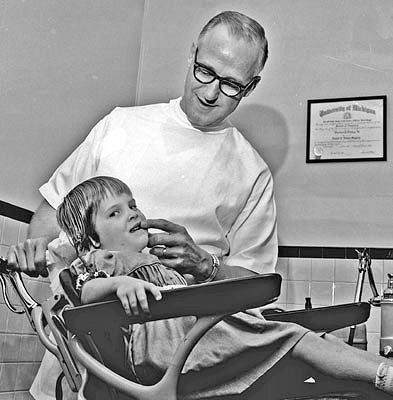
The St. Johns City Commission is back to full strength now with the appointment of Dr Herb Oatley, St. Johns dentist, to fill the one vacancy created by the resignation and moving from town of John Furry. Dr Oatley was appointed at a special commission meeting last Tuesday night and was immediately sworn in. He attended his first meeting as a commissioner Monday night.

Mr. Oatley has been in dentistry and has been a resident of St. Johns for 28 years, having come here from Grand Rapids. He and his wife Esther and son David, 15, live at 700 S. Oakland Street. The Oatleys have another son, Mike, 25, and a grandson in Skokie, IL.

Dr Oatley was instrumental in a fund-raising drive this past spring so the St. Johns swimming pool could be open for youngsters. He was chairman of the Clinton County Memorial Pool Fund. He has a long record of community service. He was on the St. Johns School Board for six years in the days when Swegles School was built and served for a time as president. He has also been president of the former civic division of the Chamber of Commerce and of Rotary, of which he is still an active member. He was a charter member of the St. Johns Jaycees. Dr Oatley is a graduate of the University of Michigan School of Dentistry. He served for four years in the U.S. Navy.

Dr Oatley was one of four candidates placed in nomination for the vacant commission seat last Tuesday night. Others nominated were Ken Munger, John Hannah, and Robert Wood. The commission balloted on each separately, and on the second round agreed on Dr Oatley. The motion was to appoint him as commissioner passed unanimously. Dr Oatley’s term will expire in November 1972.


Benny and Jessie’s Pet Info – Tips for Dealing with Holiday Stress

The holidays have arrived, and if you are one of the fortunate ones with friends and family that you like to spend time with, the holidays mean parties, dinners, gift exchanges and get-togethers. Whether you will be the host of one of these fetes, or whether you’ll be packing up the family and pet for a cross-town trip to visit family and/or friends, know before you go how you are going to keep everyone calm and comfortable, so that everyone has a good time.

Visiting … Visitors

If you are the “visitee,” you will want to do a little preparation before the guests arrive. Many of us consider our pets to be members of the family, and we enjoy having them with us in as we celebrate good times. But, when our pets are not used to have more than a few people around, they can get overly excited, and things can stop being fun. The jumping, the grabbing food from hands and tables, the barking … all of these things can lead to some embarrassing situations, and can even frighten some guests who are not accustomed to having animals around. In the weeks before the event, take some time to work on your pet’s manners and reinforce obedience training. You might try some small gatherings with some pet friendly people who can help you to reinforce your pet’s manners, so that when the bigger party night comes, your pet will already be prepared.

If, on the other hand, you know that your pet will not be able to hold back his exuberance, set aside a safe room where he can stay for the duration of the event. Make the space comfortable with a bed or rug, water, toys, and maybe some treats. Close this area off to the guests so that you can be sure that your pet, and your guests, are safe. Remember to either tell your guests that your pet should be left alone, tape a sign to the door saying “do not open,” or place a hook and eye lock on the door so that people know that it is not to be opened. The last thing you want is for a very excited pet to dash through the house, and possibly out the door to the outside of the house.

Traveling With Your Pet

Leaving the familiarity of home can provoke anxiety in people and animals. If you are traveling by car, be sure to bring along some of your pet’s favorite toys, a blanket or pillow bed, and his regular food. If your pet is used to sleeping in a crate, bring it along so he can sleep in his familiar space.

We advise keeping pets in a travel safe crate so that the animal is not able to move freely though the car. This covers a few bases. Keeping animals in travel crates prevents them from getting underfoot or on your lap while you are driving — an obvious hazard — it prevents them from being thrown from the car should an accident occur, and it prevents them from getting free/running away during rest stops or after minor accidents have occurred. We can tell you that these unhappy events do occur and are reported in the news frequently enough to make them worth noting. If you cannot fit a crate into your car, you can use a pet approved safety belt/harness to keep your pet in her seat, where she belongs.

On that note, make sure your pet is wearing identification at all times, and pack an emergency first aid kit for pets in case of an emergency. And don’t forget to take frequent breaks to allow for rest and relief.

If You Leave Your Pet Behind — Boarding

Before choosing a boarding facility for your pet, take a quick tour of the facility to check out the accommodations. You will want to be sure that it is clean and well kept, and that there is ample space given for the animals to exercise daily.

Have your questions ready before you go. Things you may want to know are: how many animals are kept together in one space; can you bring your pet’s food so that his digestive system will not be upset by an abrupt change in food; will you be able to bring along toys and other familiar comfort objects from home?

If you do not feel comfortable with a boarding facility, whether for your pet’s emotional comfort or because of health concerns, and you do not have the option of taking your pet along with you, give yourself plenty of time to ask around the neighborhood for someone to pet-sit in your home or theirs, or do some research into local pet-sitters that will come to your home to check in and care for your pet, or will take your pet into their home. The better prepared you are, the less stress there will be for you and your pet, and the better your holiday celebrations will be.

Keep to a Routine

One of the best things you can do throughout it all is to stay to a familiar schedule. This means taking walks at the same time that you always do, and feeding at the same time as usual. It might help to create an alarm system on your mobile phone to remind you of your pet’s daily routine. Also, don’t forget to take time to play and show affection, so that your pet does not feel thrown off balance by all of the activity and distractions.


Maralyn’s Did You Know? – Blue Buffalo Recall

Blue Buffalo Recalls Cub Size Wilderness Wild Chews Bones

Blue Buffalo Company is voluntarily recalling one production lot of Cub Size Wilderness Wild Chews Bones. This is being done in an abundance of caution, as the product has the potential to be contaminated with Salmonella.

Salmonella can affect animals eating the product and there is risk to humans from handling contaminated pet products, especially if they have not thoroughly washed their hands after having contact with the products or any surfaces exposed to these products. Pets with Salmonella infections may have decreased appetite, fever and abdominal pain. Other clinical signs may include lethargy, diarrhea or bloody diarrhea, and vomiting. Infected but otherwise healthy pets can be carriers and infect other animals or humans. If your pet has consumed the recalled product and has these symptoms, please contact your veterinarian.

The product was distributed starting November 19, 2015 in PetSmart stores located in the following 9 states: California, Kansas, Michigan, Minnesota, Montana, Nevada, Oregon, Utah, and Washington. The recalled product comes individually shrink-wrapped in plastic with the UPC number 840243110087 printed on a sticker affixed to the product, and an expiration date of November 4, 2017, printed as “exp 110417” on the shrink-wrap. Consumers should look at the UPC Code and expiration date on the product package to determine if it is subject to the voluntary recall.

The voluntary recall is limited to the following product and production lot:

Cub Size Wilderness Wild Chews Bone – 840243110087 – November 4, 2017

Consumers who have purchased the product subject to this recall are urged to dispose of the product or return it to the place of purchase for full refund.

Consumers with questions may contact Blue Buffalo at: 888-641-9736 from 8 AM to 5 PM Eastern Time Monday through Friday and the weekend of November 28, 2015, or by email at Bluebuffalo4260@stericycle.com for more information.


Maralyn’s Pet Corner – 3 Fall Recipes Your Dogs Will Love

I’m not known for my cooking skills, but our dogs don’t mind, because I’m an expert at three recipes they love.
Salmon, Sweet Potato and Coconut Bites

I modified this recipe from one I found on Kol’s Notes, a blog that is chalk full of easy recipes and DIY projects for you and your dog. I made a few adjustments, because I wasn’t able to find what the recipe called for at our market—it was still a hit!

Ingredients

– 1 6oz can of boneless, skinless salmon
– 1 medium sweet potato
– 1/2 cup of unsweetened, shredded coconut
– 2 eggs
– Coconut oil to grease the muffin pan

Preheat oven to 300 degrees. Mix the first 4 ingredients in the above list. Allow to sit for 5-10 minutes while the coconut soaks up the mixture. Grease the muffin pan with the coconut oil and spoon the mixture into each muffin tin.

Bake for 45 minutes (more or less depending on your oven).

Allow to cool and serve up these yummy (to the dogs) treats. Yes, I tried a muffin. I didn’t care for it, but the dogs loved them.

Simple Apple Slice Treats

Ingredients

– Apples
– Coconut Oil

Core and cut apples into slices and drizzle with melted coconut oil. Coconut oil is great for your dog’s skin and coat, digestive system, immune system, metabolism, and more.

Apple/Pumpkin/Berry Kong Recipe

This is a great frozen treat that our dogs enjoy. Bonus: it provides me with at least 20 minutes of silence.

Ingredients

– Apples
– 100% canned pumpkin (not the one with spices)
– Blueberries
– 2 cups of plain Greek yogurt

I use a food processor to blend all of the ingredients until they’re nearly smooth and spoon the mixture into our Kong toys. I freeze overnight and hand them out when it’s time for the dogs to have a break.

If your dog has trouble with yogurt, you can reduce the amount of yogurt or eliminate it from the recipe. Your dog will love this treat either way.

If you’re serving this treat indoors, I recommend serving this Kong treat in your dog’s kennel or on a towel or blanket—it can get messy and the berries may stain.

And there you have it—three easy recipes that I can whip up for our dogs on a moment’s notice and feel like master chef (kind of).


Remember When? – Hicks Store

by Maralyn Fink

mainstreet

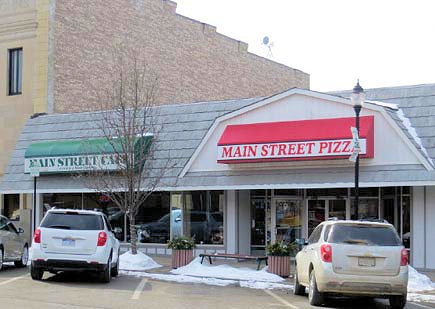
Main Street Café sits on the former site of Hicks Clothing Store back in the day.

statebank1

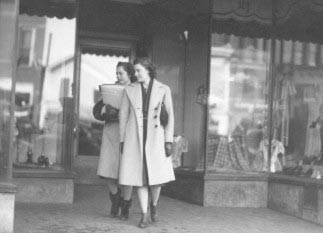
I remember this business well, and this was a clothing store where my mother would take us for clothing. Every Easter season was a must trip there where we purchased a new coat, fancy hat and patent leather shoes. Dick Kohls opened a shoe store in a front section and had a large display of shoes. Easter was a big holiday, and people were decked out in their finest.

hicks2

I just loved to go there and have a look around. We couldn’t buy all the nice stuff because we had to watch our pennies. Maybe a coat was $10.00 back then, but it was also considered high-priced. Little did we know that in the coming era that the prices would really be high-priced.

However we were always happy to have something back then and it was such a peaceful time.

Just to go back one more time!

Features

Around Town With Barry – an album by Barry Bauer

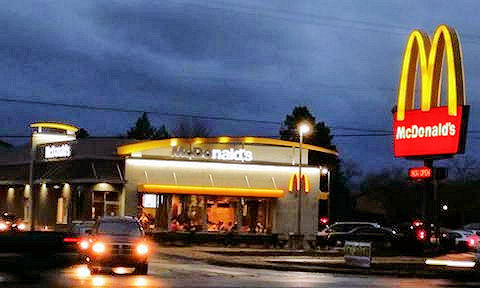
mcd
Fine dining returns to St. Johns

https://plus.google.com/photos/110845930262453987007/albums/6218258622681596241?authkey=CIvUoLXq6e6wkwE


This week’s Mystery Photo

Where is this?

mystery241

Can you tell us where this is located? Drop us a line at mail@sjindy.com.

111 N. Ottawa St.

mystery240

The current owner is James E. Oakwood. Previous owners include Carol Shaw, Carol McCarthy, Ronald Pung, Lonier/Parkhouse.


A Look Back – Exchange Club Toothbrush Sale

by Barry Bauer

exchange

Brushing up for the upcoming toothbrush sale are these members of the St. Johns Exchange Club.

Milo Rowell (right), puts the brush to Charlie Huntington (left) and Bill Patton as they prepare for the annual toothbrush sale Sept 28, 1973, from 9 a.m. to 9 p.m. in the St Johns shopping areas to raise funds for the Exchange Club Youth fund. Those who wish to purchase the $1 toothbrushes, but are unable to during the sale are urged to call Bill Patton at 224-2304.


Random Notes – Dibble, Ella, Stewart? St. Johns streets in 1894

By Rhonda Dedyne

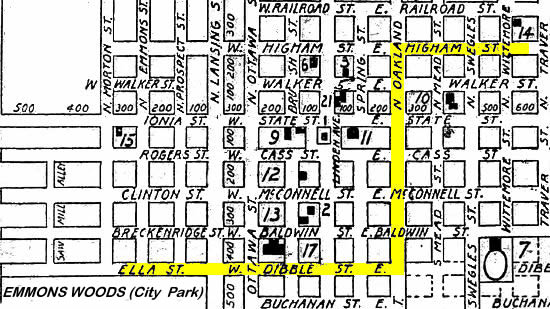
Biking from “Home Sweet Home” on East Higham Street to the St. Johns City Park typically finds yours truly heading west across US-127 to Oakland, south to Dibble Street and west to the Park. Oops – forgot Ella Street. Dibble west of Lansing is named Ella Street – assuming you’re using the 1894 St. Johns map.

map1

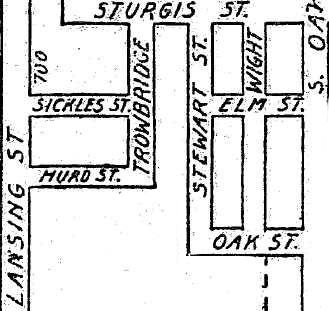
Dibble and Ella? Yup. Today’s Park Street went by Dibble and Ella in 1894, just like Clinton south of the Courthouse was Stewart and Brush south was Trowbridge.

map2

When Ruth Nihart obtained the attached 1894 Map of St. Johns, I wasn’t surprised by the changes in street names. Like other local “historians” (if we may be called that), I knew the names of some streets had changed over the years, but I did not know the location of those streets.

Names like Dibble and Ella are logical for the time period of the late 19th century. Without a doubt, Dibble Street was named for Charles L. Dibble – one of the six men who helped launch what would become the Village of St. Johns in 1856. Dibble was a wealthy Detroit resident, and the key investor in the purchase of land where the Detroit and Milwaukee railway sited its depot in St. Johns. Streets today still bear the names of the other five men: John Swegles Jr., Bernard C. Whittemore, Porter Kibbee, H.S. Mead and Robert Higham.

My guess is Ella Street is named for Ella Perrin. She was the daughter of an early St. Johns patriarch, Henry M. Perrin, who served as a Michigan State Senator in 1865. Ella was killed in a railroad accident in 1889 near Rochester, N.Y., when she and her parents were returning from a family reunion in Vermont. The “Ella” vault in the old part of Mt. Rest Cemetery is named for the young girl. The vault was originally built for use as a temporary holding vault for bodies when weather hampered burials.

Read more about Ella and early settlers.

Others changes remain a mystery – at least to me. Why in 1894 was today’s Cass Street named Rogers west of Lansing Street? Ditto for McConnell changing to Clinton Street and Baldwin to Breckenridge? The same question pops up in other areas: Gibbs west of Lincoln was Stout Street, State Street (M-21) west of Ottawa was Ionia Street – and what’s up with Crosby Street in the northeast quadrant that’s now part of Mt. Rest Cemetery? Thanks to Jean Martin’s “History of St. Joseph Catholic Church,” I did know about the original Catholic Cemetery on Scott Road that was relocated to Mt. Rest in 1925.

The identification of specific buildings by numbers on the map – (#1) Courthouse, (#4) Waterworks, and an assortment of churches and school buildings in 1894 – is equally interesting. While most of these are easily recognized, I did not know about one location denoted on the map: the Athletic Park (#7), sited on Dibble Street east of Swegles. The location of Whittemore Street changed when the highway (then US-27) was constructed, making the present location of the First Baptist Church the original site of the Athletic Park – I think?

It’s interesting that Hunt’s Drug Store (#21) is the only business identified on the map. Perhaps the map was a promotional advertisement for that business? Hunt’s, established in 1858 by brothers George and Alonzo Hunt, was one of the earliest businesses in the Village of St. Johns. It was located in the first block on Clinton Ave., on the east side of the street – Shaggies Ice Cream is there today.

Hopefully, SJ Indy readers will enjoy seeing this old map. If anyone can help fill in the blanks about the origins of the different street names, please send a message to sjindy.com.

See the whole map (PDF).


Benny and Jessie’s Pet Info – What is the best way to give my dog a pill?

To put it simply, the best way to give your dog a pill is any way that gets him or her to swallow it. Seasoned pros may have the old “pop it in the mouth with one hand” trick down, but most people find that they may need to resort to more enticing methods to get the pills where they need to go.

Some medications come in a flavored chewable tab or liquid, with such enticing flavors as beef or cheese. Compounding pharmacies can often create medications that aren’t normally flavored with a better taste, though it’s often more expensive to get these medications made.

If you’re trying to give a not-so-tasty pill to a pet, bribery is most often the method of choice. People use all sorts of treats to get their pet to swallow a medication, from Cheez-Whiz to peanut butter to wrapped in baloney. While low-tech, this can also get messy, and depending on the dexterity of the pet in question, some dogs can manage to suck off all the good stuff while leaving the pill behind.

One of my favorite products is Pill Pockets, a small squishy envelope-shaped treat that allows you to slide a pill in, then squish it shut. Many animals take these easily and save you lots of time and wasted, drooly, melting medicine capsules. In response to the many pets with food sensitivities, they even come in hypoallergenic formulas.

If a medicine needs to be given on an empty stomach, you can pill a pet by placing it far enough back on the tongue that they can’t spit it out. This can be accomplished with a long device called a pill gun, or for the brave, your own hands. If you are in this situation, I recommend asking a technician at the veterinary office for lessons. They are the undisputed pros.


Maralyn’s Pet Corner – The Not So Secret Solution for Urinary Crystals in Pets

“The solution to pollution is dilution” is the phrase veterinarians now use to explain how to prevent urinary crystal and stone formation. Time, observation, and studies have shown us that there are no magical diets for solving this problem and that water consumption is key.

Different types of crystals and stones form depending on whether the urine is acidic or alkaline. Special diets limit certain minerals and manipulate the ingredients to create a urine pH (measurement of acidity or alkalinity) that is unfavorable for crystals and stones to form. Those of you with pets that have had multiple surgeries to remove bladder stones are well aware of the limitations of these diets to successfully prevent stone formation. The answer appears to be water, H2O, and more water.

The more dilute urine is the less likely minerals can clump together to form crystals and stones, no matter what the urine pH. This knowledge is extremely important for cat owners but is also a major problem for them. Why?

Cats are extremely thirst tolerant. They are also capable of conserving body water by concentrating their urine much greater than dogs or humans. These evolutionary adaptations make sense for a carnivore that evolved in a dry, desert climate. Cats obtain most of their water from their prey. Rodents, birds, and small reptiles are 60% water.

What this means is that cats are much less likely to seek sources of water even when their body needs it. This is the main reason they are so susceptible to urinary crystals and stones. The more concentrated the urine the more likely minerals can become crystals and eventually stones. This has been the major reason that special dry diets have such variable results with preventing urinary crystals and stones in cats. These diets only contain 10% water.

So how do you make a cat drink more water? You can’t. But you can get more water into them by changing their diet.

I have spent my entire veterinary career trying to convince cat owners that a wet food diet was more important than the brand of diet for cats with a tendency to form urinary crystals. More water and dilute urine are for more important than the urine pH and ash content of the diet. In fact, we now know that the ash content of the diets is largely an irrelevant concern.

Preliminary results from recent research by veterinary teams in France and Germany demonstrate this. The scientists compared the urine of cats fed a wet food, a homemade poultry and rice with zucchini diet, a dry food with zucchini, and a dry food without zucchini. It is not clear if zucchini was added to the diets to increase the water content, the fiber content, or both.

The findings suggested that wet and homemade diets were more effective for preventing calcium oxalate crystal formation. Calcium oxalate is presently the most common crystal and stone found in cats. Their findings were mixed with regards to struvite crystal prevention.

Experience with homemade diets in dogs has shown great success for those suffering from struvite and oxalate crystal formation. In fact, it is possible to formulate a homemade recipe that is virtually oxalate free.

Without any recipe manipulations, we have been successful in dissolving kidney and bladder struvite stones and preventing the recurrence of both struvite and oxalate crystals. I attribute the success primarily to the water content of the homemade diets for struvites and the combination of water and ingredient selection for oxalates.

The take home for those of you with cats and dogs that are urine crystal-formers is to increase the amount of water in the diet.

That can be achieved easily by adding water to their dry and wet foods. Dog owners may want to consult with their vets about the amount of salt to add to the diet to drive thirst and additional water consumption. Use salt with caution in cats due to their natural thirst tolerance. Your vet may have other suggestions for increasing daily water consumption for your cat.

Who’s Who in Mt. Rest Cemetery

Vaults bear names of St. Johns pioneers

By Rhonda Dedyne

Names etched in granite on the vaults in Mt. Rest Cemetery comprise a veritable Who’s Who list of the prominent early residents of St. Johns.

Entering from the original old west gate, a walking tour along the gravel road is like tripping through pages of the city’s history. Here rest the physical remains of the men and women who carved a village out of towering forests, laying a foundation for the productive community that thrives to this date.

Following is a brief history lesson on some of these early St. Johns citizens whose deeds and accomplishments spring to life on the shaded grounds of Mt. Rest’s Old Part.

The Old Part of Mt. Rest covers six sections in the most western part of the cemetery, located west of the current main entrance that leads to the Mausoleum. Section A is laid out in a half circle with the lots radiating from the Steel mausoleum – the family vault of R.M. Steel who helped construct the railroad through St. Johns and had a hand in a multitude of other business ventures. His crowning achievement was the landmark Steel Hotel, built in 1888 that was destroyed by fire March 28, 1975.

ellavault

ellaSection A also contains the so-called “Ella” vault. It is amed in memory of Ella Perrin, daughter of another early St. Johns patriarch, H.M. Perrin.
Ella was killed in a railroad accident in 1889 near Rochester, N.Y., when she and her parents were returning from a family reunion in Vermont. The vault was originally built for use as a temporary holding vault for bodies when weather hampered burials.

One of the more interesting stories that unfolds on a walking tour of the Mt. Rest Cemetery Old Part has as its focal point the Babcock family vault, located on Lot 59 near the Ella vault. Charles T. Babcock, son of Marvin Babcock, Esq. and Effie Babcock, built the private mausoleum in the 1902s. His parents’ bodies were interred in the cut-stone building; his own interment took place August 2, 1926.

Marvin Babcock was among the first merchants in St. Johns, owning a jewelry retail business. He and his wife were among the earliest St. Johns families, living in the home located on the northeast corner of Oakland and State Streets.

Charles was a U.S. Government Indian Agent; he prospered as a trader and investor in the Indian Territories. Upon his return to St. Johns, he was equally successful in business ventures in central Michigan. He was President of the Union Telephone Company, which originated in Alma in 1899. The company acquired the National Telephone Company in 1901. The National Telephone Company was the first such business in the City of St. Johns, established in 1889. By 1910, the Union Telephone Company was providing service to Michigan’s 13 central counties. It continued to expand, and was acquired by General Telephone Exchange (GTE) in 1957.

Charles was one of the first individuals in St. Johns, and probably mid-Michigan, to own an automobile. A newspaper article dated April 17, 1902, reads: “Charles T. Babcock received his new Olds automobile and it runs like a top. It carries enough gasoline to run 100 miles, and has a 4 H.P. engine, and slow motion gear for hill climbing. It cost $650.”

His wife, Mary, also held a prominent place in the social history of St. Johns. She was the daughter of another important St. Johns resident, Gen. Oliver Lyman Spaulding. Mary helped organize the St. Johns Literary Club, serving as its first president. In 1895, it federated with the State Federation and became part of the General Federation of Women’s Club. The St. Johns Chapter of the GFWC played a vital role over the years in countless charitable fund-raising and community events.

The Babcocks purchased the Spaulding home on Oakland Street in the early 1900s, enlarging it for a second time about 1911. The “Babcock Mansion” soon became a focal point for St. Johns society, often entertaining guests in the third-floor ballroom. Mary is responsible for the application of pastel frescoes as part of the decorative plaster in the music and library rooms.

Section B in the Old Part of Mt. Rest includes lots set aside by the cemetery association to bury military service persons. It contains the GAR memorial, and a marker for the Unknown Soliders. Seven unknown Civil War soldiers are buried here.

Section C is unique for the vault that is no longer there. The Hicks family, one more in the list of Clinton County pioneers, originally had a cut-stone vault that was disassembled and moved with its contents by rail to New York. It was reassembled there, and the bodies re-interred, although the burials remain in Mt. Rest records.

Located on the north border of the Old Part, Section D contains the Catholic Burial Grounds. A simple masonry cross on lot 99 marks the mass grave of re-interred bodies which were brought from the Old Calvary Catholic Cemetery of St. Joseph Church in 1925.

Two of the four “Baby Land” plots in Mt. Rest are located in Section E, as is a section called “Potter’s Field” which is set aside for the burial of the poor. Plots in Baby Land were often used by individuals who did not have family plots purchased at the time of the death of their infant children.

Section F faces the front of the Old Part, east of the drive and along Steel Street’s wrought-iron fence. The Bunday Family vault stands at one end of the section, housing the remains of 10 family members.

Although it is technically located in the ‘New Part’ of Mt. Rest, the Mausoleum is a focal point of the entire cemetery, situated at the top of the circular main driveway which branches off to each side for entry into the Old Part and New Part sections. Built in 1919, the Mausoleum contains 450 crypts, each having a faceplate of marble. The building features stained glass windows and a marble interior.

Features

Now and Then – St. Johns High School Symphonic Band

When we heard that the St. Johns High School Symphonic Band would be featured on WKAR on Saturday November 21, we were impressed. When we learned that they would be tackeling Amparito Roca on air and at District Festival, we were blow away and back in time.

Back in 1960 the Rodney B. Wilson High School Band prepared for District Festival by choosing Amparito Roca.Needless to say, the performance propelled the band on to the State Festival and straight first division ratings there. Some people of a certain age think, however, that it might still be too soon. Amparito Roca is a rousing march, but it is it might be an understatement to say that it is challenging.

Current musicians, we salute you!

Here are the details of the Symphonic Band’s upcoming appearance:

5:30 p.m. Saturday November 21 on WKAR – HD

Under the direction of band director and St. Johns alumus Roy Davis, students strive to maintain a long tradition of straight ‘1’s” at District Festival. Includes full preview performances of “Amparito Roca,” by Jamie Texidor and “Emperata Overture,” by Claude T. Smith, recorded in WKAR Studio A at Michigan State University. Hosted by WKAR’s Peter Whorf.

Now take a look and listen back to a 1960 performance of Amparito Roca; and see some of the fresh-faced, frequently sleep-deprived young musicians who performed it. Please bear in mind that most of those years were lived in black and white. The original recording was done on reel-to-reel tape by the Rev. Griffith C. Rice.

https://picasaweb.google.com/110845930262453987007/1011band?authuser=0&feat=directlink


This week’s Mystery Photo

Where is this?

mystery240

Can you tell us where this is located? Drop us a line at mail@sjindy.com.

306 S. Morton

mystery239

The current owners are Michael Ruehle and Vicky Hufnagel. Previous owners include Keith Mishler, Milo Rowell and Jenna Lafferty-Owens.


A Look Back – New St. Johns Police Officer in 1973

by Barry Bauer

plowman

Jack Plowman, 37, 501 Giles, St. Johns, has recently joined the St Johns Police Dept. He began his patrol duties recently after completing a 7-week training course with the Michigan Law Enforcement Training Council School in Muskegon. Plowman was previously employed as a materials inspector for the Michigan State Highway Commission for 14-1/2 years.

A 1954 graduate of Rodney B. Wilson High School, he served with the US Army for 3 years from 1954 to 1957. While in the Army, he served with the Military Police and is a graduate of the Military police School at Ft. Gordon, Ga.

He and his wife, Sheryle, are the parents of 3 sons, Jeff, 11; Mark, 8 and Brian, 5. Plowman is the son of Mr. and Mrs. R.G. Plowman of 505 Giles, St. Johns. He has 3 brothers and 2 sisters, all residents of Clinton County.


Random Notes – Guests enjoy tours, music at Wilson Center Auditorium Open House

Area residents had an opportunity to check out renovations – and see what remains on the “to-do” list – at the Wilson Center Auditorium Open House on November 10. Committee members involved with the project provided tours of the venue and information on funding opportunities designed to raise approximately $30,000 which will complete renovations at the site that dates to 1924.

wiosonopen3

Major components of the project that remain include the installation of an additional 140 seats on the main floor; projection system for use with film, video and digital presentations; and a completely new lighting system.
Guests who attended the open house enjoyed musical selections by talented local performers pianist, Eliana Nurenberg, and acoustic guitarist, Aidan Pope.

Upcoming events at the Wilson Center Auditorium include an Open Mic Night, 7 p.m., Nov. 16; Rock Concert, 7 p.m., Nov. 20, featuring sets by Aidan Pope, Hailey Wojcik, and the Januzzi Watchmen; Christmas Variety Show, 7 p.m., Dec. 4-5, produced by Hometown Productions; and the annual Community Christmas Concert, 7 p.m., Dec. 11, featuring the St. Johns Community Band, Mint City Singers and the youth chorus, Vivo Contando.

For detailed information on Wilson Center events, donation opportunities and the renovation project become a Wilson Center Auditorium Facebook Friend.


Maralyn’s Did You Know? – Cat treats recalled

Blue Buffalo Recalls Cat Treats

Blue Buffalo Company, Ltd. is voluntarily recalling a limited production of Blue Kitty Yums Chicken Recipe Cat Treats that may contain low levels of propylene glycol, which is not permitted by the FDA for use in cat food.

Cats reacting to high doses of propylene glycol may exhibit signs of depression and may have a loss of coordination, muscle twitching, and excessive urination and thirst. If your cat has consumed the recalled product and has these symptoms, please contact your veterinarian.

The affected product was distributed nationwide in the US and Canada through pet specialty stores and e-commerce.

The product is packaged in a 2 oz., plastic stand up pouch. Only these specific code dates of this product are involved:

Blue Kitty Yums Tasty Chicken Recipe, UPC: 859610007820 – Best If Used By: April 24, 2016.
Blue Kitty Yums Tasty Chicken Recipe, UPC: 859610007820 – Best If Used By: July 24, 2016.

No other BLUE pet foods or treats are involved in this recall.

The FDA tested product in response to a single consumer complaint and found propylene glycol in one bag of our cat treats in the impacted lot. To date we have had no other reports of incidents related to our cat treats. Out of an abundance of caution, we are voluntarily recalling all product manufactured in the same lot as the subject bag.

Consumers who have purchased the product being recalled may return it to the place of purchase for a full refund. Consumers with questions may contact Blue Buffalo at: 888-667-1508 from 8 AM to 5 PM Eastern Time Monday through Friday and the weekend of November 7, 2015 or by email at BlueBuffalo5883@stericycle.com for more information.


Letters – Kudos to SJPD and thanks from CASA

Just another reason I’m glad we chose to live in St. Johns. When your daughter locks your car keys in the trunk and your other set has vanished and you are trying to go to the zoo… The police will come unlock your car for you. Because they are awesome.

Kateri Konik

******

During this special season of thanks, we reflect on our CASA village–all of you who support Court Appointed Special Advocates in Clinton County.

Understandably, for various reasons, not everyone can serve as a CASA Advocate. However the support of all CASA Superheroes makes the work of CASA Advocates possible.

CASA Advocates walk a special journey with children involved in court proceedings due to no fault of their own. The children have been removed from their parents’ care due to abuse or neglect and are placed in our foster care system.

So what does ysupport, financial or in kind, do?

– Provide mileage reimbursement to CASA Advocates, some who travel an hour one way, to visit their appointed child.
– Support the case management of the children entrusted to our program and appreciation of our CASA Volunteer Advocates for their service.
– Help in stuffing overnight bags with comfort and care items for children who have been removed from their parents’ care.
– Provide games, Play Dough, and other goodies for our CASA Advocates to use when they visit their appointed child.
– Spread the word about CASA Advocacy throughout Clinton County.
– Provide a voice to children who may not otherwise have one during court proceedings.
– Support Advocacy in the best interests of children and decisions involving a safe, permenant home for all children.

We are humbled and uplifted everyday by the generous support of our community. You are a CASA Superhero, appreciated not just in this season of thank you but all year round. YOU are providing a voice to children involved in court proceedings due to abuse or neglect. Thank you!

Happy Thanksgiving to you and your family,
Kelly L. Schafer, M.S.
CASA Executive Director


Maralyn’s Pet Corner -Pet bad breath

What is causing my pet’s bad breath, and what can I do about it?

Few things rival the sensation of being awoken from a deep sleep by the noxious odor of a pet breathing heavy doggie-breath into your face. Halitosis is one of the most common complaints owners have about their pets. So what causes it?

Most of the time, bad breath is a result of periodontal disease- which is found in about 85% of all dogs and cats! As bacteria build up on the teeth and form plaque, the resulting smell can get very noticeable indeed. As untreated periodontal disease progresses, the smell only worsens.

In these cases, treating the periodontal disease helps the symptoms resolve. The most beneficial treatment is a full cleaning at the veterinarian, though home care such as toothbrushing and dental chews can help preserve dental health in between cleanings.

Aside from the periodontal disease, halitosis can also result from other medical conditions. Conditions of the mouth and throat such as bacterial infections, fungal overgrowth, or cancer can create bad breath. Systemic diseases such as diabetes or kidney disease are also known for affecting the breath. An experienced veterinarian can often differentiate the uremic breath of kidney disease from the ketone breath of diabetes, but for most of us that diagnosis requires blood work.

Lastly, bad breath can be diet related, especially if the pet is on a strong-smelling fish based diet or has a habit of eating poop (a condition called coprophagia.)

If the breath is bad enough to bother you, it’s probably something that will need a vet exam to solve. The good news is that most cases of halitosis are highly treatable.


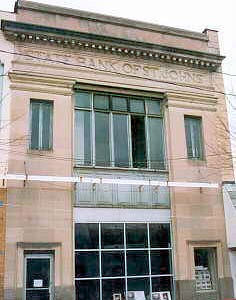
Remember When? – State Bank

by Maralyn Fink

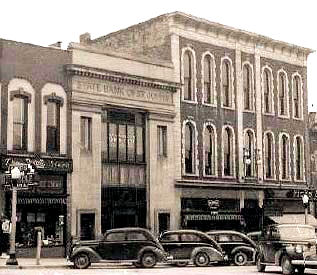
The State Bank of St. Johns was located at 200 N. Clinton next door to Parr’s Pharmacy.

The business relocated there in 1894 moving from Walker St.

statebank3

In 1921 exterior and interior remodeling took place which gave the building a granite façade, marble and granite wainscoting, a tiled floor, and mahogany furnishings inside.

statebank2

In 1961 the bank merged with Clinton National Bank and in 1963 is when Parr’s Pharmacy extended their business into the space.

The biggest thing for me at that time was the fact that it was where people went in and got money or left money.

statebank1

Features

Around Town With Barry – Spray Park Splash

an Album by Barry Bauer

https://picasaweb.google.com/110845930262453987007/151104?authuser=0&feat=directlink


This week’s Mystery Photo

Where is this?

mystery237

Can you tell us where this is located? Drop us a line at mail@sjindy.com.

709 S. Swegles St.

mystery239

The current owners are Joseph and Dona Pawlowski. Previous owners include: Hicks/McLaughlin/Stanolis, Charles Purvis, Richard Armstrong, Catherine Farrell, Cheryl Parody.


A Look Back – Federal-Mogul Promotions

by Barry Bauer

backfm

Left to right: Louie Merignac, Art Halfman, Bernard Mankey, and Ed. Davison.

In 1973 Plant Superintendent Louie Merignac has announced the following promotions and additions for the St Johns Federal-Mogul plant:

Arthur Halfmann has been promoted to Unit Manager from General Foreman. Art is a lifelong resident of Clinton County and began his employment with Federal-Mogul in 1948 as a machine operator. During the ensuing years he has held the positions of set-up man, group leader, became Foreman in 1958 and General Foreman in 1966.

Art resides at 501 Wight St, St Johns, with his wife Pat and their 4 children, Shirley 20, Chris 17, Jim 13, and Danny 10.

Bernard Mankey has been has been promoted to Unit Manager from General Foreman. Bernard began his employment with Federal-Mogul in 1948 and is a lifetime resident of Clinton County. He began his employment with Federal-Mogul as a height broach operator and subsequently held the positions of set-up man, group Leader, became a foreman in 1954, and was promoted to General Foreman in 1962.

Bernard resides in St. Johns at 606 West Park St. with his wife, Agatha. The Mankeys have 3 children, David 22, Larry 20, and Dale 17.

Ed Davison has joined the Federal-Mogul plant in St. Johns as a Unit Manager. He comes to this job from his home in Mansfield, Ohio where he was employed by the Empire-Detroit Steel Division of Cyclops Corporation.

Ed is now residing at 205 N. Scott Rd. in St Johns with his wife Marilyn and their 2 sons, Scott 12 and Lee 10.


Benny and Jessie’s Pet Info – Cancer Relapse in Dogs
petcolumn

Cancer Relapse in Dogs is Devastating for Everyone Involved

Lymphoma is a frequently diagnosed cancer in dogs. It is a cancer of lymphocytes, which are a type of white blood cell normally tasked with fighting infections. There are many different forms of lymphoma in dogs, with the most common type (multicentric lymphoma) bearing close resemblance to Non-Hodgkin’s lymphoma in people.

The recommended treatment plan for multicentric lymphoma in dogs is a 6-month course of a multi-drug injectable chemotherapy protocol. This treatment plan is extremely effective at achieving remission, which is a term used to describe when a patient no longer shows any visible, detectable evidence of their disease.

Remission rates are greater than 80%, and survival times can be extended well beyond what would be expected without any treatment.

Remission, unfortunately, does not equate with a cure. Cure would imply that treatment resulted in complete eradication of all of the cancer cells from the dog’s body. Remission indicates the disease is no longer detectable, but is still present.

Ninety-five percent of dogs treated for lymphoma will experience disease relapse (i.e., “come out of remission”). The timing of when this happens is variable.

Relapse typically manifests with the same clinical signs as were shown during the initial diagnosis. For example, if the initial signs of disease were enlarged peripheral lymph nodes that reduced to normal size during treatment, at relapse the lymph nodes would enlarge again.

If the patient was initially administered the multi-drug protocol mentioned above, this is usually considered the most successful plan in re-inducing remission once relapse occurs. The main exception to this recommendation would be a dog who experienced relapse in the midst of, or within a few short weeks of completing, the protocol. In those patients, rescue protocols are more appropriate and effective choices.

There are a many different rescue protocols for canine lymphoma. Among veterinary oncologists, owners are surprised to hear there is no one universally agreed upon “next best” way to proceed. Rescue protocols vary in terms of success of inducing remission, expected duration of remission, number of trips to the oncologist for treatment, chance of side effect, and cost.

Many owners are willing to treat their dog with lymphoma with chemotherapy once. Far fewer will embark on additional treatment once relapse is detected. The variables listed above also influence owner’s decisions about how they would next like to proceed.

For some, cost of treatment is not an issue, and efficacy is their primary goal. For others, the price tag associated with the drugs limits what they are able to pursue.

Even when finances do not play a role, aspects of treatment related to the emotional and time commitments required for appointments influence what an owner is, and is not, capable of.

When dogs with lymphoma experience relapse of disease it is a devastating reminder to owners of their pets’ vulnerability. It means their dog will not be a part of the 5% who are cured. It means revisiting the idea of continued chemotherapy. It means additional obligations they may be unprepared for. And it means genuinely facing their pet’s mortality, which is something they may have deeply buried during the time their dog was in remission.

From a clinician’s perspective, relapse evokes a similar set of emotions. These are owners and animals with which I’ve journeyed through diagnosis and six months of treatment. I’ve learned much about their lives, their families, and, of course, their dogs. When a dog comes out of remission, despite knowing the odds were never stacked in my favor, it still feels like a professional failure.

Once lymphoma resurfaces, it’s a harsh reminder that it was always there, lurking beneath the surface of a pet that otherwise behaves exactly the same as a healthy pet. Though I try to stress that relapse is simply an outward manifestation of the dog’s cancer and that there are many options available to re-induce remission, I remind owners that just because we can do something doesn’t mean we have to do anything.

Relapsed cases remind me that the palliative nature of veterinary oncology is a double-edged sword. I afford pets that have cancer with the chance to live longer and happier lives, which fulfills my goals to be an advocate for animals. But I cannot cure them because I must administer doses of drugs at levels designed to maintain a good quality of life during treatment rather than invoking a cure.

This is a bittersweet compromise I make as a veterinarian, who more than anything, must always ensure that I first do no harm.


Letters – Wilson Center Auditorium Restoration/Renovation Project

When St. Johns area students first attended Rodney B. Wilson High School in 1924, community residents took great pride in the building that featured a beautiful “state of the art” auditorium with outstanding acoustics. Thousands of students performed there in the following decades until the start of the 1969-70 school year when the “new” St. Johns High School opened. At that point, RBW housed middle school students, and the auditorium had limited use to 1998-99 when St. Johns Middle School was constructed. Then, the acoustically perfect venue fell silent.

Fast forward to the early 2000s when St. Johns began planning for its Sesquicentennial Celebration in 2006 that included an original theatrical production about the history of our community. The Wilson Center Auditorium was the most appropriate theatrical space for the Sesquicentennial pageant. Being used for storage, the auditorium was cleared and cleaned. A total of $13,000 was raised from the Sesquicentennial show; that became the seed money for the restoration/renovation of the Wilson Center Auditorium.

Since that time, $70,000 has been raised including a $1,667 grant. All funds are held by St. Johns Schools Foundation for Excellence, a 501 (c) 3 non-profit organization that provides tax incentives for donors. In 2010, the auditorium was completely gutted, repaired and painted. New stage curtains were hung; 212 seats were completely restored; and a sound system added. A lot of the work was in-kind by volunteers; monetary donations came from businesses, community organizations and individuals. Numerous fund-raising performances have been staged at the Wilson Center Auditorium since that time, but the renovation committee was inactive – waiting for an opportunity to complete the original vision of making the space “state of the art” for the 21st century.

Now is that time. The committee reconvened recently, excited and energized to complete the project. At the present time, $20,000 is available for use; the committee needs to raise an additional $60,000 to completely replace the antiquated lighting system, add 140 more restored seats, purchase a projector and screen, and take care of some other minor fixes.

When the project is completed, the Wilson Center Auditorium will be a beautiful, well functioning venue for our community, especially for live entertainment that presently includes an active community theater group, Homegrown Productions, and a community band and choir, and also a children’s choir; and local high school rock bands. We are currently putting a Friday night rock series together that will provide middle school and high school students with a chance to hear some good groups. We are beginning an Open Mic event on a monthly basis for poetry, music, storytelling, etc. A film series and film festival will also be possible when the auditorium has a new projector and screen. The venue will be a great, intimate space for meetings and presentations by speakers on a wide range of topics. The auditorium will comfortably seat 356 people downstairs and an additional 180 in the balcony.

The committee believes there is tremendous potential for community involvement in finishing the renovation of this wonderful hidden treasurer. Whether up on stage or experiencing an event as an audience member, the Wilson Center Auditorium will be another point of pride in our mid-Michigan community, truly adding to the quality of life here in Clinton County and beyond.

Wilson Center Auditorium Renovation Committee
Susan DeRosa
John Gross
Aidan Pope
Darryl Schmitz
Bill Tennant
Beth Webb
Tom Webb


Maralyn’s Pet Corner – Euthanasia is No Longer the Only Choice

Euthanasia is No Longer the Only Choice for Dying Pets

There are two views about a doctor’s role in death in our country, and they couldn’t be more diametrically opposed.

If you are an MD, you live and work in a world where natural death is the norm. Assisted suicide is still an option in its infancy, legal in only four states up to this week, when California became the fifth. The role of the doctor is to preserve life at all cost, even, some might say, at the expense of its quality. Helping a patient end his or her life is, many say, cruel and unnatural.

But as a veterinarian, euthanasia is the norm. It is so far in the opposite direction that I have read some of the most well-respected names in the field state publicly that no pet should ever experience a natural death. The role of the doctor here is to preserve quality of life at all cost, even its length. Prolonging a suffering pet’s life is, many say, cruel and unnatural.

So who’s right?

The answer, of course, is neither and both. Where MDs and DVMs once stood at opposite ends of the rope, both sides are now moving towards the middle. While coroners in Los Angeles were shaking their heads at the role physicians may now play in the death of a patient, I was sitting in a packed lecture hall at the International Association of Animal Hospice and Palliative Care listening to a veterinarian discuss how she supports clients who wish their pets to have a natural death.

Up till now, many clients who do not want euthanasia for any number of reasons were given one of two options: accept it and all the moral discomfort that may accompany it; or go home and let the pet die on his or her own, with little palliative support from the veterinarian.

When veterinarians talk about the cruelty of a natural death, we’re thinking of a situation where there is no support whatsoever. Dying, despite what some people may tell you, can be a messy business. Yes, some living beings may drift off gently into that good night. On the other hand, they may suffer from tremendous nausea, gut-wrenching pain, soiling oneself, the agony of trouble breathing.

Fortunately for us, we have a great model on how to manage all of that: human hospice. A hospice-supported natural death is kind of the opposite of doing nothing; it can be intense. Parenteral fluids. Tube feeding. Round the clock nursing care. Meticulous observation of pain symptoms. It is not an easy path to walk, and many clients who elect to try for a natural death in their pets eventually choose euthanasia. But at least they do so with a clear heart.

And those who do not, have done their duty in providing an ethical death for their pets.

I live for the day when the conversations we have are open and honest enough to determine what is right for each patient and each family, the day when the death of a pet and the death of a person are not so very different. The day we all can make educated choices rationally, and feel, if not good about it, at least at peace.

Because we sure aren’t there yet. But we are on our way.

Features

Drama Club to present Cinderella – with an album by Maralyn Fink

I decided to visit the Drama Club at St Johns High School to get the scoop on their upcoming play “Cinderella.”

I met up with the group in the auditorium along with their Director Mr. Barry Palmer. Rehearsal was in full swing so I sat a spell with Mr. Palmer.

I asked a few questions and here is what I learned.

Cinderella will be held on November 13th at 7 pm, November 14th at 7 pm and November 15th at 2pm.

The club starts plans and picks their play in June.

There are 46 cast members plus the Pit Orchestra. The Pit Orchestra is led by Mr. Justin Villa, and the Vocal Instructor is led by Nichole Eller.

After watching a few minutes, I learned we have some very talented students, especially the singers and the Orchestra.

I was in a few plays back in the day, and we did Huckleberry Finn for one at Rodney B. Wilson High School.

The costume director is Dawn Flynn, and I learned that some costumes are made or rented. Others come from thrift shops and donations.

Try outs for the play were held in early September. Rehearsals are held every day from 3:30-5:30 pm. Music rehearsals are held from 3-6 pm every day all the way to the opening.

To recap:
Cinderella will be presented on November 13, 14, 15.

Tickets go on sale November 2nd and a cost of $10.00 for the public. The Box Office phone number is 227-4112.

I inquired about Cinderella’s carriage, and Mr. Palmer said that it had come from Endicott and that he had driven to New York to bring it to St. Johns. That’s a call of duty and beyond.

The student director this year is Isobella Medina.

Please folks, for all the hard work of the club and the many talented people they have, you cannot go wrong in attending one of the performances of Cinderella. So get your tickets early for an enjoyable time.

Thank you Mr. Palmer for your interview and time and to the cast for the pictures.

https://picasaweb.google.com/110845930262453987007/151020?authuser=0&feat=directlink


This week’s Mystery Photo

Where is this?

mystery238

Can you tell us where this is located? Drop us a line at mail@sjindy.com.

******

505 S. Oakland St.

mystery237

Jan Upton writes: This darling house is at 505 S. Oakland St., and belongs to Don and Julie VeCasey.

In 1950 the house belonged to J E Bartholomew.


A Look Back – Interim City Manager in 1974

by Barry Bauer

randy

Randy Humphrey, St Johns City Clerk, has been appointed interim city manager by the City Commission to fill the vacancy created by the resignation of Harvey Weatherwax.

Weatherwax, City Manager for 6 years, resigned to accept the manager’s position in Roseville.

Humphrey has served as City Clerk for the past 13 months, previously serving as the assistant City Manager for 3½ years. During that time, he was also zoning administrator and code enforcement officer. A graduate of Central Michigan University, Humphrey, his wife, Melanie, and 3 children, reside at 805 W Park, St Johns.


Random Notes – Clem Sohn – Fowler’s “Batman” feted at Michigan Historical Center

By Rhonda Dedyne

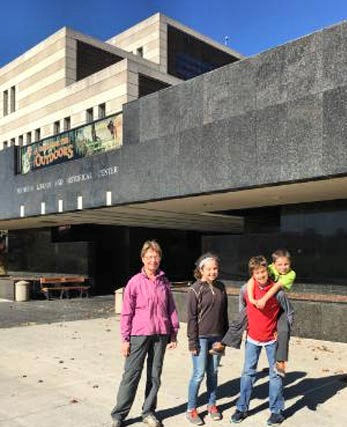
A recent weekend visit by the Charlevoix grandkids included a trip to the Michigan Historical Museum in downtown Lansing. Joe, a second-grader at St. Mary School in Charlevoix, and his classmates are studying Michigan history, and there’s plenty to see and do at the Museum. Plus there’s no admission charge on Sundays and parking is free – a value and a deal.

rhonda3

The main entrance into the Museum features a single, stand-alone exhibit that immediately drew my attention. There he was, “Michigan’s Batman,” Clem Sohn, via a life-size photo of the Fowler native who drew international attention in the 1930s for his daring jumps from airplanes wearing his “batwings” that are also part of the display.

rhonda2

Needless to say, Joe was impressed.

Grandma provided some additional information on our famous Clinton County resident, recalling stories written in years past about Batman and the fatal jump in France that took his life at age 26. Perhaps the most interesting article (Read it here) was provided by Barry Bauer. We hope you enjoy reading it again – or for the first time.

Wandering through the Museum’s two floors really does bring Michigan history to life, and the hands-on, interactive displays make learning fun – for kids and adults. There’s something for everyone from every time period: the fur trade that helped generate interest in what would become the Great Lakes State; mining and lumber industries that followed; the importance of Michigan agriculture which still remains as a dominant driver of our state’s economy; and, of course, the automobile – the rise of the Motor City and manufacturing.

Grandma thoroughly enjoyed herself, and so did Ella, Jack and Joe and their mom, Karrie, a Yooper from Lanse – and proud of it!

There is a limited amount of time – now through Dec. 6 – to view the exhibit on Clem Sohn. For detailed information on the Michigan Historical Museum that’s part of the Michigan Library and Historical Center visit http://www.michigan.gov/mhc/


Benny and Jessie’s Pet Info

Staying Safe While Walking with Your Dog at Night

Nighttime walks with your dog are fun — and necessary — but they can also be hazardous. Visibility is diminished, meaning that not only will you not see all of the obstacles and ground level hazards (e.g., sharp objects like rocks and glass), you will also not be as visible to motorists and other pedestrians, such as bikers and joggers, who may unintentionally invade your dog’s personal space. There are also the nighttime critters to take into account — the raccoons, the opossums, even the neighborhood cats that prowl at night, all can be distractions for your dog.

Improving Visibility

There are so many useful and easy to find products for night walking that we only need to list them to get you started. Of course, the easiest and thriftiest solution is to get a roll of reflective tape and attach it to your dog’s collar, leash and harness. But if you want a product that has been specifically designed for nighttime visibility whether light is shining directly on you and your dog or not, there are plenty to choose from.

The most no-nonsense are the blinking light collars, leashes and attachable collar lights (similar in size to a typical collar tag), the latter which can be found in long lasting, far reaching lights — as strong as a standard flashlight in some cases. Look for the products that have easy battery replacement to guarantee that you always have what you need.

Collars and leashes with reflective strips and lights, so that even when a light is not shining on your dog, the lights will illuminate your dog in the dark — blinking lights and steady lights are both available

– Clip-on blinking lights, to attach to your clothing and to your dog’s leash
– Collar tags with reflective coating
– Brightly colored and reflective vests for you and your dog
– Reflective leg bands for your dog
– Flashlights that attach to your dog’s collar, or onto your own head (e.g., the type used by mushers, climbers and miners)
– Lighted pooper scooper or combination flashlight waste bag holder/dispenser
– High pitched whistle

Using Caution

Even if you have outfitted your dog with the best lights and reflective gear, it is still best to carry your own flashlight to be sure that you are in control of your own field of vision. We recommend a headlight, the style worn by mushers and miners, so that your hands are free to hold onto your dog and clean up.

Other precautions to take at night are to walk against traffic if you must walk on the roadside (you should stick to the sidewalk otherwise). While walking toward traffic might seem counter-intuitive, it enables you to see what it coming so that you can get out of the way quickly, if need be. Always stay aware of the sounds and movements around you, and be prepared to move quickly.

We are not advising an attitude of fear, just an attitude of awareness. There may be loose dogs, nocturnal wild animals, roaming cats, and in some places, troublesome people. There are also joggers and bicyclists who may not be paying attention and come up on your and your dog too quickly, startling your dog. And with these things in mind, always keep your dog on a leash, and always keep a firm hold on the leash. Nighttime is an especially bad time to lose your dog.

Don’t forget about what you are wearing

If you are wearing dark clothing, you will basically be invisible in the darkness. At the very least, you should have a light colored jacket to wear at night. Better is to have reflective clothing for your night walks. A reflective jacket and sneakers will improve your visibility tremendously, and if you reinforce the outfit with a couple of blinking clip-on lights and a head light, you can be sure not to be missed in the dark. Remember, you can always make your own reflective gear using a roll of reflective tape. Last but not least, make sure you have your cell phone tucked securely into your pocket.


Maralyn’s Did You Know?

Halo Recalls Select Bags of Cat Food

Halo, Purely for Pets, a Tampa, FL based pet food manufacturer, has issued a recall for select bags of its Spot’s Stew Sensitive Cat Turkey kibble due to reports of mold.

The products involved in this recall include:

Spot’s Stew Wholesome Turkey Recipe Sensitive Formula for Cats
UPCs: 745158350231 and 745158340232
Sizes: 6 lb. and 3 lb. bags
Best By date: 09/04/2016

No other Halo products are currently affected by this recall.

Halo is advising consumers who have packages of Spot’s Stew Sensitive Cat Turkey stamped “Best By 09/04/2016” to discontinue feeding it to their cats and return the remaining portion to any Halo retailer for a full refund or replacement.

According to the press release issued by Halo, Purely for Pets, “While some pets can ingest mold without incident, others may experience digestive issues.”

Should your cat experience digestives issues after consuming food involved in the recall, consult a veterinarian.

For more information, contact Halo Customer Care at 800-426-4256 Monday-Friday 8:00 a.m. – 5:00 p.m. EST. Consumers can also e-mail customers@halopets.com or visit www.halopets.com.


Letters – Help us find pumpkin winner and Veterans Day

mysterypumpkin

This pumpkin won in the pre-school category of pumpkin decorating and was done by Tyler, as can be seen on it. By the time of the judging, Tyler had left so we don’t know how to give him his prize, especially since we don’t have a last name.

Maybe somebody out there will recognize who Tyler is when you put up your album. That would be really nice.

Email us if you know how to contact Tyler and his family.

Jenny McCampbell

******

We are fast approaching a special holiday, Veterans Day, to honor the men and women who have worn the uniform and helped to protect our country, whether abroad or at home. Our staff at the Aleda E. Lutz VA Medical Center and Healthcare Annex in Saginaw, Community Based Outpatient Clinics (CBOC) in Alpena, Bad Axe, Cadillac, Cheboygan County, Clare, Gaylord, Grayling, Oscoda, and Traverse City, take great pride in serving Veterans and their families.

I personally am proud to serve Veterans. I received my post college training at the Hines VA Medical Center in Chicago and have served Veterans for over 32 years. My father served in the Air Force in WW II, my husband served as a Navy Corpsman, and a niece and nephew were deployed to Afghanistan and Iraq. We have no greater mission in the Federal Government than to care for those who have served.

November 11 has been set aside each year to pause and remember the many sacrifices made by Veterans. Those who experienced extreme combat or other active duty conditions, those who were injured or became ill because of those experiences, many who still struggle with transitioning within their communities, others who won’t seek medical or mental health care because they may feel someone deserves it more than them, or they just do not want to seek help.

I want to personally take this opportunity to reach out to Veterans and their families and welcome them to any one of our VA facilities. Although eligibility for care and services vary from Veteran to Veteran, it never hurts to pay us a visit and learn more about how you may be eligible for care, prescriptions, and more. We encourage individuals to visit www.ebenefits.va.gov or call 1-800-406-5143, extension 13120 or 13121 to ask for an enrollment packet. We also welcome you to visit our website at www.saginaw.va.gov to learn more about your hometown VA.

We provided care to 34,716 Veterans in a 35-county catchment area, contributing to 414,250 Outpatient Visits and 999 Admissions during our Fiscal Year 2015 (October 1, 2014 – September 30, 2015), and have experienced many amazing accomplishments during that timeframe:

· We continue to improve upon clinic access and are gaining momentum on hiring clinical providers necessary to fill health care positions.
· We have engaged in Systems Redesign utilizing LEAN Six Sigma practices to improve medical record document scanning processes, timeliness of consults to specialty care, communications for primary care, and much more.
· Our patient satisfaction scores told a story that we are working hard and doing the right thing for Veterans. Inpatient scores exceeded national averages for all targeted indicators for the period October 2014 – June 2015.
· We received full accreditation from The Joint Commission after an April 2015 survey for Behavioral Health, Hospital Care, Long-Term Care, and Home Care.
· A successful survey by the Long-Term Institute occurred in September 2015.
· We received a three-year accreditation from the Commission on Accreditation of Rehabilitation Facilities (CARF) in October 2014 for our Blind Rehab, Compensated Work Therapy, and Veteran Homeless Programs.
· Accreditation was received by the College of American Pathologists (CAP), also in October 2014.

We are also embracing new care concepts which include:
· Relationship Based Care – Relationship Based Care enhances the care delivery by nursing and other clinical staff to improve the relationships between caregiver and Veteran, and their family members, as well as relationships between caregivers and with themselves. It promotes true caring of the Veteran as a human and not a case or diagnosis.
· Integrative Therapies – A number of therapies are now introduced to Veterans to help with pain management, comfort, and healing. They include massage therapy, auricular acupuncture, aromatherapy, healing touch, and drum mantra repetition. Additional therapies are studied, trialed, and implemented when proven successful.
· Whole Health Coaching – Provides a team approach which places the Veteran in the center of their care and encourages self-healing, promotes therapeutic approaches, and enhances collaboration of healthcare professionals to optimize the Veterans’ health outcomes.
· Telemedicine – A number of new clinics were introduced through the telemedicine delivery of care program. Some of the clinics implemented this year included:
o Pulmonology expanded to every CBOC from Saginaw.
o Pre and post-operative Thoracic Surgery with Ann Arbor being offered at all CBOCs.
o Tele-Audiology from Saginaw to Gaylord and expanded to Grayling and Alpena CBOCs.
o Interpersonal Psychotherapy being offered at all CBOC’s.
o Genetic Counseling with Salt Lake City Utah being offered at all CBOC’s.
o Transplant Evaluation Clinics with Iowa City.
o We are bringing Telemedicine to Beaver Island, Michigan as well.

Although much work has been completed within the walls of our VA and Community Based Outpatient Clinics as described above, we have also completed several construction projects which have included improvements to parking lots, laboratory renovation, expansion of some of our Community Based Outpatient Clinics, and the building of a new pavilion for Veteran and staff use.

This year, we have collaborated more in our communities than in any other year. On record, we have participated in community events, meetings, or speaking engagements to the tune of 119 events. We have developed new partnerships with the Department of Michigan Veterans Affairs through their establishment of Veterans Community Action Teams, and have a number of VA staff engaging in Veteran groups and coalitions throughout our state.

We held Veteran Community Town Halls in Traverse City, Clare, Grayling, and Mackinaw City this past year and heard first hand from Veterans, their family members, and others the good and the bad. We formulated action plans and committed to helping those with specific care needs, as well as looked for process improvement opportunities voiced at those meetings. We plan to hold quarterly Town Halls in additional cities in our primary service area this year as well.

Mental Health Summits were held in Traverse City and Bay City this year. These are opportunities for members of our community to come together for the betterment of Veterans who are in need of mental health care or support. They both proved to be very successful collaborative events.

Homeless Veteran Program Staff coordinated multiple Veteran Stand Downs in Alpena, Bad Axe, Gaylord, and Traverse City. Stand Downs provide a commonplace setting for Veterans in need to receive services and items, with the ultimate goal of enrolling them for care and services, as well as assisting them with their housing needs.

Each month we meet with Veteran County Service Officers and Veteran Service Officers on a variety of VA and Veteran issues, as well as meeting quarterly with Congressional and Senatorial Representatives whom support our VA and the Community Based Outpatient Clinics throughout our primary service area.

Our Voluntary Service Program at the VA is 459 volunteers strong. They contributed a total of 39,038 volunteer hours to assist Veterans and staff. Through community contributions, our VA has received $313,991.11 in donations this year, which support a variety of needs and activities for Veterans.

In closing, I want to thank each and every VA employee. You do amazing work each and every day. Without your Integrity, Commitment, Advocacy, Respect, and Excellence, we would not be the proud VA health care organization we are today.

Happy Veterans Day to Each and Every Veteran and if you receive your care with us, thank you!!! We are proud to serve those who have served.

With My Gratitude,
Peggy W. Kearns, MS, FACHE
Medical Center Director, Aleda E. Lutz VA Medical Center, Saginaw, MI

Features

Remember when? – Remembering Parr’s Pharmacy

by Maralyn Fink

Remembering Parr’s Pharmacy is still fresh in my mind. It was located on the northwest corner of Walker St. and Clinton Ave. This became the home of a pharmacy starting at least by 1862.

The Parr family—Lyman, Dart, Ray and Jim were associated with the business from 1910 until they sold it to Atlas Drugs in 1999. In 1963 the store was expanded to include the adjacent State Bank, which became a gift shop at one time.

The store sold Rexall products which was a big name back then. I remember my dad always bought M31 that could be used for just about anything from bites, a gargle, cuts and whatever else. We always had it on hand. Ray’s son, Jim also became a Pharmacist and worked at the store.

They employed students from the High School, one being Roger Fitzpatrick, who later became a Doctor.

Boxed candy around Christmas time was also a big seller to have on hand, just in case.

The Parr’s had a lot of things in stock and there was always a great selection of anything you could think of.

Everyone took their film or 8mm film to send in for development.

One feature of the store that was a student favorite was the soda fountain located in the back of the store. The Vernor’s with peanut butter crackers were the best.

Ray’s wife, Elma, was a great lady. I remember her bringing in homemade cinnamon rolls to Clinton Memorial Hospital for all the staff to share while I was employed there. She was our guardian angel, and we have never forgotten her kindness.

Well, those were the days!

https://picasaweb.google.com/110845930262453987007/15parr?authuser=0&feat=directlink


This week’s Mystery Photo

Where is this?

mystery237

Can you tell us where this is located? Drop us a line at mail@sjindy.com.

******

mystery236

810 Spring St.

The current owners are Richard and Marleen Cornwell. Previous owners include Don and Margaret Boettger, Gary and Diane Boettger, and Clifford Lumbert.


A Look Back – Meals on Wheels

by Barry Bauer

meals

The new Meals on Wheels program in 1973 which provides hot meals for area elderly got underway Monday, with the first deliveries made by Shirley Karber (left). Others working on the project are (from left) Carole Chalmers, coordinator for deliveries; Jean Leon; who collects the money; Joanne Gentry; coordinator for collections; and Maxine Parmalee; hospital Dietician.


Random Notes – Antes sign update

antes


Benny and Jessie’s Pet Info – Are over-the-counter medications safe for my dog?

Much of the time, the answer to this is “no!” Even for those that can be used, many of the time, a more effective dog-specific alternative exists. In fact, inadvertent overdosage of a human medication is one of the top reasons people call the Pet Poison Control Hotline.

Antihistamines, such as Benadryl and Tavist, are some of the more commonly used over-the-counter medication for dogs. Veterinarians may also occasionally recommend over the counter antacids such as Pepcid for certain conditions. Because canine dosages can differ from human dosages, it’s important to get directions specific to your pet if these medications are recommended.

Pain medications is the number one category where owners seem to have problems when it comes to dosing their dog with human medications. Aspirin, Tylenol, and NSAIDS are often given to pets with very variable results. Best case scenario, they just don’t work. Worst case scenario, a pet can go into renal failure or suffer from ulcerations in the GI tract. Worse still, even one Tylenol is enough to kill a cat! I know this is a dog article, but it never hurts to remind people.

Although it may be tempting to skip the office visit and try an Aleve instead, my clients who spent thousands of dollars in the vet hospital after a pet develops bleeding ulcers can confirm: it’s not worth it. Safe and effective veterinary pain medications are always a better choice.

Despite how we think of them, dogs aren’t just small, furry humans. The fact is, there are many differences in the way dogs metabolize drugs compared to people. This can have tragic consequences. Never dose your pet with a drug meant for you without talking to your veterinarian.


Maralyn’s Pet Corner – Seasonal Pet Health Hazards Associated with Fall

Fall is one of my favorite seasons. I fondly recall the sensations associated with brisk autumn temperatures, the aromas of drying plants, and the variety of colors bursting from withering leaves, all of which I experienced while living on the East Coast. Now that Southern California is my home, fall’s climate and vegetation changes are more subtle, yet still highly regarded.

Although many of the seasonal changes associated with fall have great appeal for people, they also present many potential health hazards for our pets, about which owners must be aware.

Dangers Due to Decreased Hours of Daylight

Most peoples’ lives are so busy that we wish there was an extra hour in each day to manage our responsibilities. Therefore, losing an hour of day light when our clocks fall back in observance of Daylight Savings Time’s completion can be frustrating.

Fewer hours of daylight and evening’s earlier start means that we are partaking in many of our daily activities when visibility is poor. Dog owners end up walking or exercising their canine companions in the darkness of early morning or evening.

Reduced light makes it more challenging for drivers to see animals (and people) in driveways, sidewalks, and roads. Having worked in emergency veterinary practice for many years, I’ve observed an increase in the trend of both dogs and cats suffering injuries after being hit by a car during daybreak or twilight hours.

If you walk your pooch or permit your feline companion to venture outdoors, maintain close observation and control by using a leash and collar or chest harness. Have your pets wear up-to-date tags and implant a microchip to improve their likelihood of a safe return should they go missing.

Dangers Due to Leaves

The pleasure associated with observing the colors of fall quickly dissipates upon embarking on the laborious job of cleaning up a seemingly endless supply of leaves.

The startling noises created by leaf blowers may drive your pets into seclusion or cause them to flee your property. Additionally, gas powered devices can leak fuel or oil, which creates a source of toxicity should ingestion occur when your pet licks a substance from the ground or their paws.

Leaf piles remaining on your lawn quickly accumulate moisture, which promotes bacterial and mold growth. If your pet ingests these microorganisms, digestive tract upset (vomit, diarrhea, decreased appetite, etc.) could ensue.

Dried leaves and other plant material may be burned as part of fall’s clean up, thereby releasing smoke and plant based oils (poison ivy, etc.) that can irritate your pet’s eyes, nose, throat, lungs, and skin.

The safest practice is to keep your pets confined indoors, separate from your yard work.

Dangers Due to Plants and Mushrooms

The Chrysanthemum (mum) is a seasonally blooming flower that is commonly associated with fall. Toxicity can occur if your dog or cat ingests the mum’s flower, stems, or leaves, all of which can cause the following clinical signs:

– Ataxia (stumbling)
– Dermatitis (skin inflammation)
– Ptyalism (increased salivation)
– Vomit
– Diarrhea

Other plants producing blooms with a toxic potential for dogs and cats include:

– Meadow Saffron/Autumn Crocus
– Clematis

Mushrooms can also appear in our yard or other nitrogen rich material (mulch, etc.). Fortunately for our companion animals, most wild-growing mushrooms are non-toxic. Differentiating a toxic from a non-toxic mushroom is quite challenging, so it’s best to prevent their consumption by your pet. The Amanita phalloides (death cap) causes severe liver toxicity if ingested.

Dangers Due to Rodenticides

Fall’s cooler temperatures drive rodents in search of shelter from the cold and into our homes. Rodenticides (poisons which kill mice, rats, and other creatures) can help deter vermin infestations, but rodenticide ingestion also causes life threatening toxicity to both dogs and cats. Brodifacoum, the active ingredient in D-Con and a common rodenticide, is an anti-coagulant that inhibits Vitamin K’s normal function in the blood clotting cascade. Within one to seven days post-ingestion, blood fails to properly clot and the following clinical signs occur:

– Lethargy
– Decreased appetite
– Pale mucous membranes (gums)
– Increased respiratory rate and effort
– Bruising
– Bloody feces
– Black, tar-like stools (from digested blood)

Other varieties of mice and rat poisons can contain Cholecalciferol (Vitamin D3), which causes kidney and liver failure, muscle weakness, seizures, and death.

As mice and rats can transport chunks of rodenticide from a container to a location that is accessible to other animals, it’s best to hire a professional service to address your rodent problem instead of putting down easily accessible commercial poisons.

With suspected or known toxicities, immediately contact your veterinarian or emergency veterinary hospital. Additional resources include the ASPCA’s Poison Control Center (888-426-4435) or Pet Poison Helpline (855-213-6680).


Now and Then – Michigan Cranberry Company

by Jean Martin

If they weren’t voted the cutest couple when they graduated from Rodney B. Wilson High school in 1959, they should have been in the running for that and Most Likely to Succeed. Soon after high school Wally Huggett and Sharon Waggoner married and bought a sod farm near Marlette from Wally’s father, Dow. Over the years they raised their four children and continued to expand their farming operation.

huggett

Michigan Cranberry Company started out as an idea, with some potential, in the mind of Wally Huggett back in 1980. In the middle of his sod fields, in the Thumb of Michigan, Wally first started experimenting with growing cranberries commercially. The peat base soil in that location had been farmed for many years and it proved to be too high Ph for viable cranberry growth. Still wanting to try his hand at cranberry farming, Wally searched throughout Michigan for the exact type of land in which to start a commercial cranberry farm.

An abandoned peat mining operation in Cheboygan County came to his attention. This location, being less than five miles from Lake Huron, supplied a good snow cover for winter frost protection on the vines. A high water table to provide a closed irrigation and flooding system, rich peat soil with a low ph and a good mix of sand, made this land ideal for constructing a cranberry marsh.

In 1991 Michigan Cranberry Company was formed. The first beds were planted in 1993 with a respectable harvest in 1998. Currently we are harvesting over three million pounds of cranberries on 150 acres of cranberry beds. In 2010 an additional 70 acres of cranberry beds were planted. Michigan Cranberry Company is the largest cranberry marsh in the State of Michigan, accounting for three-fourths of the state’s crop.

huggett2

The majority of their cranberries are sold directly to processors and wholesale packers. Through brokers they have exported cranberries to Asia, Australia, East and West Europe and Canada. They have an onsite cleaning and color sorting line that all our cranberries go through. Depending on our requirements, they are then shipped to a packaging plant or direct to the freezer to wait further processing.

Now one of their sons, Mark, owns the farm in Marlette; and Sharon and Wally have retired to northern Michigan to concentrate on their cranberry operation. Today Michigan Cranberry Company produces about three-quarters of the state’s crop. The Huggetts’ operation accounts for 220 of the 300 total acres devoted to the crop, statewide. They raise five different varieties across 45 separate beds-each about five acres-producing 3 million to 6 million pounds of cranberries annually, depending upon conditions.

The spectacle of cranberry harvest has resulted in popular bus tours – often sold out-organized by the Cheboygan Chamber of Commerce for both adults and local school children.

Growing cranberries in northern Michigan is just one more success story in their lives.

Features

This week’s Mystery Photo

Where is this?

mystery236

Can you tell us where this is located? Drop us a line at mail@sjindy.com.

******

205 W. Walker St.
mystery236

The current owner is Maureen Durbin. Previous owners include Seibert, Schafer, Lanterman, and Cain.


Remembering a hometown hero
by state Rep. Tom Leonard, R-DeWitt

As you drive throughout our state this fall you will notice the beauty of the trees changing colors, the wildlife and the remarkable landmarks this great state has to offer. As you travel for work, for color tours, or for a visit with family and friends, I urge you to also pay attention to the occasional sign on the side of the highway memorializing a portion of the road as a tribute to a fallen hero.

The Michigan Memorial Highway Act provides for these designations, which serve to commemorate our fellow citizens who have significantly contributed to our communities. These Michiganders have served us in the public square, protected us on our streets, or fought for us on foreign soil. Many have paid the ultimate sacrifice in the line of duty.

On December 25, 2006, U.S. Army PFC Andrew H. Nelson, 19, from St. Johns, was killed in battle while serving in Baghdad. An improvised explosive device hit the armored personnel carrier he was driving as part of a route-clearing mission through Baghdad. He had volunteered to drive the lead vehicle in the mission, and his job was to ensure a route for his comrades in arms.

Andrew was born to be a soldier, according to his family. From an early age he wanted to serve others. At age 5, he wanted to be a fireman, and then advanced to the “policeman stage” a few years later. By age 9, he decided he wanted to be a soldier.

PFC Nelson was 14 when terrorists attacked America on Sept. 11, 2001, and he began to seriously consider the Army as a career at that time. When he was 17 he enlisted in the Delayed Entry Program, which allowed him to spend many weekends training and preparing for the military while he attended school during his senior year. He received his diploma in June of 2005, then began basic training a little over a month later.

Nearly 5,000 American military men and women died in the Iraq War. Each death in battle is a very personal loss for family, for friends, for fellow soldiers and for entire communities. Saint Johns mourned the loss of one of its own.

We must never forget those who have given, in the words of Abraham Lincoln, their “last full measure of devotion” to their country. That’s why I introduced a bill to name a portion of Business Route 127 in PFC Andrew H. Nelson’s memory. The legislation, House Bill 4874, calls for signs to designate the memorial highway between West Walker Road and East Townsend Road.

This is, truly, the very least we can do to show our appreciation for Andrew’s service to our country. I am proud to work with his family to make sure that his name and his sacrifice will never be forgotten.


A Look Back – Knights Templar

ktemplar

by Barry Bauer

This 1940s photo shows a gathering of the Knights Templar in downtown St. Johns. Fifth from the right is Don Gilson, the rest are unidentified.

boron

With the recent interest in murals and painted ads on the side of some downtown businesses this one popped up on the former A&P or D&C building seen in the background of this photo.

It reads:
E. F. Boron
Up Stairs
Rugs – Curtains
Carpets – Draperies
Linoleums – Hoovers


Benny and Jessie’s Pet Info

Danger of Homemade Dog Food

I’ve always thought I walk a reasonable line when it comes to homemade dog food. For most owners, myself included, the convenience of having a reputable company design and manufacture a diet that meets all of my dog’s nutritional needs simply can’t be beat. But for those owners who are willing to go the extra mile for their pets, home cooked meals made according to recipes designed by veterinary nutritionists can be a nutritious and delicious option.

I’ve just run across an article that is making me question this line of thought however.

Fifty-nine owners and their dogs who were prescribed homemade diets by the Clinical Nutrition Service, Teaching Veterinary Hospital of the College of Agrarian and Veterinarian Sciences, São Paulo State University were included in the study. The dogs were thoroughly evaluated and then a nutritionally complete and balanced homemade diet was prescribed.

The ingredients used in the recipes included cooked rice, potato, beef, chicken, bovine or chicken liver, carrots, green beans, fish oil supplements, salt, soyabean oil, dicalcium phosphate, calcium carbonate and dried yeast, as well as commercially available vitamin, mineral and amino acid supplements to fulfil minor nutrient requirements. Not all ingredients were used in all diets . . . .

All owners received a written recipe that included the daily amounts of each one of the prescribed ingredients. The veterinary nutritionist carefully explained to owners the importance of following the recipe, the reasons for not changing the type or amount of each ingredient, the nutritional importance of each ingredient used, and details on how to prepare and feed the diet.

What could possibly go wrong?

Well, the scientists surveyed the owners about their experiences with the homemade diets. Some did not end up feeding the prescribed diets, but for the 46 who completed the study:

30.4% admitted they had changed the recipe.

40% did not adequately control the amount of provided ingredients.

73.9% did not use the recommended amounts of soyabean oil and salt.

28.3% did not use the vitamin, mineral, or amino acid supplements.

I find this last point the most shocking. Almost 30% of these owners who received in depth explanations as to the importance of following their recipes did not use their vitamin, mineral, or amino acid supplements AT ALL! Given enough time, these dogs could develop serious nutritional deficiencies.

So before you consider feeding your dog a homemade diet, have a heart-to-heart with yourself and honestly answer these two questions:

– Are you willing to take on the extra effort and expense needed to prepare your dog’s food from a recipe designed specifically to meet his or her particular needs (age, health status, etc.)?

– Will you follow that recipe and not make any changes to it unless you first consult with your dog’s nutritionist?


Maralyn’s Did You Know?
The Truth About Grain-Free Cat Foods

Do you feed a grain-free diet to your cat? Why?

The most common reason I hear goes something like this:

– Cats are carnivores and their natural/ancestral diet contains almost no grain, so cat foods should not contain grain.

There’s nothing wrong with that line of reasoning… but as always, the devil is in the details. Many people who buy grain-cat food actually think they are purchasing a carbohydrate-free product. Just substitute the word “carbohydrate” for “grain” in the statement above:

– Cats are carnivores and their natural/ancestral diet contains almost no carbohydrates, so cat foods should not contain carbohydrates.

I’m right, yes?

But “grain-free” does not mean “carbohydrate-free.” Starch, a type of carbohydrate, is essential to the formation of cat food kibble. Without starch, the kibble will not hold together. Dry foods have to contain a significant amount of carbohydrate. The manufacturers of the grain-free products simply switch out the grains for non-grain carbohydrate sources. Take a look at the ingredient list. I guarantee you will see potato, sweet potato, tapioca, or other non-grain carbohydrates.

Why don’t we change our statement once again:

– Cats are carnivores and their natural/ancestral diet contains almost no potato/sweet potato/tapioca, so cat foods should not contain potato/sweet potato/tapioca.

Still true, right?

If you truly want to avoid carbohydrates (grain and non-grain), you’ll have to feed a canned cat food. Check out the differences in carbohydrate levels between a typical dry and canned formulation. Sorry, it does take some math.

Add up the percentages for crude protein, crude fat, crude fiber, moisture, and ash, and subtract the result from 100%. The result is a ballpark figure for the food’s carbohydrate percentage. If a number for ash is not provided, use 6% as an estimate for dry food and 3% for canned.

Many manufacturers provide these numbers on an “as fed” rather than “dry matter” basis. If this is the case, you’ll need to convert your carbohydrate percentage to dry matter:

Find the percent of moisture and subtract that number from 100. This is the percent dry matter for the food.

Divide your carbohydrate percentage by the percent of dry matter and multiply by 100. The resulting number is the food’s carbohydrate percentage on a dry matter basis.

When I did these calculations for a dry and canned cat food that I had on hand, I came up with a carbohydrate percentage of 35.4% for the dry and 7.5% for the canned.

All canned cat foods are not created equal, either. When you do the math, you’ll find some that have a carbohydrate percentage in the single digits while others are almost as high as a dry food. For example, I looked at two canned cat foods made by the same manufacturer—one was 21.8% carbohydrate on a dry matter basis while the other was 9%.

Under 10% on a dry matter basis is a good, working definition of a low carbohydrate cat food. Unfortunately, you’ll have to do break out the calculator to see if your cat’s food fits the bill.


Maralyn’s Pet Corner
What Cats and Dogs Can See that Humans Can’t: You Won’t Believe it!

Have you ever felt that your cat or dog can see something you don’t? Well, you may be right, according to a new study.

Cats, dogs, and other mammals are thought to see in ultraviolet light, which opens up a whole different world than the one we see, the study explains.

Seeing the World in Ultraviolet (UV) Light

UV light is the wave length beyond the visible light from red to violet that humans can see. Humans have a lens that blocks UV from reaching the retina. It was previously thought that most mammals have lenses similar to humans.

Scientists studied the lenses of dead mammals, including cats, dogs, monkeys, pandas, hedgehogs, and ferrets. By researching how much light passes through the lens to reach the retina, they concluded that some mammals previously thought not to be able to see UV actually can.

“Nobody ever thought these animals could see in ultraviolet, but in fact, they do,” Ron Douglas, the study leader and a biologist at City University London, England, told LiveScience.

What purpose does being able to see UV light serve for animals such as reindeer, rodents, and other mammals? It allows reindeer to see polar bears, for example, which would be invisible in regular light because they blend in with the snow.

UV light also allows mammals to see urine trails. This would be helpful for prey animals, such as cats and dogs, to find food in the wild.


Remember when? – the D&C

by Maralyn Fink

dc1c

Back in the day, this used to be the D&C store in the first block of St Johns. It took over the space vacated by the A&P when they moved to their new building on West Walker Street. Kenneth Dickens was the store manager for many years, and Wayne Banner took over after Dickens’ retirement in 1968.

dc2c

A five and dime was an experience for everyone then and you could just browse and browse and find the neatest stuff. The most important department in the store, the candy counter, greeted youngsters when they first walked in the door. The toy department was located in the far northwest corner of the building.

The D&C was always a must stop if you were downtown for anything. Some children judged the size of nearby towns by the number of dime stores in the downtown area. In this regard St. Johns with two could be compared favorably with Owosso and Lansing. If you ventured to Lansing, there was a big Kresge store there. Owosso had two, one on either side of the street.

In later years it was moved to the middle block of Main St and was managed by Wayne Banner, who was always ready and willing to help his customers. The old candy counter, toys, house wares – they were all still there.

I still have a train set from D&C which was Wayne’s store, that was purchased in the 80’s and you can set it under and around your Christmas tree.

Oh those were the days!

dcnow2
dcnow1

Eddie Boron’s carpet store was located upstairs over the D&C. It was founded in 1923.

boron

This Week’s News

Friday Evening Homecoming decorating

by Maralyn Fink

After half time of the football game, I headed to the High School to meet with the Student Council and students to snap some pictures from the start. I spoke with Jamison Cleaver who gave me the info I needed to do this article.

The Student Council holds the Homecoming and started planning for it last summer, planning the date and theme. They also choose the Honorary Redwings at that time.

I was very happy to learn that the theme was “50s Date Night.” They couldn’t have made a better choice in my mind as this also brought back a lot of good times and memories for us folk who lived that era.

Jamison and Jen Eaton who is the President of Student Council, stated that they had a new Adviser this year who is Sheri Becker. The Advisers change around every two years. In having Sheri, participants are here when they are supposed to be and on time. They also said that Sheri has exceeded any expectations that were set.

Thank you, Jamison and Jen along with Miss Becker for letting me take pictures and write about Homecoming Eve. Also thanks to the students who were helping. It was a pleasure. Time to find my cookies for the road.

50s Date Night

Back to the High School on Saturday night, I attended the Homecoming Dance to take me back to the 50s. I was greeted by Mr. Stukey at the door and made my way back to the festivities.

Things were in full swing and everyone was milling around. I then proceeded to the gym where the dancing and DJ were and everyone seemed to be having a great time.

There were plenty of shoes on the tables in the cafeteria, and I wondered if any would fit. But after checking them over I decided I couldn’t stand in them even if they did fit. Oh well.

I wandered around to make sure I saw everything and visited with some of the kids. Pictures were being taken by a photographer, and there was also a photo booth with accessories to wear and that was busy also.

A lot of different snacks were provided but one thing caught my eye – cookies. Well, that just completed my evening, I think I can make it home now!

Thanks to Student Council and all who helped with this event and especially Sheri Becker. To all the students who attended, take time to treasure your school days because before you know it, they will be over.

I appreciate your help and I will see you again soon.

https://picasaweb.google.com/110845930262453987007/151004a?authuser=0&feat=directlink


Arts Council hosting “Art-ful Treasures” sale

artsA collection of vintage art items will go on sale Tuesday and Wednesday October 19 and 20 from 10:00 a.m. to 6:00 p.m. in the storefront at 315 N. Clinton Ave., St. Johns.

All of the art on sale was created by past artists of Clinton County Arts Council. The “Art-ful Treasures” sale will feature a broad selection of wall art as well as some pottery, jewelry and other items.

Many of the works will bear names familiar to local residents, such as Maxine Strahle, Florence Horne, Muriel Gilson and Kathy Martindale.

Jenny McCampbell explained that Clinton County Arts Council has many works of art sitting in storage from its 35 years of serving the community and would like to make them available at prices that will allow everyone to enjoy owning original artwork from this area. Because there are so many items, the sale will take place at 315 N. Clinton Ave., rather than in the Gallery, to better display everything.

Come and browse – no reasonable offer will be refused.


Class of ’85 – Alumni Giving Update

What an incredible weekend. The Class of 1985’s 30th Class Reunion was a resounding success thanks to the planning committee and of course the classmates who joined in the parade, the school tour, the football game and finally a Saturday evening at Bruno’s.

Thank you to Mark Palmer and Chris Ervin for such a warm welcome back for Homecoming. And congratulations on a great WIN against Owosso. Everyone enjoyed the school tour, and we all left with an incredible sense of pride seeing the facility you have developed to remain a first-class learning institution that is shaping the minds and character of our young people. It is truly impressive. Congratulations and know that you and the faculty have our continued support.

bigcheck

Alumni Giving Challenge Update
The class did some additional fundraising on Saturday night at Bruno’s. Dean and Shana Mazzolini were pleased with the business generated over the weekend from Homecoming and the class reunion that they have decided to host the pizzas served on Saturday evening and not charge the class. This means that, after covering nominal expenses, the remainder of the funds collected will go to the Foundation for Excellence.

The new estimated total is approximately $4,000.


St. Johns-Ovid Lodge Open House / Yard Sale October 17

Saturday Oct. 17, 2015
9:00 AM to 5:00 PM

915 W. State St., St. Johns, MI 48879

$10.00 per 10′ x 20′ space Open to all.

For more information call phone 517-388-0882


SCH Auxiliary’s BINGO & Bags fundraiser – Saturday, November 14

Ladies, if you like purses you will love the Sparrow Clinton Hospital Auxiliary’s new fundraiser.

purse
Gay Baker, Carey Harris, Shelley Gunther and Nancy Mino. Baker and Harris serve as co-chairs for the project.

Auxilians host BINGO & Bags on Saturday, November 14 from 1 to 4 p.m. at Agro-Culture Liquid Fertilizers in St. Johns.

This unique BINGO features 19 games – each with a Purse Prize valued at a minimum of $60. Purses may also be stuffed with coupons and a few surprises. The afternoon ends with a Grand Finale Game, featuring a designer purse valued at $400.

Your $15 general admission ticket provides one BINGO sheet for each of the 19 games. Buy-in for the Grand Finale Game is 3 sheets for $1. This event includes a 50/50 drawing, door prizes, snacks and a coffee bar.

Ticket sales are limited. Purchase your tickets by contacting Shelley at 517.331.0665 shelleyredman54@gmail.com or Robin at 517.281.8004 robin.motz@53.com.

BINGO & Bags, the biggest fundraiser hosted by SCH Auxilians in 2015, helps the group meet their pledge of $100,000 toward construction of Sparrow Clinton Hospital’s new Emergency Services Department, which has been in full operations since July 2014.

Two additional events round out the Auxiliary’s fundraising calendar this year. Saturday, Dec. 5, marks the Auxiliary’s annual holiday poinsettia sale. On Sunday December 6, lucky shoppers embark on a two-day bus trip to Chicago. Reservations for the Chicago trip must be made by 6 pm Tuesday, October 20.


Officer installation opens Kiwanis year

A recent reception and dinner at the Emerald Golf Course preceded a formal installation of officers for St. Johns Kiwanis for the club’s 2015-16 year. Leading the ceremonies confirming each officer and board member was Kiwanis District Governor Alana Harvey who during her formal comments commended the club for its achievements, future plans and contributions to the community.

kiwanis
District Kiwanis Governor Alana Harvey (center) leads a unity hand shake with immediate past president of St. Johns Kiwanis Paul Opsommer and newly elected president Shannon Schlegel.

Holding positions for the upcoming year are President Shannon Schlegel, President Elect, Chris Bouck, Secretary Karen Crosby and Treasurer Jan Havlik. Directors include Eileen Bostwick, Sue Lounds and Theresa Fedewa Wells. Outgoing officers and directors include Pau Opsommer, Curt Keck, Joyce Crosby and Marilyn Thelen.

Kiwanis meets 7:07 a.m. each Thursday at Clinton Commons and an open invitation is extended to all persons interested in community service activities.


Dr. Dedrick Martin earns MASA endorsement

dedrickDr. Dedrick Martin, superintendent of St. Johns Public Schools, recently earned an advanced endorsement on his school administrator certification following completion of the “Courageous Journey” program offered by the Michigan Association of School Administrators (MASA). The voluntary, three-year professional leadership program includes classes, forums and online interactions to advance and apply leadership skills aimed at improving staff and student outcomes in their districts.

“Because the program spans three years it allows superintendents to tackle real transformative changes in their districts that in turn can raise student achievement,” says MASA Executive Director Chris Wright. “Dr. Martin has distinguished himself above his peers by going beyond school administrator certification to learn high-impact strategies that will improve St. Johns Public Schools.”

“Courageous Journey” addresses seven research-based points of learning critical to becoming a highly effective superintendent: leadership, management, relationships and communication, data-informed planning and decision-making, organizational development, politics and teaching and learning.

MASA is the only statewide association that represents the superintendents and first-line administrators of Michigan’s local and intermediate school districts. Its mission is to develop leadership and unity within its membership to achieve the continuous improvement of public education in Michigan.


Hidden Treasure at Sparrow Clinton Hospital Gift Therapy Shop

U of M fishing lures, tunic tops, purses, Pet items and great tailgating items are all available plus more at Sparrow Clinton Hospital Gift Therapy Shop.

Please stop in at this little treasure of a shop.

Open Monday – Friday 10am-7pm. All proceeds goes towards the $100,000 pledge for the new Emergency Dept of SCH.


People’s Choice Award goes to P-W Middle School Art Students

The Clinton County Arts Council’s (CCAC) Middle School Art Challenge for 2015 has wrapped up with very close vote totals. Pewamo-Westphalia Middle School edged out DeWitt Junior High by 14 votes out of 1,053 cast for the People’s Choice Award. This award is a check for $300.00 to the winning district’s middle school art program for supplies.

The contest was based on the artistry and creativity of the middle school art students in the four participating districts: Bath, DeWitt, Fowler and Pewamo-Westphalia. The challenge to each district was to develop four posters reflecting Spring, Summer, Winter and Fall.

Many of the votes were accrued when Clinton County Arts Council’s volunteers took the posters to area summer festivals: Bath Days, Most Holy Trinity’s Parish Festival in Fowler, DeWitt Ox Roast, St. Johns Mint Festival and the Pewamo Block Party. There they encouraged passers-by of all ages to vote for the set of posters they liked best. Many people found it hard to choose because all of the students had done such a great job.

Interestingly, more than half the votes came from on-line voting on the CCAC web site. The posters can be viewed by going to www.clintoncountyarts.org and clicking on the link at the left side of the Home page that says “Vote Here for 2015 Art Challenge Posters”. The voting is closed now but the posters for each district can be seen by clicking on the links for Bath, DeWitt, Fowler and Pewamo-Westphalia.

The posters were also judged by two professional artists in the late spring, who awarded a first, second, third and fourth place prize to the districts, again in the form of a check going to each school’s middle school art program for supplies.

“One of the best things about this program is showing off the artistic talents of the young people in this area to so many people,” said Jenny McCampbell, coordinator of the program in 2015.


CAFR meeting rescheduled – October 28

Clinton Area Fire and Rescue has rescheduled a public meeting on October 28, 2015 at 7:00 pm to discuss the ISO Public Protection Classification in Greenbush, Victor and Washington Townships. The meeting will be held at Clinton County RESA, 1013 Old U.S. 27, St. Johns. Skip Starling, ISO Independent Consultant, will be in attendance to answer questions.

ISO (Insurance Services Office) analyzes relevant data in a community and assigns a Public Protection Classification – a grading from 1 to 10. Class 1 generally represents superior property fire protection, and Class 10 indicates that the area’s fire suppression program does not meet ISO’s minimum criteria. Clinton Area Fire and Rescue currently has a rating of 4/8Y.

Insurance companies use PPC information to help establish fair premiums for fire insurance – generally offering lower premiums in communities with better protection. By offering economic benefits for communities that invest in their firefighting services, the program provides an additional incentive for improving and maintaining public fire protection.

For more information about ISO and the PPC program visit www.isomitigation.com.


Senior Center Annual Rock-a-Thon is October 21

On Wednesday, October 21 the Senior Center will hold it’s annual Rock-a-Thon from 9:00 a.m. to 3:00 p.m.

Throughout the day participants rock in rocking chairs while playing games, making a craft, telling stories, having lunch, etc. The theme for this year’s event is “Popcorn”. Prior to the event participants collect donations from friends, family members, businesses and neighbors.

The Premier Sponsor for this year’s event is McLaren Health Plan.

Anyone wishing to participate or donate should call the center ASAP.


Senior Center to Hold Craft Show and Bake Sale – November 14

Mark your calendar to attend a Craft Show and Bake Sale at the Clinton County Senior Center on Saturday, November 14 between 9:00 a.m. and 3:00 p.m. The Senior Center is located at 201 E Walker Street in St. Johns. The Senior Center has many volunteers that make things for the center throughout the year that will be available for purchase at the sale.

The craft show will benefit the Senior Center while proceeds from the Bake Sale will benefit the Clinton County Meals on Wheels program.

If you have any new crafts you would like to donate to the sale, please drop them off at the Senior Center Monday through Friday (except Thursday) between the hours of 9:00 a.m. and 3:00 p.m. Or if you need something picked up, please call 989-224-4257.

If you would like to make something for the bake sale, please call Meals on Wheels at 989-224-3600.


City to host annual Zombie Run – Friday October 23

Join us Friday October 23rd in the St. Johns City Park at 6:15 for the 3rd Annual Zombie Run. Navigate the 1.5 mile course as Zombies try to take your 2 “life” flags from your belt. This 1.5 mile road/trail race will take runners through post-apocalyptic St. Johns City Park and Clinton County Fairgrounds.

Cost is $10 prior to race day, race day registration $15. Children 10 and under can run for free with a paid adult registration. Children 10 and under must run with an adult. Registrations for the run can be picked up and dropped off at the City Office and are also available online at www.cityofstjohnsmi.com/Departments/ParksandRecreation. In addition you can register online at www.runsignup.com/Race/MI/StJohns/RUNFORYOURLIFE. Last day to register on line is October 22, 2015. The City Offices are located in the County Courthouse.

Being a Zombie more your style? You can be a member of the zombie horde by going to www.runsignup.com/Race/MI/StJohns/ZOMBIEHORDE. Cost to be a zombie is $8. Deadline to sign up to be a zombie is October 22, 2015. Zombies must arrive early to get painted.

Race check-in will be in the Main Pavilion in the City Park starting at 5:15 PM on race day. All pre-registered runners are guaranteed a belt with “life” flags. Minors under the age of 18 must have a parent’s signature. Children under the age of 12 must run with a parent or guardian. Children 10 and under are free and will need to sign a waiver for children when you arrive on race day. All proceeds will be used for the St. Johns Community Spray Park.


Soup kitchen makes two stops in area – October 13, 15

His Cup Runneth Over, a mobile soup kitchen, will be making a stop at the First Congregational Church, 100 Maple Ave, St. Johns 11 a.m.-1 p.m., Tuesday, October 13.
They will be at Pompeii United Methodist Church, 135 Burton St. in Pompeii 3 pm to 6 pm., Thursday October 15.

Soup, bread, fruit and dessert will be served to all who come free of charge. For more information call 989-533-9535 or 989-544-5764.


An Event So Good It’s Scary – October 30

On Friday, October 30 the Clinton County Chamber of Commerce along with many businesses in St. Johns will be holding their Annual daytime trick-or-treating event for young children. From 3:30-5:30 p.m. young children that are in costume can trick-or-treat at over 30 businesses.

A complete list of businesses that will be participating in the Event So Good It’s Scary will be available after October 26.

If you have any questions about the event; or if you have a business that would like to participate, please call the Chamber of Commerce at 989-224-7248.


Christmas Festival coming December 4

The Clinton County Chamber of Commerce will hold their 13th Annual Christmas Festival on Saturday, December 5, 2015 at the CC RESA Building, located at 1013 S US 27 in St. Johns.

The event will include a Breakfast with Santa (8-10:30 a.m.), Craft Show and Festival of Trees (8:00 a.m. to 3:00 p.m.) and Children’s Make it and Take it Crafts (12:00 – 3:00 p.m.).

Tickets for the Breakfast with Santa are available at the Chamber office, which is located in the CC RESA Building. Adults tickets are $6 and children’s tickets (age 12 and under) are $4. Children 2 and under are free. Breakfast will include scrambled eggs, pancakes, sausage links, cereal, muffins and beverages.

At the Craft Show more than 75 vendors will be selling everything from baked goods to quilts, jewelry, wood products and much, much more. A lunch will be available for purchase from the Clinton County Senior Center. If you would be interested in a booth at the festival spaces are available for $30 (for a 7′ space with a 5′ table provided) or $35 (for a 10′ space where you provide the table and chairs).

The Festival of Trees will feature theme decorated Christmas Trees. Everyone will be encouraged to vote for their favorite tree with a monetary donation. The tree that collects the most donations will get to decide which charity gets all the donations collected. If you group, business or family would like to submit a tree, please contact the Chamber of Commerce.

Finally, the Make It and Take It Crafts will be a time where children (of all ages) can come and make some fun crafts for themselves, or items they can make to give as gifts. Most crafts will be .25 or .50 each to make.

If you would like more information about any part of the Christmas Festival, call the Chamber of Commerce at 989-224-7248.